 Custom
Tea-Length vs Midi vs Floor-Length Custom Gowns
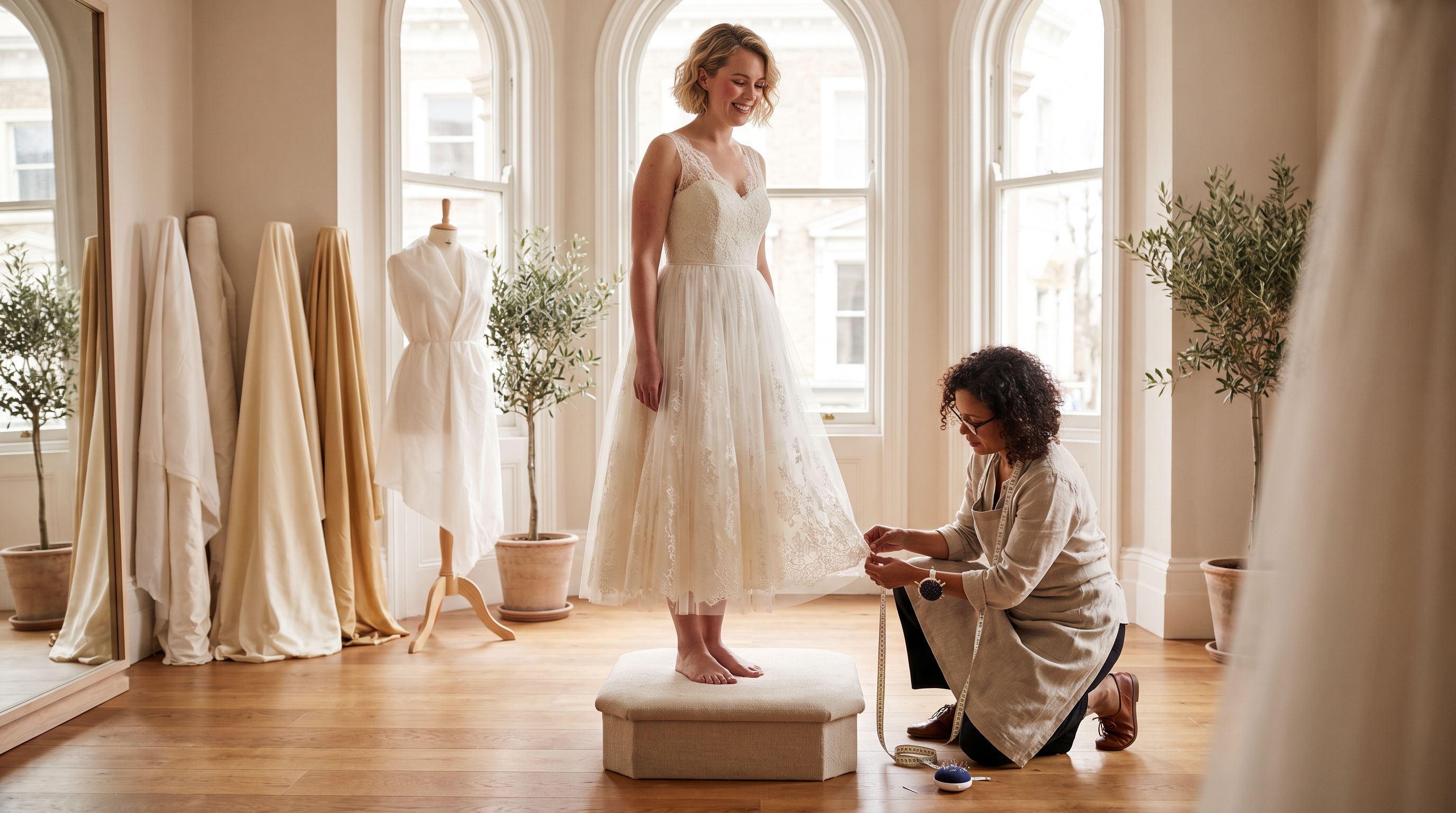
Most people start with a silhouette in mind and barely think about the hem until a fitting. But length is doing more work than almost any other decision in the dress: it sets the formality, decides which shoes are visible, changes how you move through a ceremony, and quietly determines how the whole figure reads in every photograph.
If you’re planning a courthouse ceremony, a garden lunch, a second wedding, a reception change, or an elopement where you’d genuinely like to walk somewhere — the question of how long your dress should be deserves a real answer, not a default.
What each length actually means
Bridal vocabulary is slippery, and two salons will use the same word differently. Here’s the practical version most dressmakers work from:
- Midi — anywhere from just below the knee to mid-calf. Modern, a little fashion-forward, reads less “bridal” and more “occasion.”
- Tea-length — the classic 1950s hem: mid-calf down to roughly two inches above the ankle. Retro-romantic, very photogenic with a full skirt.
- Ballerina / ankle-length — grazes the ankle bone. Elegant and surprisingly formal; you still see the shoe.
- Floor-length — the hem clears the floor by about half an inch in your chosen heel, with the back slightly longer. Anything longer becomes a train.
- High-low — short in front, longer behind. Divisive, but genuinely useful for uneven ground or anyone who wants the drama without the hem in the grass.
Let the venue and the ground decide first
Before proportion, consider logistics. Floor-length over grass, sand, cobblestone, or a long outdoor aisle means your hem will collect everything it touches. That’s fine if you’ve planned for it — a cathedral-length moment is worth a little dirt — but a tea-length or ballerina hem on a vineyard lawn means you’re not clutching fabric all afternoon.
Formality matters too. A cathedral, a ballroom, or a black-tie evening almost always calls for floor-length. A registry office, a rooftop, a lunch reception, or a civil ceremony followed by dinner can carry a shorter hem with total confidence. Couples planning a destination ceremony or elopement often land on ankle-length as the compromise: formal in photos, practical on real ground, easier to pack.
Some ceremonies set the rule for you. Religious and cultural traditions may require covered legs, a specific hem, or a particular level of coverage during the rite itself — and many cultures involve two or more outfit changes across a single celebration. Raise all of that at your first consultation so your maker plans the lengths, layers, and any cover-ups together rather than retrofitting them later.
If this is a second wedding or vow renewal, a shorter hem is often the single change that makes a dress feel like yours rather than a repeat — celebratory without the full ceremonial sweep.
Height, shoes, and why proportion beats rules
The old advice — short people shouldn’t wear tea-length — is simply wrong. What’s true is that a hem cuts the body into sections, so the ratio matters.
On a petite frame, a midi that hits mid-knee can shorten the leg line. The fixes are straightforward in custom: lift the waist seam slightly, drop the hem to the calf taper, and choose a shoe close to your skin tone to carry the line down. If you’re tall or long-legged, tea-length can read as accidentally short — true ballerina length often looks more deliberate.
If you’ll be seated for much of the day, in a wheelchair or using a mobility aid, have the hem measured seated as well as standing. Floor-length fabric catches in wheels and under castors; ankle or just-above-ankle is usually the practical choice, and it photographs beautifully from seated eye level.
And a non-negotiable: bring your actual wedding shoes to every fitting. A hem is set relative to heel height. A two-inch difference between your fitting shoes and your wedding shoes is the difference between a clean hem and a puddle.
What each length costs to have made
So does a shorter dress actually cost less? A little — but less than you’d hope. Fabric is usually a modest portion of the total. What you’re paying for is pattern drafting, a toile, fittings, and hours of construction, and a tea-length gown with a lined, boned bodice takes nearly as long to build as a floor-length one.
These are USD figures reflecting a broad mid-market, and they’re starting points to adapt, not benchmarks. Makers in high-cost cities and ateliers outside the US will sit outside them in both directions, so always price locally. The genuine cost drivers are the same at every length: silk versus polyester, hand-beading versus plain fabric, how many skirt layers need separate hemming, whether the bodice is boned and lined, and your maker’s experience and city. A heavily layered tulle tea-length dress can easily cost more than a simple floor-length crepe column.
A short hem saves fabric. It doesn’t save labor — and labor is what you’re actually buying.
Why shortening a bought gown rarely gives you tea-length
Off-the-rack gowns — bought in stock, in a standard size, then altered — carry a hidden catch: hem geometry. An A-line or ball skirt gets narrower as it goes up. Cut a floor-length skirt to mid-calf and you don’t get a tea-length dress; you get a stumpy, tight-at-the-hem version of the original, often with the horsehair, lining, and lace border all landing in the wrong place.
A skilled seamstress can raise a hem a few inches gracefully. A dramatic length change usually means re-cutting the skirt panels, re-balancing the hem circumference, and reapplying any border detail — which is where alterations stop being alterations and start costing close to new construction. If a short dress is the goal, building it short from the start is almost always better value and a far better shape.
How a good maker sets your hem
-
Discuss the ground, not just the dress
Grass, sand, stairs, and cobbles all change the recommendation. A maker who asks about your venue surface is thinking ahead. -
Try lengths on a toile
At the muslin stage, your maker should pin the hem at two or three heights and let you look in a full-length mirror from several feet back — and photograph it. Photos read length differently than mirrors. -
Measure in your shoes, standing naturally
Hems are set from the floor up, with you standing relaxed, not posing. A posture change of an inch moves a hem visibly. -
Pin in the round, then hang it
Bias and soft fabrics drop. A good atelier hangs the skirt for a day or more before finalizing the hem so it settles. -
Finish to suit the fabric
Horsehair braid for structured flare, a narrow rolled hem for chiffon, a weighted or faced hem for crepe. On a tea-length A-line, horsehair holds the skirt out and away from the leg, which stays crisp all day where soft, unsupported tulle tends to collapse inward — worth knowing on a fuller figure. Your skirt fabric choice drives the finish.
A quiet advantage of going short
Shorter hems are forgiving in exactly the places people worry about. There’s no bustle to learn, no train for guests to step on, no hem to clean, and the dress is far more wearable again afterward. For a lot of people, that’s not a compromise — it’s the whole point.
If you’re torn, bring both options to a consultation and ask a dressmaker to pin a toile at each length. Seeing it on the body that will actually wear it, in your own shoes, settles the question in about ten minutes — and it costs you nothing but an afternoon.
Ready to bring your dream dress to life?
Tell us what you're picturing — style, timeline, and budget — and we'll connect you with custom dressmakers who can make it. Free, no obligation.
Get matched with a dressmakerRelated guides
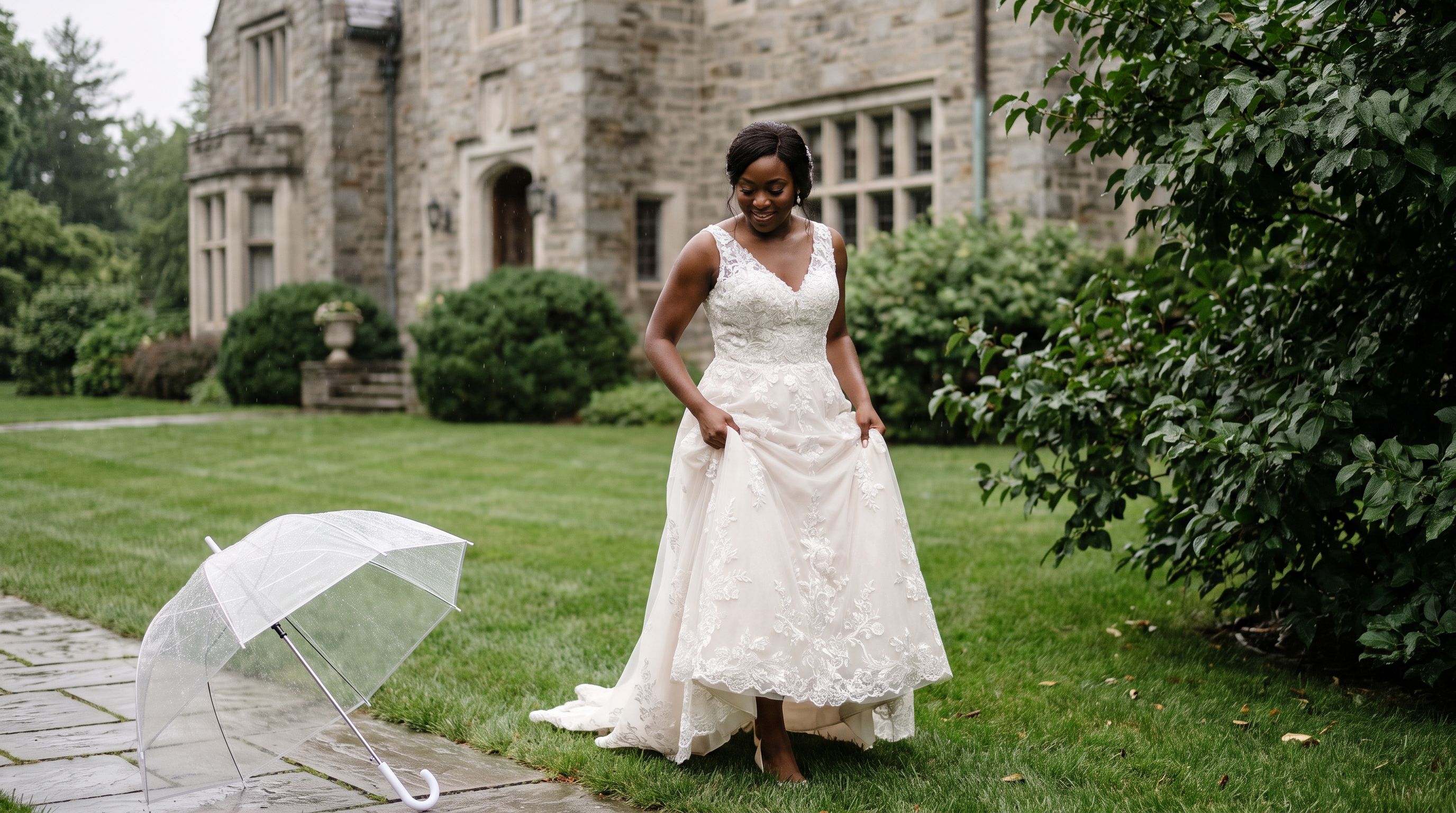
Outdoor Wedding Dress: Rain, Grass, and Humidity Guide
How to choose a custom outdoor wedding dress that survives rain, grass, wind, and humidity — fabric picks, hem strategy, and what weatherproofing costs.
Read guide →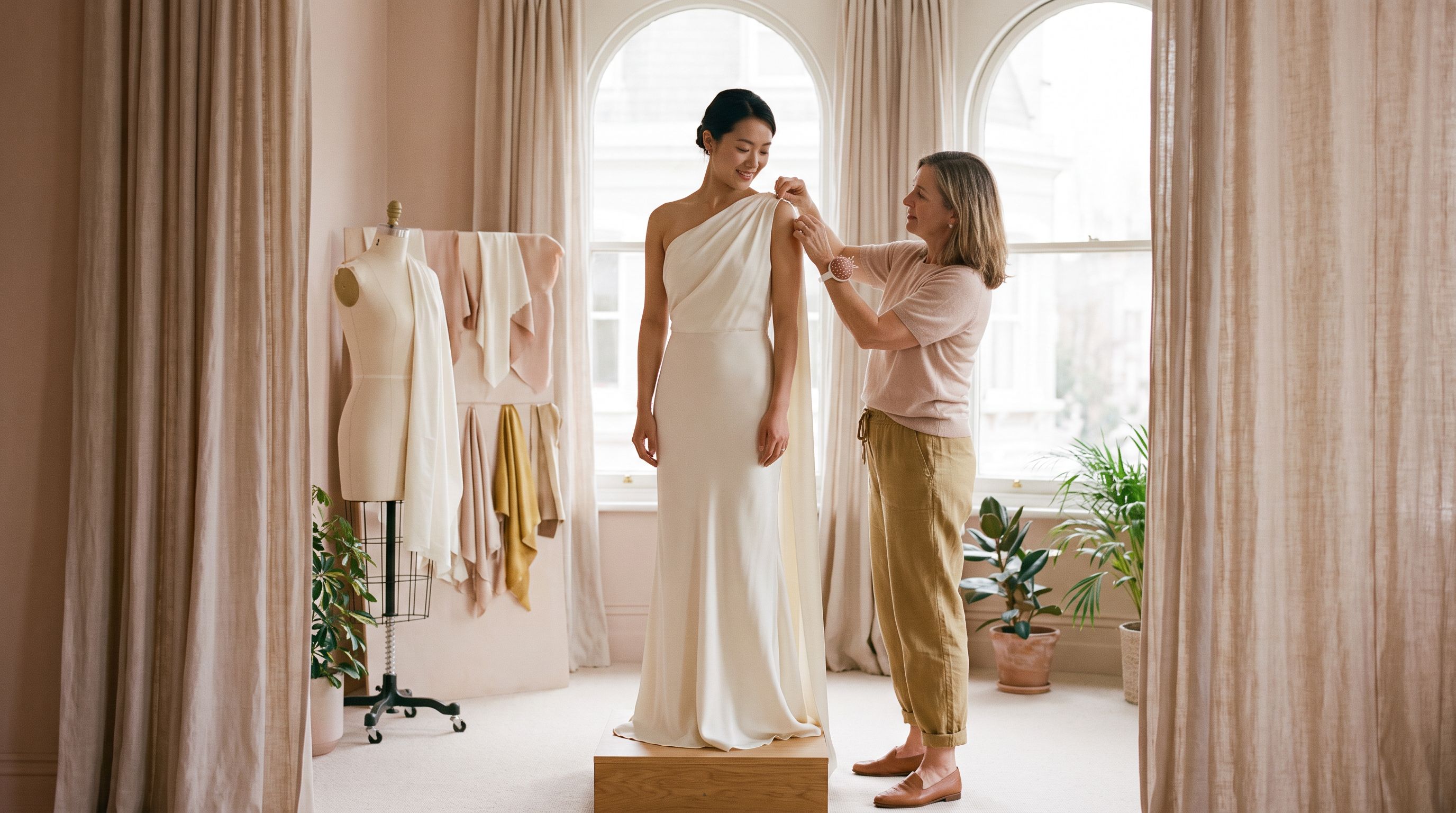
Halter vs One-Shoulder vs Asymmetric Gown: Fit & Cost
Halter vs one-shoulder wedding dress: how each neckline carries weight, flatters different shoulders and busts, what it costs custom, and what to ask your maker.
Read guide →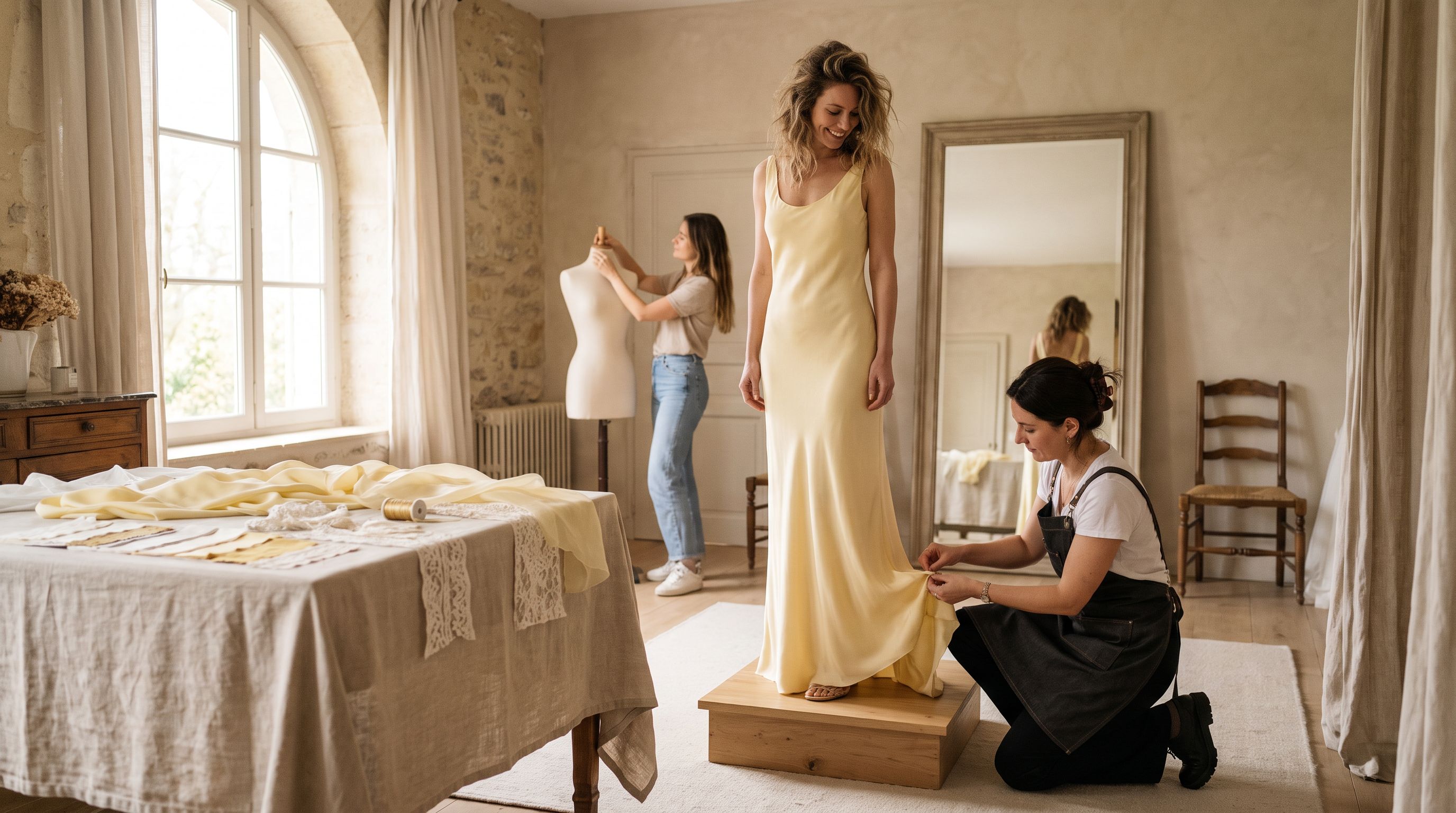
Butter Yellow Wedding Dress: Custom Color, Fit, Cost
Butter yellow is bridal's softest new neutral. Here's how custom dyeing works, which fabrics hold the shade, what it costs, and how to pick your tone.
Read guide →