 Custom
 Wedding Dress Alterations vs Custom: Know the Limits
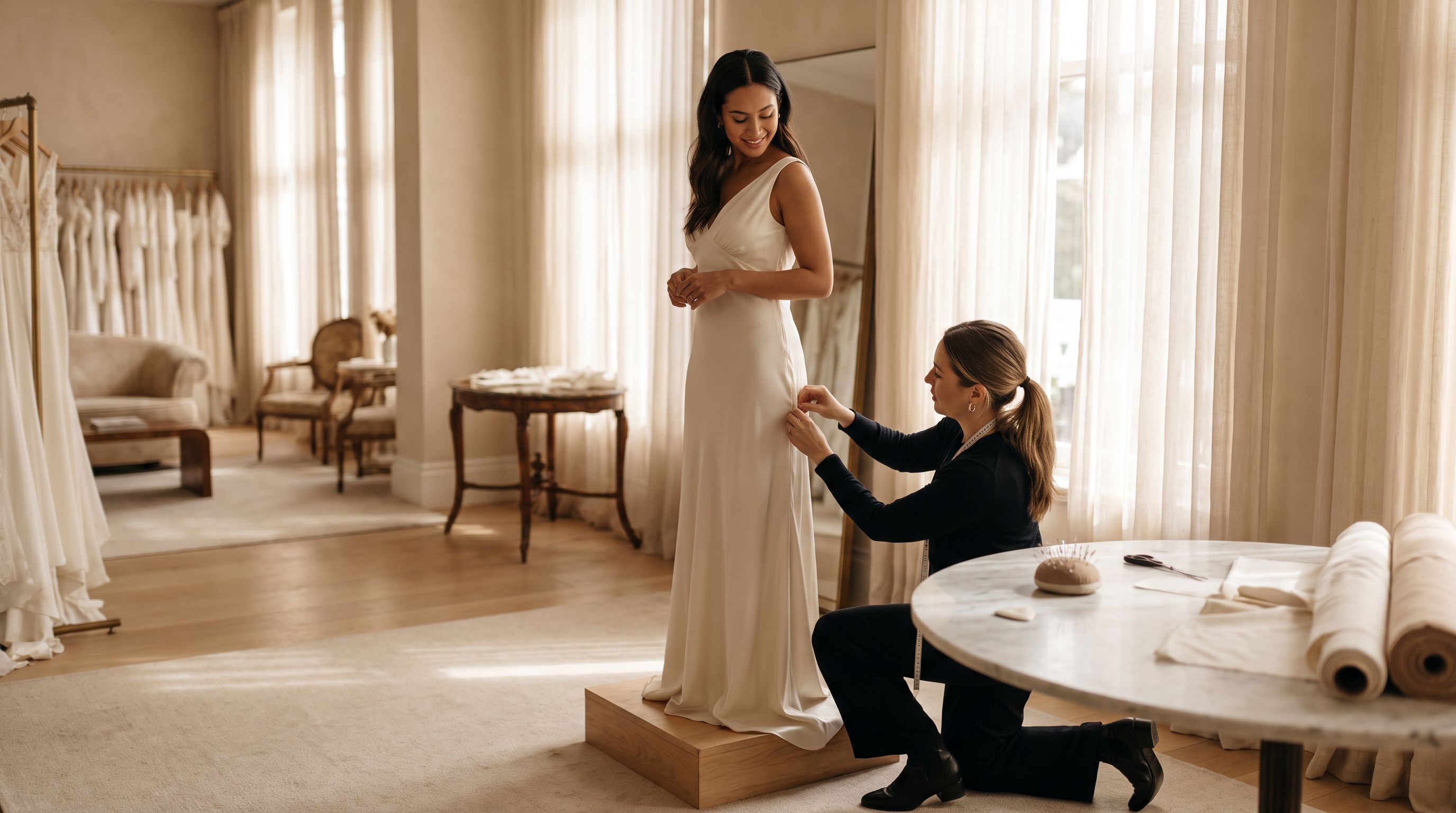
Almost every wedding gown needs some alteration. Bridal sizing is its own strange universe, gowns are cut for a hypothetical body, and “off the rack” simply means you’re buying a gown that already exists in a specific size — a sample, a stock piece, or a discontinued style — rather than one cut for you. So the real question isn’t whether you’ll pay an alterations specialist. It’s how much of the dress you’re asking them to rebuild, and whether that rebuild has quietly become more expensive than starting from scratch. That math works the same way whether you’re a bride, a groom in a gown, or a nonbinary wearer who has never found a rack built with you in mind.
What alterations do beautifully
A skilled bridal alterations specialist can do remarkable things, and for a lot of people this is absolutely the right path. The reliable, cost-effective changes include:
- Taking in the side and back seams — usually the workhorse alteration, and generally good for about one to two sizes depending on how much seam allowance the maker left.
- Hemming, including the lining and horsehair braid on a plain hem.
- Adding bra cups or boning, or building in a corselette so you can go braless.
- Bustling the train — often a surprising amount of hand-sewing, priced accordingly.
- Adjusting straps and shoulder seams for torso length, so the waist actually sits at your waist.
- Taking in or padding the bust cups and re-shaping the neckline gap.
Those figures move a lot. A hem on plain crepe is a different animal from a hem on tiered tulle or scalloped lace, and a big-city atelier prices differently than a small-town shop. Ask for a written itemized quote — good alterations studios give one at the first appointment.
Where alterations start fighting the dress
Here’s the thing dress shops don’t always say out loud: a gown is engineered. The seams, boning, and grainlines are placed for one particular set of proportions. Alterations work with that engineering. Push past it and you’re paying someone to undo the designer’s work and redo it.
The usual sticking points:
Letting a dress out. Most gowns only have an inch or two of seam allowance. If a sample is a size too small, that’s often solvable; two sizes small usually isn’t, unless there’s a corset back, a modesty panel can be inserted, or the fabric is plain enough to add a discreet panel.
Beaded or lace-appliqué seams. Every seam moved in a beaded gown means picking off beads by hand, sewing the new seam, then re-beading over it. It’s slow, skilled, expensive work — and on all-over lace, the pattern rarely matches perfectly afterward.
Lengthening. Hems come up easily and go down almost never. Tall and long-torsoed wearers get bitten by this constantly. There’s usually no extra fabric hiding in there, and a lace border can’t be regrown.
Armholes, shoulders, and sleeves. Armhole shape is structural. Making one deeper is easy; making it higher or narrower usually means reconstructing the whole bodice front. Adding sleeves to a strapless gown is possible and can be gorgeous, but it requires matching fabric — which is why it’s a design conversation, not an alteration conversation. (If sleeves and coverage are non-negotiable for you, it’s almost always cleaner to build them in from the start — more on that in our guide to modest custom gowns with sleeves and coverage.)
Changing the silhouette. Turning a ballgown into an A-line, dropping a waistline, or converting a mermaid to a fit-and-flare is a redesign. Some couture-level workrooms will do it. You will pay couture-level prices.
The same physics apply well beyond the white gown. A lehenga with zardozi or gota borders, a cheongsam whose fit lives entirely in bias-cut side seams and a fitted mandarin collar, a hanbok jeogori with its own proportional logic, aso ebi cut from a shared fabric lot, or a reception outfit change — all of these run into the identical constraint: a hand-embroidered or beaded border can’t be lengthened, and it can’t be moved without being re-worked stitch by stitch. If you’re wearing any of these, the custom-versus-alter question matters less than finding someone who has actually built that specific construction before. A brilliant bridal seamstress who has never set a hanbok sleeve is the wrong person for the job, and a good one will tell you so.
Running the honest math
The comparison people run in forums usually goes wrong because the off-the-rack number is the ticket price only. The fair comparison is: dress price + alterations + rush fees + a second trip for a fabric match, versus the all-in custom quote.
We walk through the full arithmetic — including the fees people forget — in the real math on custom vs off-the-rack cost. The short version: custom rarely beats a $900 stock gown that fits, and often does beat a $2,400 gown that needs $1,300 of reconstruction.
If someone has to rebuild the bodice, you’re not altering a dress anymore — you’re paying twice for one that was never cut for you.
Five signs it’s time to stop altering and start designing
-
The alterations quote passes roughly a third of the dress price
This isn’t a rule, it’s a flag. At that point, price out a made-to-measure gown before you commit — the numbers are often closer than you’d expect. -
You keep hearing 'we can make it work'
Fine for a hem. Worrying for a bodice. Ask your alterations specialist directly: what will this look like when it’s done, and what won’t be perfect? -
Nothing on the rack matches your proportions
If every gown gaps at the bust and strains at the hip, or the waist seam lands under your ribs, that’s a pattern-block mismatch — no amount of taking in will move a seam that’s engineered to sit somewhere else. -
You're altering toward a picture in your head
If the gown is a starting point for a dress you’ve already imagined, you’ll be happier having it made. A maker working from your inspiration photos can build the real thing rather than approximate it. -
Your body may change before the wedding
Pregnancy, medication, training, surgery, weight fluctuation. A custom maker plans the final fitting close to the date; an already-purchased gown locks you into a shape months early.
What to ask before you hand over a deposit
At an alterations consultation: How many sizes can this specific gown be taken in or let out? What happens to the beading? Will the lace pattern still match? How many fittings, and when’s the last one? Is the quote itemized and final, or an estimate?
At a dressmaker consultation: Will I get a muslin or toile before you cut the real fabric? How many fittings are included, and are they in the quoted price? Can I see finished gowns and inside seams, not just Instagram photos? What’s the timeline, and what’s the rush fee if I’m late? Someone who answers all of that plainly, in writing, is showing you exactly how they work.
There’s no morally superior answer here. Plenty of couples marry in an $1,100 stock gown with $400 of thoughtful alterations and look extraordinary. Others spend a similar amount having something made that finally fits their shoulders. The mistake isn’t choosing one path — it’s choosing before you know what the dress in front of you can actually become.
Related reading: our guides for plus-size and curvy wearers and for petite frames unpack why standard pattern blocks so often miss, and what custom actually fixes.
Ready to bring your dream dress to life?
Tell us what you're picturing — style, timeline, and budget — and we'll connect you with custom dressmakers who can make it. Free, no obligation.
Get matched with a dressmakerRelated guides
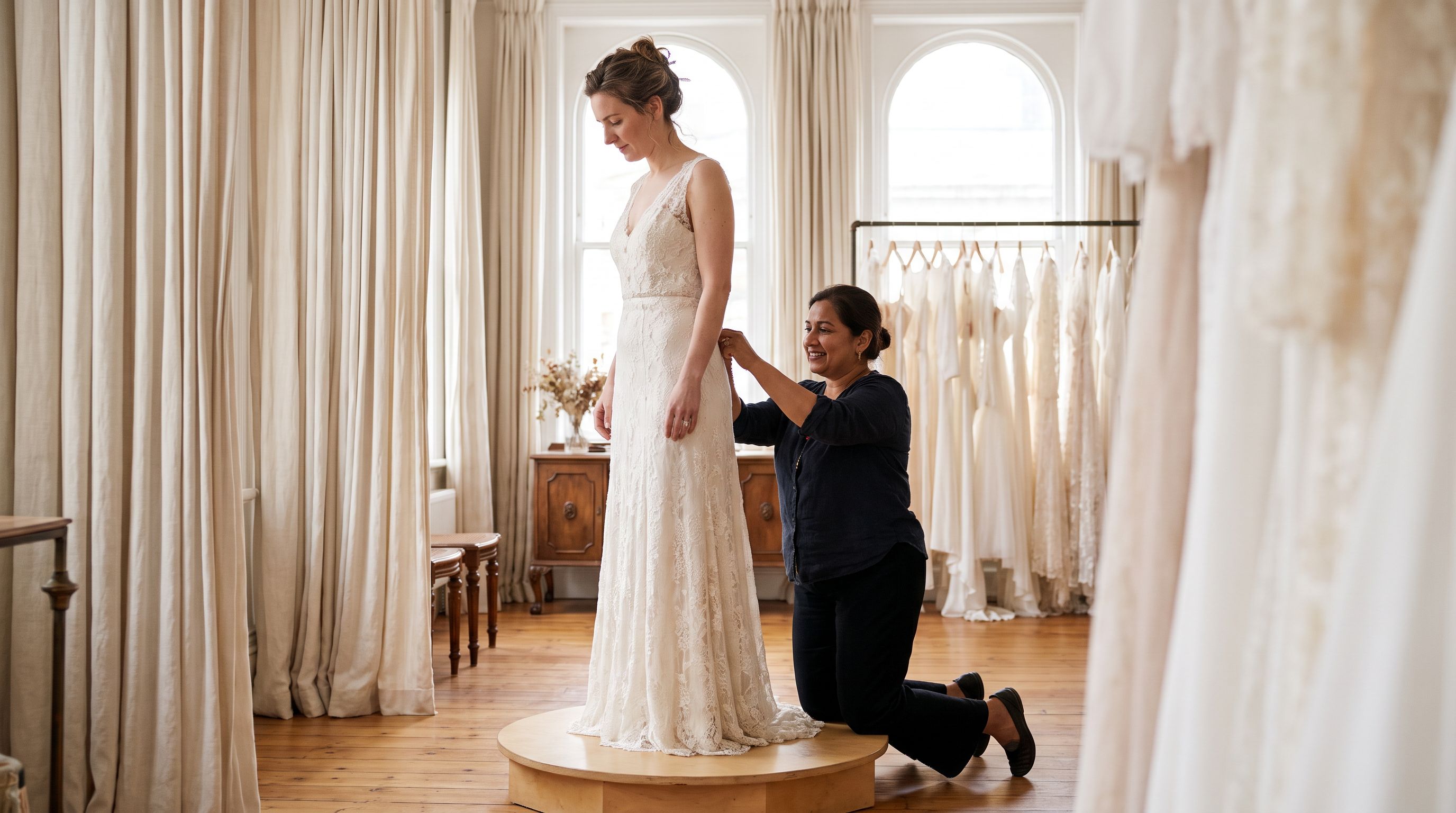
Off the Rack Wedding Dresses: What It Means and Costs
What "off the rack" really means in bridal, how off-the-rack wedding dress costs compare to custom and made-to-measure, and how to set a realistic budget.
Read guide →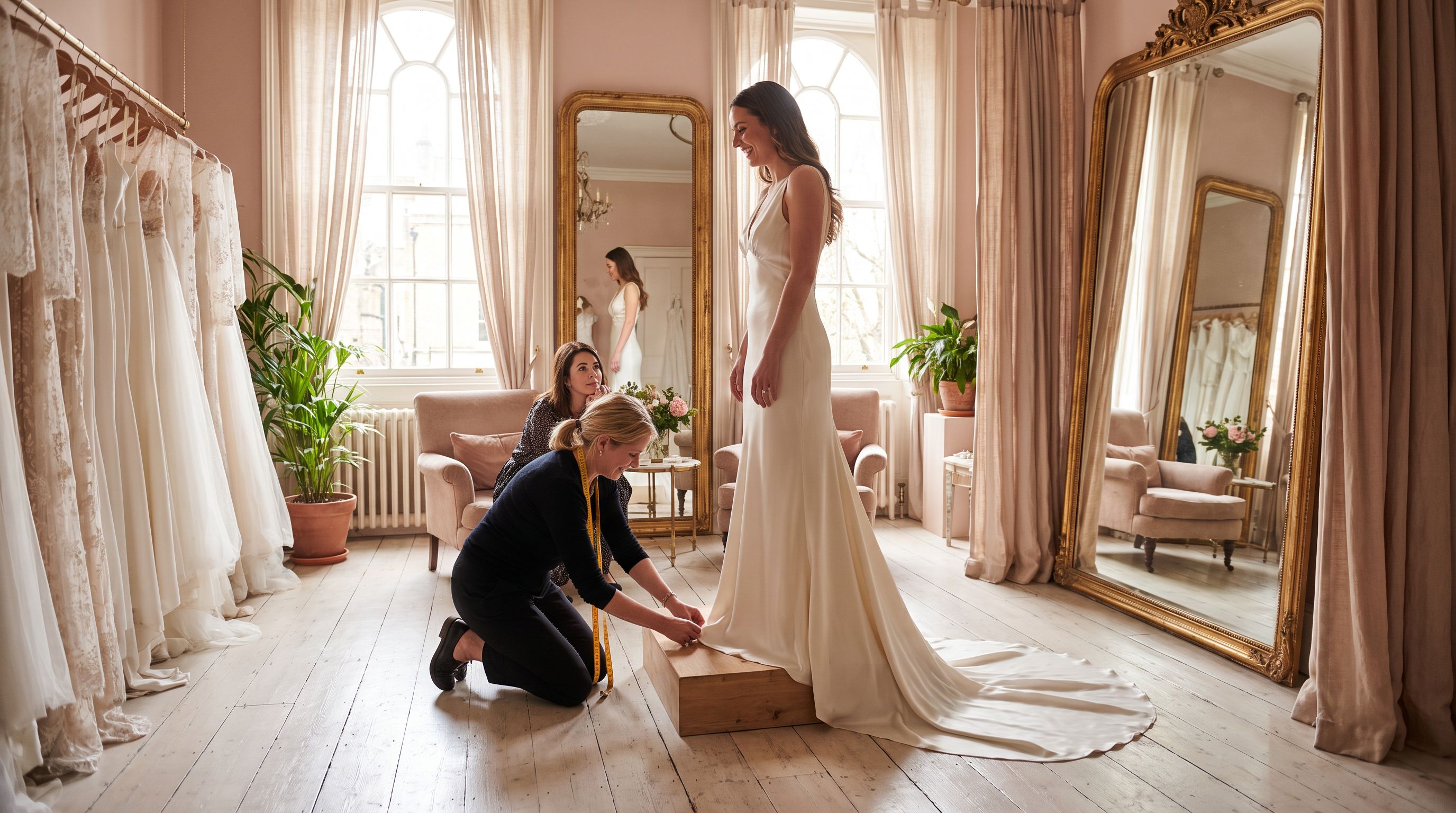
Chapel vs Cathedral Train: Length, Cost, and Bustles
Chapel vs cathedral train for a custom wedding dress: real length measurements, what extra train costs, bustle types and prices, and how to decide at your fitting.
Read guide →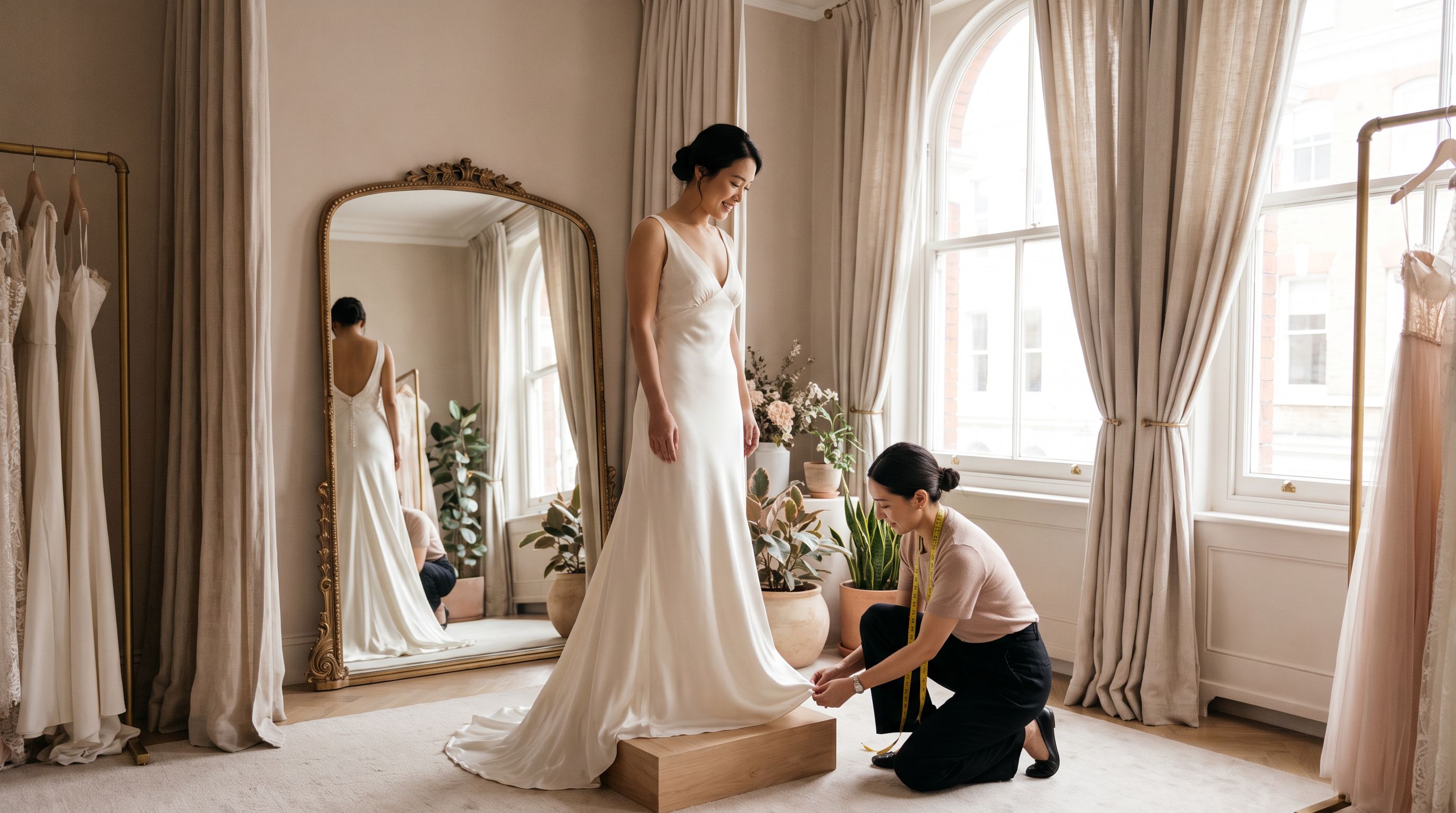
Bridal Sizing vs Street Size: Why Gowns Run Small
Bridal sizing vs street size explained: why wedding dresses run 2–3 sizes small, what off-the-rack really means, alteration costs, and when made-to-measure wins.
Read guide →