 Custom
Getting a Wedding Dress Made Abroad: Is It Worth It?
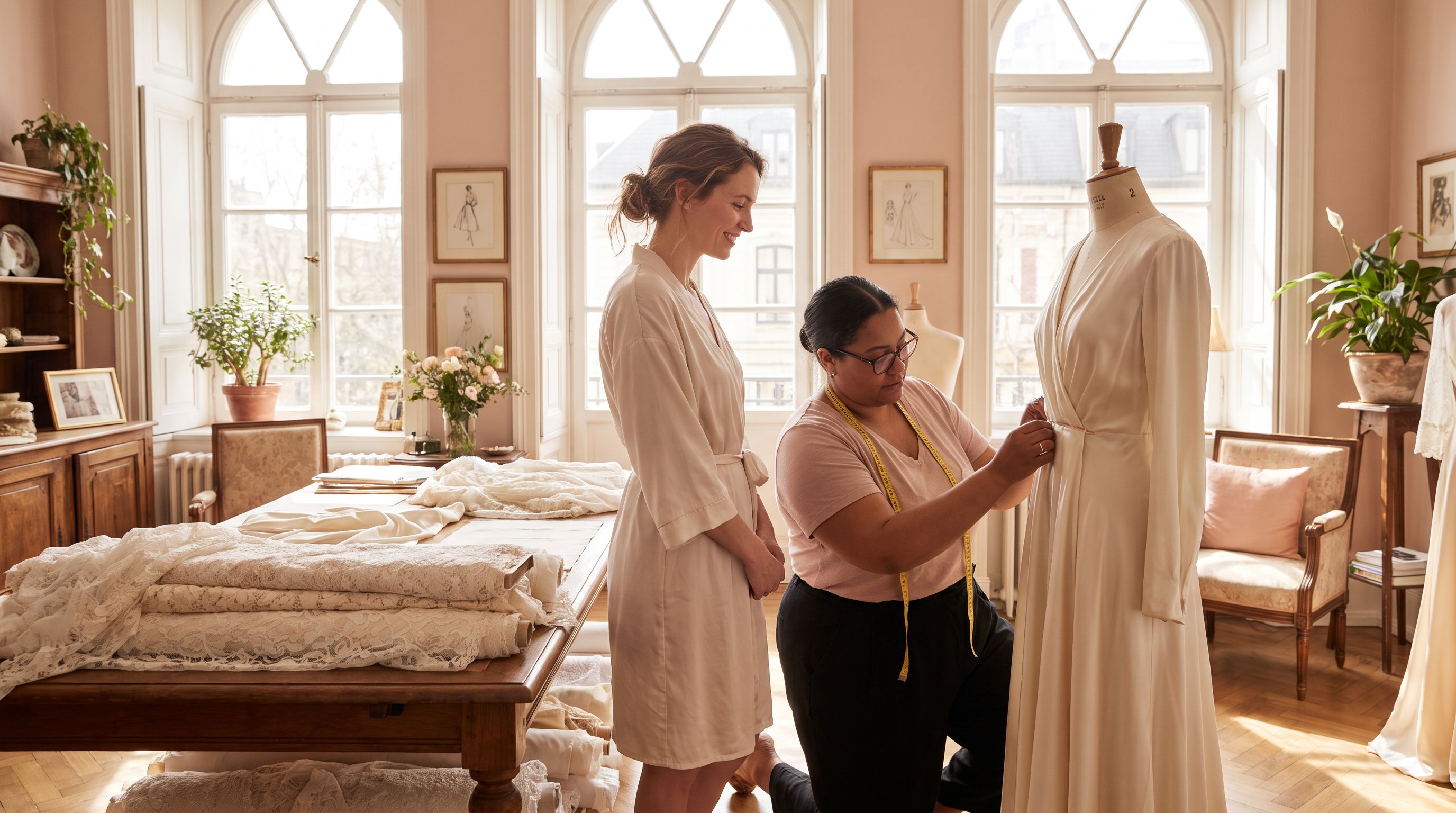
A quick note before we start: we’ll use “bride” as shorthand, but everything here applies to the bride, or whoever is wearing the gown — any gender, any body, any kind of wedding.
Why “tailored abroad” is suddenly on every planning spreadsheet
Travel tailoring has never really gone away, and it keeps resurfacing. Time Out’s guide to Bangkok’s best tailor shops worth a fitting is one example of the kind of roundup that sends a very specific question around group chats: could I just get my wedding dress made there?
The honest answer is yes, sometimes beautifully. And sometimes it turns into an expensive lesson. The difference usually comes down to how complicated the gown is, how much time you’ll physically be in the same room as the person sewing it, and how much you’ve set aside for the fixes nobody plans for.
What a gown made overseas typically costs
Prices vary enormously by country, by shop, and by whether the fabric is house stock or something you’ve chosen. Treat these as orientation, not quotes:
The cost drivers are the same everywhere: fabric quality (real silk versus polyester changes everything), the number of internal layers, boning and corsetry, hand-beading or appliqué, lace placement and pattern-matching, train length, and how many fittings the maker builds in. A bias-cut crepe slip is fast to make and hard to fit. A boned ball gown with a lace-matched bodice is slow to make and needs multiple fittings. Price follows labour hours, not geography alone — geography just changes what an hour costs.
Bridal construction is not suit tailoring
This is the single most useful thing to understand before you book. A shop that makes exquisite men’s suits is working with wool, interfacing and a structural vocabulary that doesn’t transfer automatically to a strapless silk bodice that has to stay up while you dance.
Bridal work asks for specific skills: internal corselettes and boning channels, cups and bust support, bias-cut handling, horsehair hems, lace cutting and re-appliquéing over seams, invisible zippers into bulky layers, and bustles. Some overseas ateliers do all of this exceptionally well — many specialise in it. But a general tailor who says “yes, no problem” to a photo of a beaded mermaid gown may be answering optimistically.
So make your vetting testable rather than impressionistic. Ask for photographs of the inside of a gown they’ve finished — boning channels, seam finishes, the bustle. Ask for a specific example of a corseted bodice or a lace-matched seam they’ve built, not a general portfolio. Ask for the names of two recent bridal clients who’d be willing to exchange messages with you. A maker who genuinely does bridal work will have all three ready; one who mostly does menswear usually won’t.
Ask to see the inside of a finished gown, not just the outside. Support, seam finishes and a clean bustle tell you more than any front-facing photo.
The real constraint is fittings, not skill
A well-made custom gown usually involves a toile (test garment), a structure fitting, and one or two refinement fittings, spread over weeks so the body and the fabric can settle. Compress that into a seven-day holiday and something has to give.
-
Before you travel
Send measurements, inspiration photos and your venue and season details. Confirm fabric options and get a written quote by email. Book the first appointment for day one or two of the trip — not day five. -
First appointment
Measuring in person, fabric selection, and ideally a toile or a rough shell pinned on. Discuss support openly: what holds the bodice up, what’s worn underneath. If you need structured support for a fuller bust or you’re a larger size, say so now — that means built-in cups, wider strap or band placement, extra boning and often a longer bodice, and the maker should be able to describe exactly how they’ll build it. -
Mid-trip fitting
The gown in its real fabric, roughly assembled. This is where neckline height, bust fit and waist placement get decided. Bring your wedding shoes or a matching heel height. -
Final fitting before you fly
Check it seated, with arms raised, walking. Look at the inside. Ask them to fit it slightly generous at the side seams rather than snug — taking in is easy at home, letting out is not. Pay the balance only after this fitting, never before. -
Transport and re-check
Carry it as hand luggage if you possibly can. Within a week of landing, book a local bridal seamstress to assess hem, support and bustle.
Abroad versus a dressmaker at home
Because recourse is the weak point, protect yourself on paper and on payment. Get the quote, the full list of inclusions, the fabric specification and the delivery or collection date in writing — email is better than a verbal promise, and screenshot or export the WhatsApp thread before you fly home, because that chat log is often the only record of what was agreed. Pay deposits by credit card wherever possible rather than cash or bank transfer, since card payments carry chargeback protections that a wire does not. Keep the deposit modest, and hold the balance until after the final fitting.
If you’re ordering sight-unseen rather than travelling in person, the risk profile shifts again — we go through that in detail in ordering a custom wedding dress overseas.
So is it actually cheaper — and what’s a realistic budget?
Cheaper than custom at home: usually yes, often by a lot, even after shipping and local alterations. Cheaper than off-the-rack? Not always. A sample sale gown or a non-bridal-label dress can land well under $1,000 before alterations, so “off-the-rack is always cheaper” and “custom is always pricier” are both too blunt to be useful.
One way to build your number — a planning heuristic many dressmakers suggest, not a researched rule — is to decide your total dress budget (gown, alterations, undergarments, veil, cleaning), allocate roughly 70% to the gown itself and hold about 30% back. That reserve is what makes a travel-made gown safe. Spending the entire budget abroad and arriving home to a bodice that gapes is the scenario worth avoiding.
When going abroad is genuinely the right call
- You’re already travelling for a month or more, or you’ll return before the wedding.
- You want a style your local market doesn’t carry — regional embroidery, specific silks, a cultural or religious gown.
- Your size has been steady and you’re not expecting changes before the date, for any reason.
- You’ve found a maker who passed the bridal-work test above: inside photos, a named corseted or lace-matched example, contactable past clients and clear communication.
- You’ve ring-fenced money for alterations at home.
And when to stay local: a short timeline before the wedding, a structured or heavily embellished design, a body that’s changing, or simply the knowledge that you’ll sleep better with someone accountable nearby. If you’re weighing this for a wedding overseas anyway, our destination and elopement gown guide covers packing, humidity and fabric choices that travel well.
Whichever route you choose, it’s worth having one conversation with a custom dressmaker near you before you book flights. A short consultation will tell you what your design actually requires in fittings and structure — and that’s the information that makes the abroad-or-home decision obvious rather than agonising.
Ready to bring your dream dress to life?
Tell us what you're picturing — style, timeline, and budget — and we'll connect you with custom dressmakers who can make it. Free, no obligation.
Get matched with a dressmakerRelated guides
Bought a Wedding Dress Online? Alter, Remake, or Custom
Your online wedding dress arrived and the fit is wrong. Here's how to tell what's fixable, what alterations cost, and when going custom is the smarter buy.
Read guide →
Custom Veil vs Heirloom Veil: Cost, Length, and Fit
What a custom wedding veil costs, how to choose a length, and when wearing (or restoring) an heirloom veil is the smarter, more meaningful choice.
Read guide →
Custom Bridal Jumpsuit vs Gown: Fit, Cost, Comfort
A custom bridal jumpsuit vs wedding dress: honest costs, the fit details that make or break a jumpsuit, fabrics, timelines, and how to decide.
Read guide →