 Custom
 Bridal Jumpsuit vs Gown: Fit, Cost, Comfort
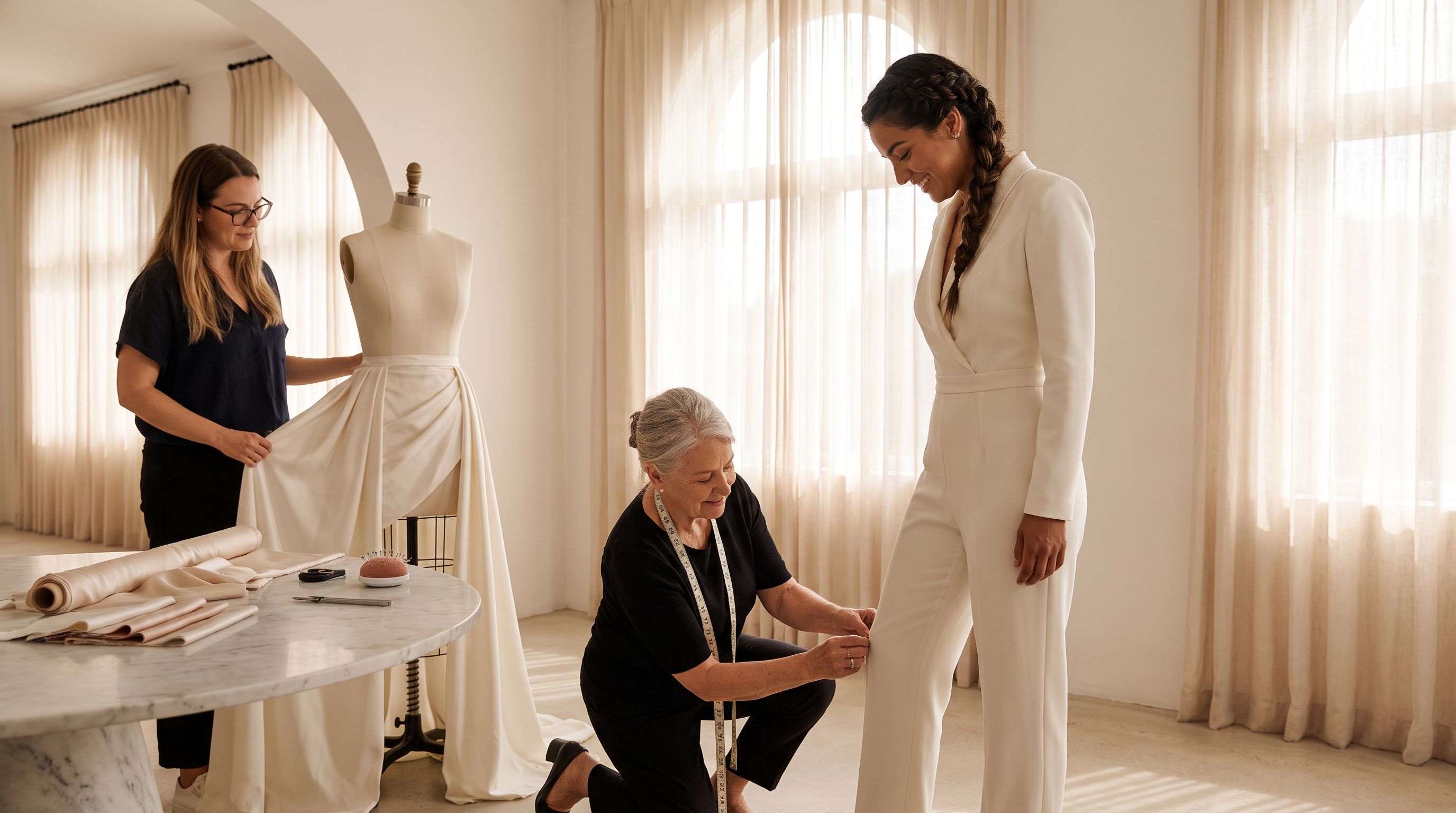
Why jumpsuits are so hard to buy off the rack
A wedding gown is forgiving in one crucial way: below the waist, it’s a tube or a cone. If the hip measurement is generous, the skirt just hangs. A jumpsuit has no such mercy. It has to match your torso length, your rise (waist to crotch), your hip curve, your thigh, and your inseam — and most sizing systems only offer you one number for all of it.
That’s why so many people try on bridal jumpsuits in a salon and leave deflated. The bodice gapes at the bust but digs at the hip. The crotch sits two inches low, which reads as “borrowed” in every photo. The waist seam lands below your natural waist, shortening your legs. None of that means a jumpsuit is wrong for you. It usually means the jumpsuit was cut for a torso that isn’t yours.
This is especially true for the bodies standard jumpsuit blocks serve worst. If you’re a DD+ cup, the built-in shelf bra in a ready-to-wear jumpsuit is almost always cut for a B — so it digs under the bust or flattens rather than supports. A princess-seamed or wrap-front bodice solves this properly, because the shaping lives in the seams and can be scooped out exactly where your bust actually sits, with a wider underband that sits flat instead of cutting in. In plus sizes, the waist-to-hip difference is frequently five or six off-the-rack sizes wide, which no single garment number can cover. If you’re apple-shaped or carry weight through the middle, a softly draped or wrap bodice with a slightly raised waist seam is more comfortable than anything boned and rigid. If you’re athletic through the shoulders and back, armholes and a wide back width need drafting, not alteration — that’s a pattern change, not a seam let out.
If you’re long- or short-waisted, very petite or very tall, made-to-measure isn’t a splurge here — it’s the only reliable route. The same logic drives people toward custom bridal separates rather than a one-piece gown: when a garment has to fit two or three places independently, separate pattern pieces solve what alterations can’t.
What a custom bridal jumpsuit typically costs
Prices vary enormously by fabric, detailing, your maker’s experience, and where you live — a studio in a major city with a team of machinists prices differently from a solo dressmaker in a smaller market. Treat these as starting points for your own math.
A note on those numbers: they are editorial estimates offered as a planning starting point, not survey data or a measured average. Your own quotes are the only figures that matter.
The cost drivers are straightforward once you know them. Fabric is the big one: four to six yards of good silk crepe or wool-blend suiting costs real money, but a jumpsuit uses dramatically less yardage than a ball gown, which is why it often lands below a comparable custom gown. Tailoring complexity is the second: a structured, boned bodice with internal support, welt pockets, or a wide-leg trouser that must hang perfectly straight from the hip takes more hours than a soft, elasticated style. Finishing — hand-rolled hems, lined trousers, covered buttons, a concealed zip that doesn’t buckle across the waist seam — adds hours too.
If four figures isn’t where your budget sits, there are honest routes down. Commission only the trousers — the genuinely hard part to buy — and pair them with a top you already own, a silk camisole, or a simple bodysuit. Choose a well-made synthetic crepe instead of silk; good polyester crepes hang beautifully, survive a dance floor, and can cut fabric costs by more than half. Skip the overskirt, keep the bodice unbeaded, and let a back detail or a veil do the decorative work. For more on how fabric choice alone moves the number, our guide to crepe, satin, and mikado is worth reading before you brief anyone — crepe dominates bridal jumpsuits for a functional reason: it has enough weight to hang straight from the hip and a matte enough surface to hide seam shadow.
A jumpsuit has nowhere to hide — which is precisely why, when it’s cut for your body, it looks more expensive than it was.
Where each one genuinely wins
It also isn’t always either/or. In weddings with multiple outfit changes — a lehenga, hanbok, áo dài, kente, or a religious ceremony followed by a party — a jumpsuit often becomes the civil ceremony, registry office, or reception look worn alongside traditional dress, rather than replacing it. One honest question to ask yourself: when you picture walking in, are you picturing fabric moving behind you, or your own silhouette? That answer is usually louder than any trend.
The fit details that make or break it
-
Decide the waist placement first
Natural waist elongates the leg and suits most people. A slightly dropped seam can balance a very short torso, but go too low and you lose leg length instantly. Try both on your toile before committing. -
Choose your leg line
Wide-leg palazzo hides shoes and reads most gown-like; straight-leg is sharper and more tailored; a slim leg under an overskirt gives a clean reveal. If you have fuller thighs, the leg needs enough width at the fullest point that the fabric clears the body and falls straight down from there — cut too narrow, it grips and swings outward; cut from heavy crepe with a good hang, it reads as a column. -
Hem to your exact shoes
Jumpsuit hems are unforgiving — a wide leg should just kiss the floor at the front and never drag. Bring the real shoes to the fitting, and if you’re swapping to flats for dancing, ask whether a second hem length or an adjustable system is feasible. -
Sort support in the toile
A boned inner corselet or a properly drafted internal bra beats adhesive solutions, and stops the bodice riding up when you lift your arms. For a DD+ bust, ask for the underband to be fitted separately from the cup so it sits flat without digging. Our guide to built-in support versus a separate corset covers the trade-offs. -
Test it seated, dancing, and in the bathroom
Sit, cross your legs, raise both arms, and practice the bathroom routine at your fitting. A back zip that opens to the hip, a drop-panel, or a concealed side opening is a genuine design decision, not an afterthought.
How to make it read bridal, not corporate
The difference is almost always fabric and finish. Silk crepe, satin-back crepe, or a weighty mikado in ivory or ecru behaves like a gown and photographs like one. Thin, shiny polyester in stark white is what tips a jumpsuit toward office wear. Beyond cloth, the bridal cues that work hardest are a dramatic back (deep V, draped cowl, covered buttons), a detachable overskirt or cape, a statement sleeve, and a well-chosen veil, which does more to make trousers look bridal than any amount of beading.
If you love the idea but want gown drama for the ceremony, an overskirt is the best-value decision in this whole article: ceremony volume, reception freedom, one fitting process, one garment to care for afterwards.
Timeline and what to ask your maker
Plan on a similar runway to a gown: roughly four to six months is comfortable for most independent makers, with a toile (test garment) fitting, a first fabric fitting, and one or two refinements. Jumpsuits often need one extra fitting specifically for the rise and hem, so don’t squeeze the schedule.
If you’re weighing this against a gown and want a second opinion on budget, our breakdown of what different custom budgets actually buy will help you see where your money does the most work. When you do book a consultation, bring the shoes you plan to wear, your inspiration photos, and your real questions — including the awkward ones.
Ready to bring your dream dress to life?
Tell us what you're picturing — style, timeline, and budget — and we'll connect you with custom dressmakers who can make it. Free, no obligation.
Get matched with a dressmakerRelated guides
Getting a Wedding Dress Made Abroad: Is It Worth It?
Thinking of having your wedding dress tailored in Bangkok, Hoi An or Bali? Real costs, timelines, risks and how it compares to a custom dressmaker at home.
Read guide →
Bought a Wedding Dress Online? Alter, Remake, or Custom
Your online wedding dress arrived and the fit is wrong. Here's how to tell what's fixable, what alterations cost, and when going custom is the smarter buy.
Read guide →
Custom Veil vs Heirloom Veil: Cost, Length, and Fit
What a custom wedding veil costs, how to choose a length, and when wearing (or restoring) an heirloom veil is the smarter, more meaningful choice.
Read guide →