 Custom
 Modest Custom Wedding Dresses: Sleeves, Coverage, Cost
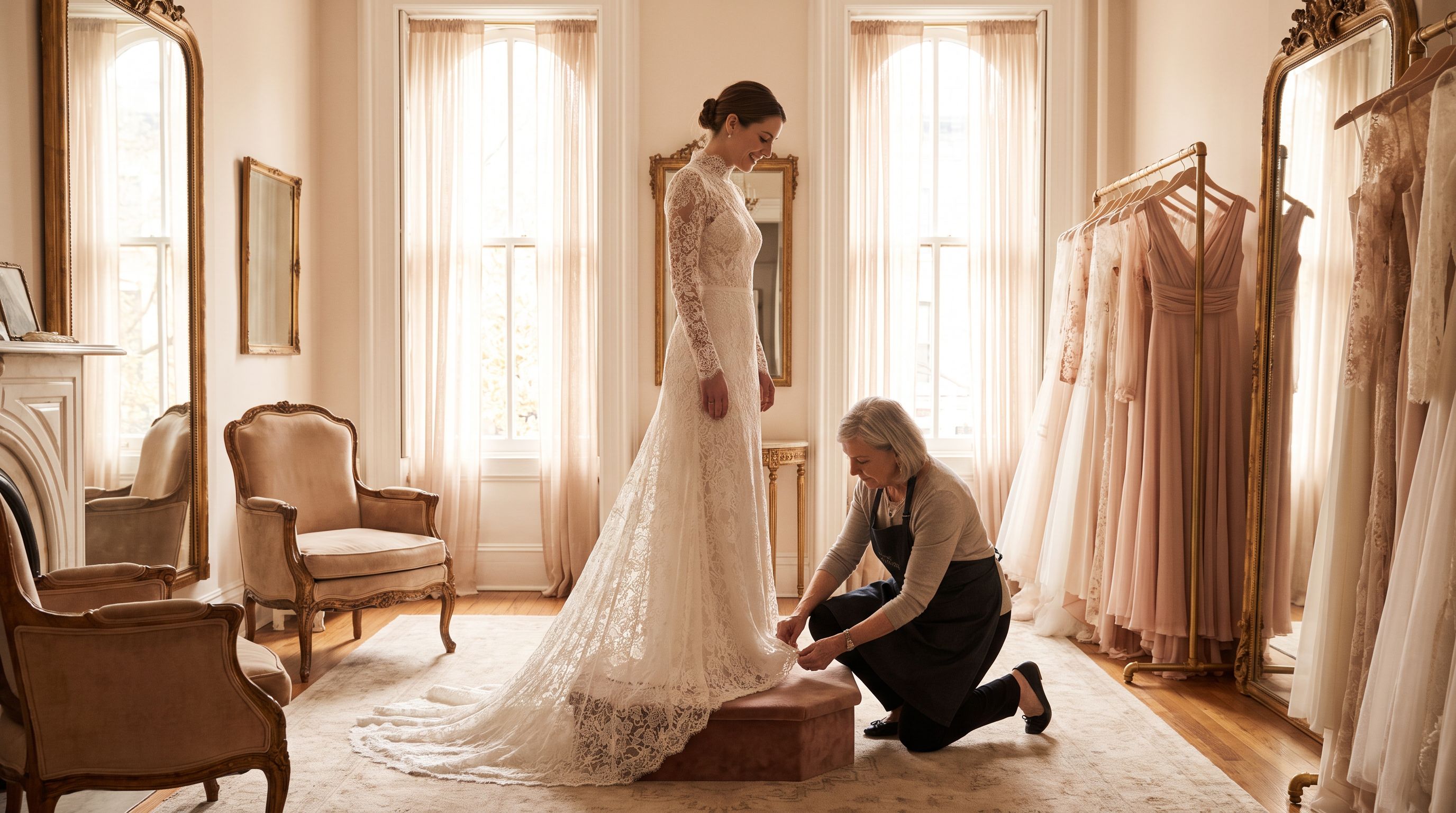
Why coverage is so hard to buy off the rack
Most bridal shops carry racks of strapless and spaghetti-strap gowns, a few illusion-sleeve styles, and maybe one or two genuinely covered designs — usually in a single sample size. Stack your requirements (sleeves, a collarbone neckline, a closed back, a skirt that stays opaque in photos) and the odds of finding that dress ready-made in your size, budget and timeline get slim fast.
That’s a supply problem, not a failure of taste. Sleeves cost manufacturers more fabric and more labour, and they’re harder to fit on a rack sample. Custom flips the math: when a gown is drafted for your measurements, coverage isn’t an add-on, it’s part of the design, and the proportions are planned around it.
The coverage decisions that actually matter
Sleeves. Cap, short, three-quarter, fitted long, bishop, bell, or illusion (fine tulle with lace appliqué). Fitted woven sleeves need careful drafting and often a stretch lining so you can raise your arms; illusion sleeves are lighter and cooler but read as sheer under flash.
Neckline and back. Bateau, high neck, jewel, mock turtleneck, or a sweetheart with an illusion overlay. Say explicitly whether the back must be closed and how high — a covered front with an open back defeats the purpose for many brides.
Opacity. The detail people forget. Many bridal fabrics photograph translucent under strong light, and you won’t see it in a showroom. Ask your maker to do two tests with the lined fabric: photograph it with a direct flash in a dim room, and hold it up against a bright window. Look at both on a phone screen before you approve anything — that is exactly how the fabric will behave in reception photos and backlit ceremony shots.
Comfort in heat. A long-sleeved, fully lined gown can be punishing outdoors. Ask for a breathable lining — cotton batiste, or bemberg/cupro — rather than polyester, which traps heat. For a summer outdoor ceremony, push toward lighter silk, crepe or illusion sleeves instead of heavy duchesse satin, and consider a detachable overskirt or train you can shed after photos.
Alter an existing gown, or build one from scratch?
Both are legitimate. It comes down to how much of your ideal dress already exists in something you can buy.
Our honest comparison of custom versus off-the-rack walks through the trade-offs in more detail.
What a modest custom gown typically costs
Price is driven by hours and materials, not by the word “modest.” These are calibration ranges to adapt to your fabrics and your city — not benchmarks.
The drivers worth understanding: fabric quantity (sleeves, a high neck and full lining simply use more yardage); lace matching, where appliquéing motifs so they flow from bodice into sleeve is slow handwork billed by the hour; bodice complexity, since boning and structured cups take longer than a soft lining; timeline, as rush work carries a surcharge almost everywhere; and the maker’s experience and location. Quotes from a downtown atelier and a home-studio seamstress an hour away can differ by thousands for comparable work — get at least two. Our guide to what a custom wedding dress costs and why breaks this down further.
Building a budget you can actually live with
Work backwards. Decide the total you’re comfortable spending on everything you’ll wear, then subtract alterations, undergarments, veil or head covering, shoes, and cleaning and preservation. What’s left is your gown number. Brides most often get caught out by forgetting that last stretch of costs.
If that number lands near $600, you still have real options:
- Buy preowned or a sample gown with a silhouette you love, then pay a local seamstress to add sleeves and raise the neckline. Sample sales and resale sites often list barely-worn gowns at a fraction of retail.
- Commission only the coverage. A modesty panel, a lace bolero, or a pair of detachable sleeves made to your measurements costs far less than a full gown and can transform a simple dress.
- Look outside bridal. Ready-to-wear white or ivory separates — a high-neck blouse with a full skirt, or a modest column dress from an evening-wear line — sidestep the bridal markup entirely and are often easier to find with sleeves already attached.
Coverage isn’t a compromise on style. Some of the most striking gowns being made right now are the most covered ones.
How the process usually unfolds
-
Consultation and requirements
Bring inspiration images and a plain-language list of non-negotiables: sleeve length, neckline height, back coverage, opacity, head covering. Ask whether they’ve made sleeved gowns before, and ask to see them. -
Design and fabric selection
Choose base fabric, lace and lining together, and run the opacity tests. If a hijab, dupatta or shawl must match, buy that fabric from the same bolt now. -
Measurements and toile
A calico mock-up, including the sleeves, is where fit gets solved cheaply. Move, sit, lift your arms, and say what pinches. -
Fittings in real fabric
Usually two to four, spaced weeks apart. Bring your actual shoes and undergarments every time. -
Final fitting and handover
Hem, closures, pressing, and a walk-through of getting in and out. Bring someone who’ll be dressing you.
Most made-to-measure gowns want six to nine months; sleeved and heavily appliquéd designs sit at the longer end. If your date is closer, say so upfront — many makers can work faster and will tell you honestly what’s possible. See our realistic timeline guide.
Finding the right person
Look for a portfolio that genuinely includes covered gowns — not one illusion-sleeve dress buried among strapless designs. It’s completely reasonable to speak with two or three makers before committing.
Open any consultation with three questions: What have you made recently that’s similar to what I’m describing? What would a gown like this cost, and what’s included — toile, fittings, final press? What happens if I change my mind about the neckline partway through? The answers will tell you more than a price list will. And if the fit between you isn’t right, it’s entirely fine to thank them and leave without booking anything.
Ready to bring your dream dress to life?
Tell us what you're picturing — style, timeline, and budget — and we'll connect you with custom dressmakers who can make it. Free, no obligation.
Get matched with a dressmakerRelated guides
Off the Rack Wedding Dresses: What It Means and Costs
What "off the rack" really means in bridal, how off-the-rack wedding dress costs compare to custom and made-to-measure, and how to set a realistic budget.
Read guide →
Chapel vs Cathedral Train: Length, Cost, and Bustles
Chapel vs cathedral train for a custom wedding dress: real length measurements, what extra train costs, bustle types and prices, and how to decide at your fitting.
Read guide →
Bridal Sizing vs Street Size: Why Gowns Run Small
Bridal sizing vs street size explained: why wedding dresses run 2–3 sizes small, what off-the-rack really means, alteration costs, and when made-to-measure wins.
Read guide →