 Custom
 Custom Wedding Dresses for Plus-Size and Curvy Brides
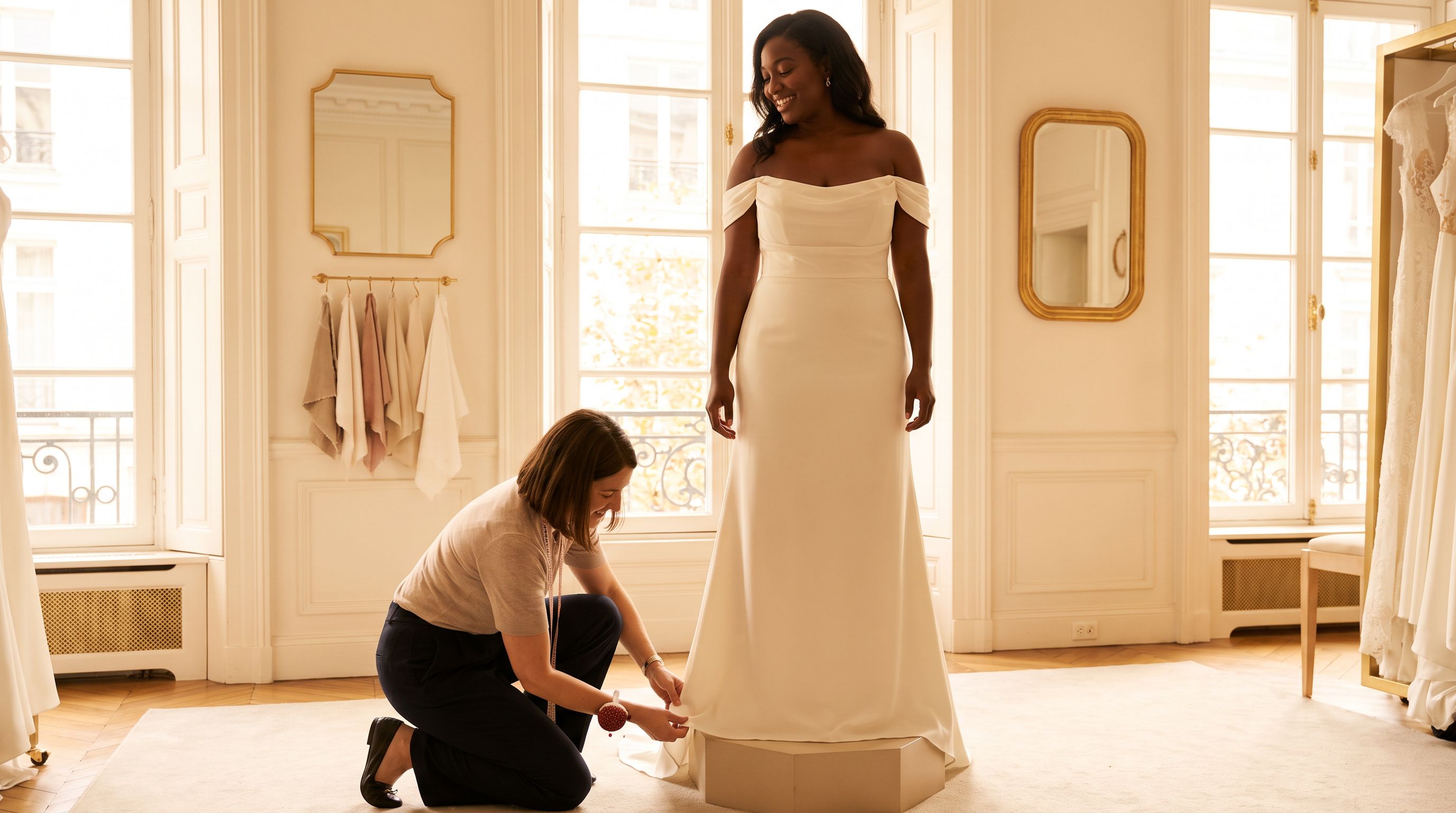
Why bridal sizing feels like it’s working against you
Most bridal salons stock samples in a narrow band of sizes — often somewhere around a bridal 8 to 12, which runs noticeably smaller than street sizing. Some shops carry an extended-size sample rack, and those shops are worth seeking out. But even then, you’re often asked to imagine a gown from a garment clipped shut behind you, or held closed with a modesty panel and a lot of optimism.
(A quick note before we go further: not everyone who wears a gown to their wedding identifies as a bride. If that’s you, this guide is written for you too — the fit principles below are about bodies and construction, not titles.)
That experience does something unfair: it quietly teaches you that your body is the variable that needs adjusting. It isn’t. Ready-to-wear bridal is graded from a single fit block — one set of proportions scaled up and down. Grading can add inches, but it can’t change the relationship between your bust, waist, hips, and torso length. Two people who wear the same dress size can need completely different bodices.
A gown that fits was never a reward for changing your body. It’s a construction problem — and construction problems have solutions.
The fit issues a made-to-measure gown actually solves
The same short list of complaints comes up again and again after alterations, and dressmakers commonly report hearing all of them. Each one is easier to build in from scratch than to correct later:
- A full bust with a smaller ribcage. Off-the-rack bodices are cut for one cup proportion. A custom bodice can be cup-sized, with the underbust seam sitting where your ribcage actually is, so the neckline lies flat instead of gaping or straining.
- Torso length. Long-waisted and short-waisted bodies both suffer here. A waist seam that lands an inch off makes an expensive gown look borrowed.
- Upper arms and sleeves. Illusion sleeves and off-shoulder bands are frequently cut tight through the bicep. A maker measures your arm and drafts a sleeve you can raise, hug, and dance in.
- Hip-to-waist difference. If your hips are much fuller than your waist, side seams on a graded gown pull and the skirt swings off-center. Custom seams follow your line.
- Internal support and weight. A heavy skirt needs somewhere to hang from. Built-in cups, a boned corselette, waist stay, or wider straps carry the weight so nothing digs, slides, or needs hoisting all night.
What “hard to fit” really means
The phrase is used loosely and it covers most of us. Tall bodies needing extra length through the bodice and hem. Petite frames under 5’2” swallowed by proportions designed for a 5’9” fit model. Broad shoulders and athletic builds. Small busts that want structure without padding. Apple shapes that want support at the underbust rather than compression at the waist. Post-mastectomy bodies needing a prosthesis pocket or an asymmetric build. Wheelchair users, for whom a gown should be cut to look beautiful seated, not standing. Pregnancy at any stage. “Standard” is a fit block, not a description of real people.
Coverage isn’t only a fit question, either. If you need a neckline and sleeve length that meet a religious or family standard, a maker can draft to a specific measurement — collarbone coverage, wrist-length sleeves, a fully lined bodice with no illusion mesh — instead of you hunting for a gown that happens to be modest enough. The same applies to a neckline cut to sit cleanly with a hijab, or a shoulder line and headpiece planned around a turban or dupatta. If your gown isn’t white — red, gold, green, black, or a colour that carries meaning in your family — an independent maker sources to your palette rather than apologizing for a limited swatch card. And if your celebration spans several outfits or several days, ask about a second look or a convertible build: a detachable overskirt, swappable sleeves, or a bodice that works with both a lehenga-style skirt and a reception column.
What a custom gown costs, and where the money goes
Prices vary enormously by market, maker experience, and how much handwork your design needs — a maker in a major metro will usually charge more than a small-town atelier, and overseas makers less again. Use these as illustrative ranges to adapt, not benchmarks:
The drivers are consistent: fabric (a fluid crepe or a structured mikado costs a fraction of silk satin or beaded French lace, and larger sizes genuinely need more yardage), handwork (beading, appliqué placement, covered buttons, and hand-finished hems are hours, not materials), structure (a fully boned, cup-built, lined bodice is more labor than a soft slip), number of fittings, and the maker’s experience. Worth verifying rather than assuming: some ready-to-wear designers apply a size surcharge above a certain size, and many publish that policy on their size chart — check it before you fall in love with a gown, because it can narrow the gap between off-the-rack and custom. Our fuller breakdown of what drives custom wedding dress pricing walks through how to estimate your own number.
If that range is above what you can spend, custom isn’t automatically off the table — it just gets simpler. Three routes worth pricing:
- A clean unlined slip plus a separate overlay. A crepe or satin column in a simple silhouette, made to your measurements, with a lace topper, detachable sleeves, or a tulle overskirt layered on. You give up heavy beading and built-in corsetry, so you’ll wear your own bra or shapewear underneath.
- Hire a maker for the bodice only. A cup-sized, structured bodice built for you, paired with a ready-made skirt. You give up perfectly matched fabric and colour between the halves — bring the skirt to the consultation so the maker can match as closely as possible.
- Buy a sample-sale or preloved gown and budget the difference into reconstruction. This works when the bones roughly suit you and you’re changing length, straps, or a back. It works badly with placed lace, and heavy rebuilding can quietly cost as much as starting fresh — get a written alterations quote before you buy.
If you’re genuinely torn, our honest side-by-side on choosing between custom and off-the-rack covers the trade-offs in more depth.
How the process unfolds, appointment by appointment
-
Consultation and design
You bring inspiration images and talk about comfort, coverage, movement, and budget. A good maker will tell you honestly what your budget buys in their hands, and where a fabric substitution gets you 90% of the look for less. -
Measurements
Expect 15–30 measurements, including underbust, upper arm, shoulder-to-waist front and back, and hip at your fullest point. Wear your actual undergarments. This appointment should feel unhurried and matter-of-fact. -
Toile or muslin fitting
A test garment in cheap fabric, fitted on your body and marked up. This is the single most valuable stage if sizing has failed you before — the shape gets corrected before a yard of silk is cut. -
Fabric fittings
Usually two to three, sometimes more for a heavily structured or beaded gown. You’ll see the bodice, then the skirt attached, then hem and finishing with your shoes on. -
Final fitting and handover
Hem, bustle, closures, and a movement test: sit, raise your arms, hug someone, walk stairs. Bring whoever will help you into it on the day.
Most makers ask for 6–9 months; three to four is often possible with a simpler design and a rush fee.
Fabric, lace scale, and the details that flatter
Two quiet things make an enormous difference on a fuller frame. First, motif scale — a tiny all-over lace grid can read busy and flatten, while a larger, well-placed appliqué gives the eye somewhere to travel and lets a maker position motifs deliberately over the bust and hip. Second, fabric hand — a structured crepe, mikado, or duchesse holds a clean line and skims; a thin, unlined stretch fabric will show every internal seam and hook. Neither is a rule, only a starting point. If you love a clingy silk slip, a properly built lining and support layer can make it entirely wearable.
Questions worth asking before you commit
Ask: Do you draft from my measurements, or adapt a graded pattern? Will I get a toile? How do you build bust support — cups, corselette, or a bra fitted into it? How many fittings are included, and what happens if I need more? Are fabric costs inside the quote or separate? How do you handle body changes between now and the wedding? What’s your payment schedule, and what’s in the contract about delays? Our full checklist on vetting a custom dressmaker goes deeper, and it applies whether you’re searching locally or working with someone online.
The goal of all of this is simple, and it’s worth holding onto through the appointments and the spreadsheets: a gown you don’t think about once you’re wearing it. When the fit is right, you stop managing the dress and start having the day. Book two consultations before you commit to one, and bring the same three inspiration photos to both — how differently each maker talks you through them will tell you more than either quote.
Ready to bring your dream dress to life?
Tell us what you're picturing — style, timeline, and budget — and we'll connect you with custom dressmakers who can make it. Free, no obligation.
Get matched with a dressmakerRelated guides
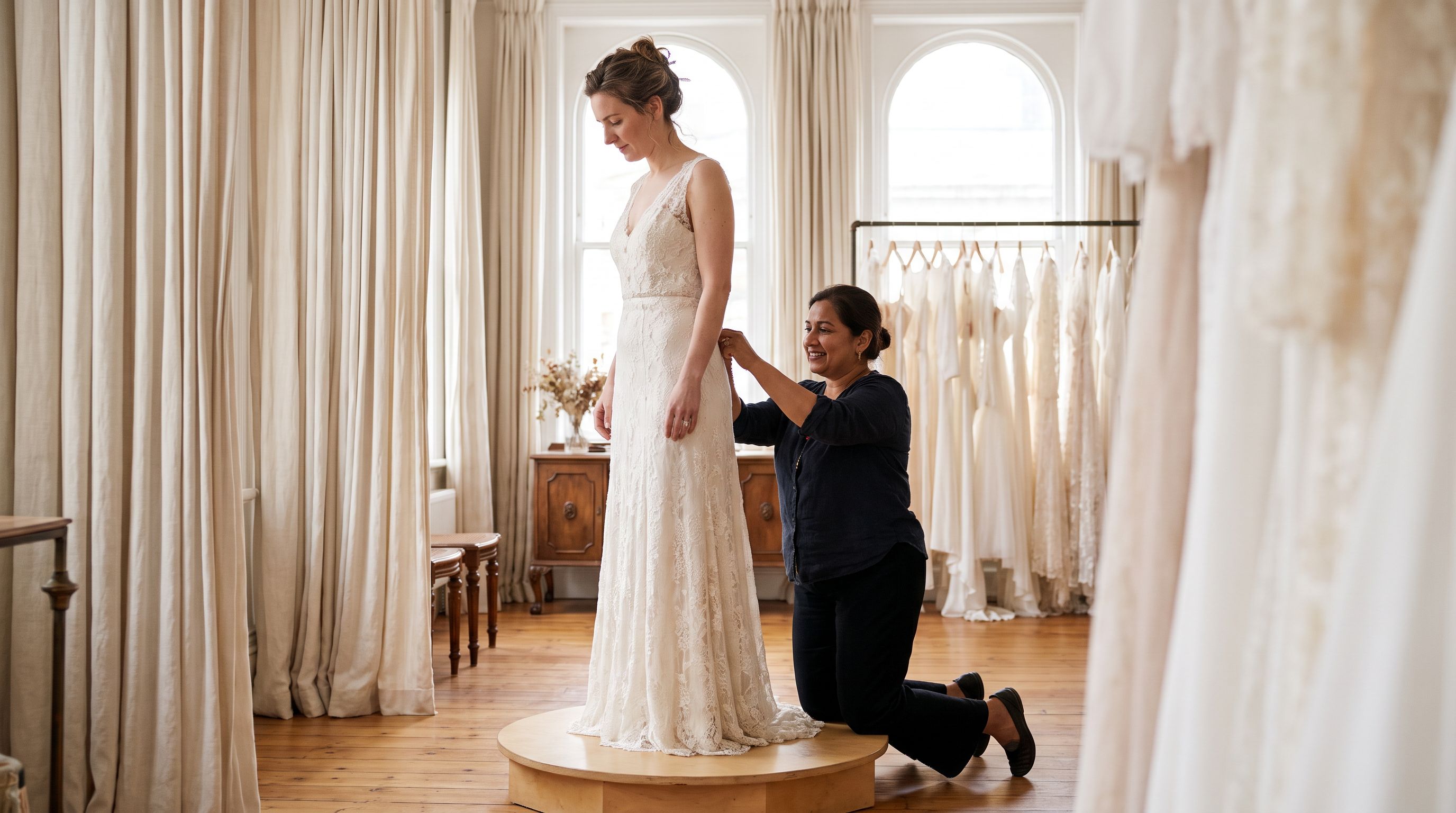
Off the Rack Wedding Dresses: What It Means and Costs
What "off the rack" really means in bridal, how off-the-rack wedding dress costs compare to custom and made-to-measure, and how to set a realistic budget.
Read guide →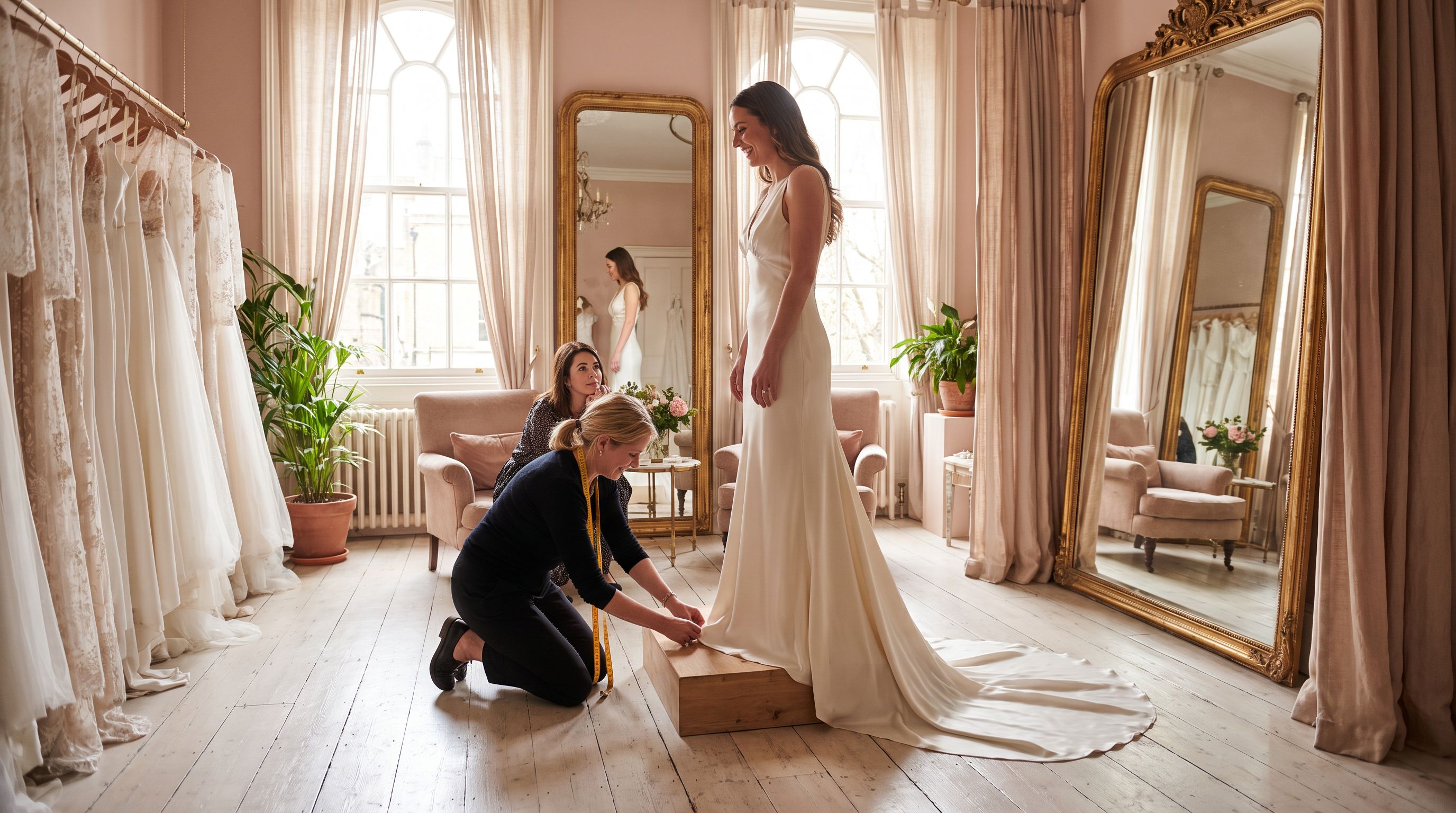
Chapel vs Cathedral Train: Length, Cost, and Bustles
Chapel vs cathedral train for a custom wedding dress: real length measurements, what extra train costs, bustle types and prices, and how to decide at your fitting.
Read guide →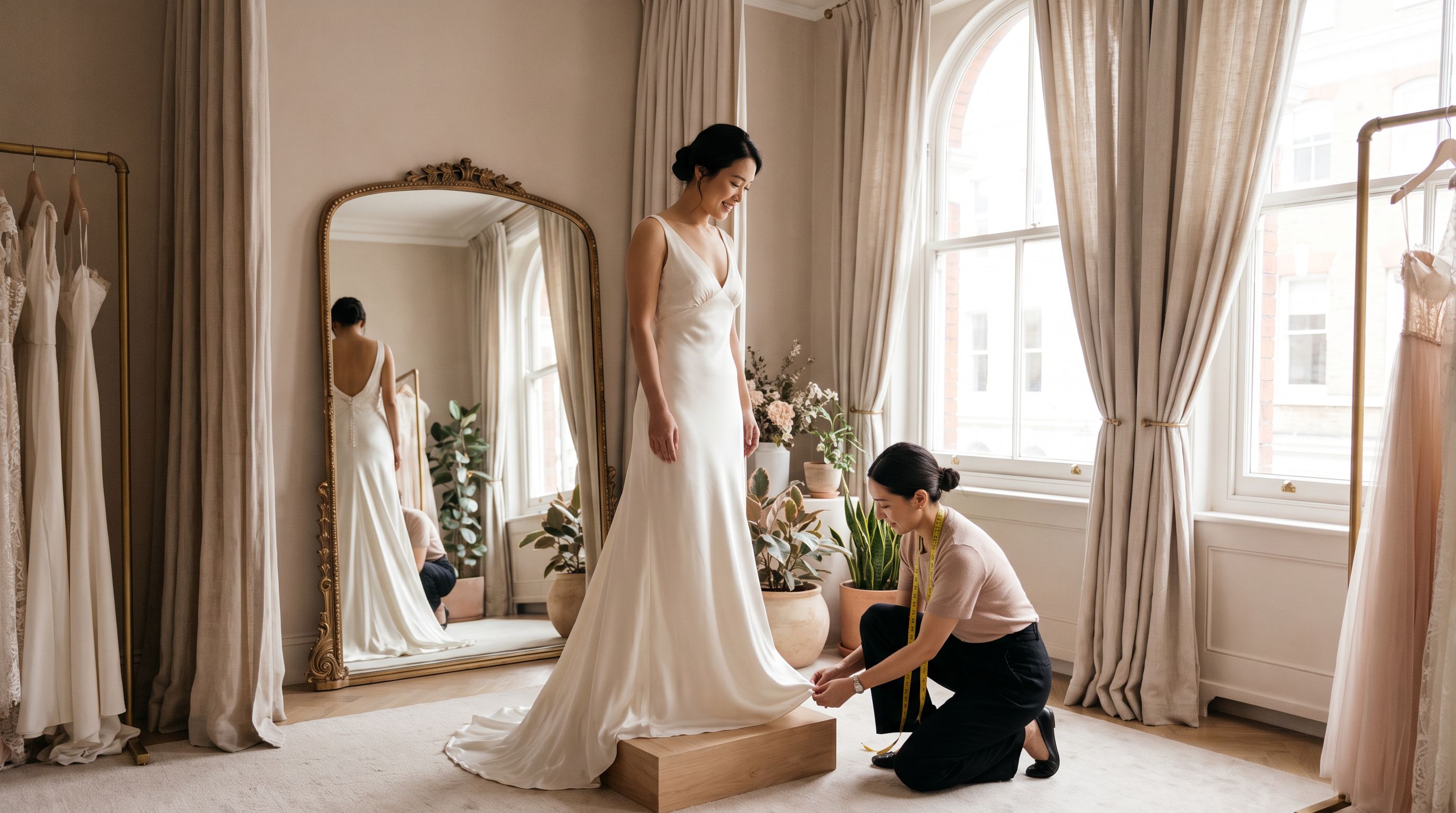
Bridal Sizing vs Street Size: Why Gowns Run Small
Bridal sizing vs street size explained: why wedding dresses run 2–3 sizes small, what off-the-rack really means, alteration costs, and when made-to-measure wins.
Read guide →