 Custom
 How to Vet a Custom Wedding Dress Maker Near You
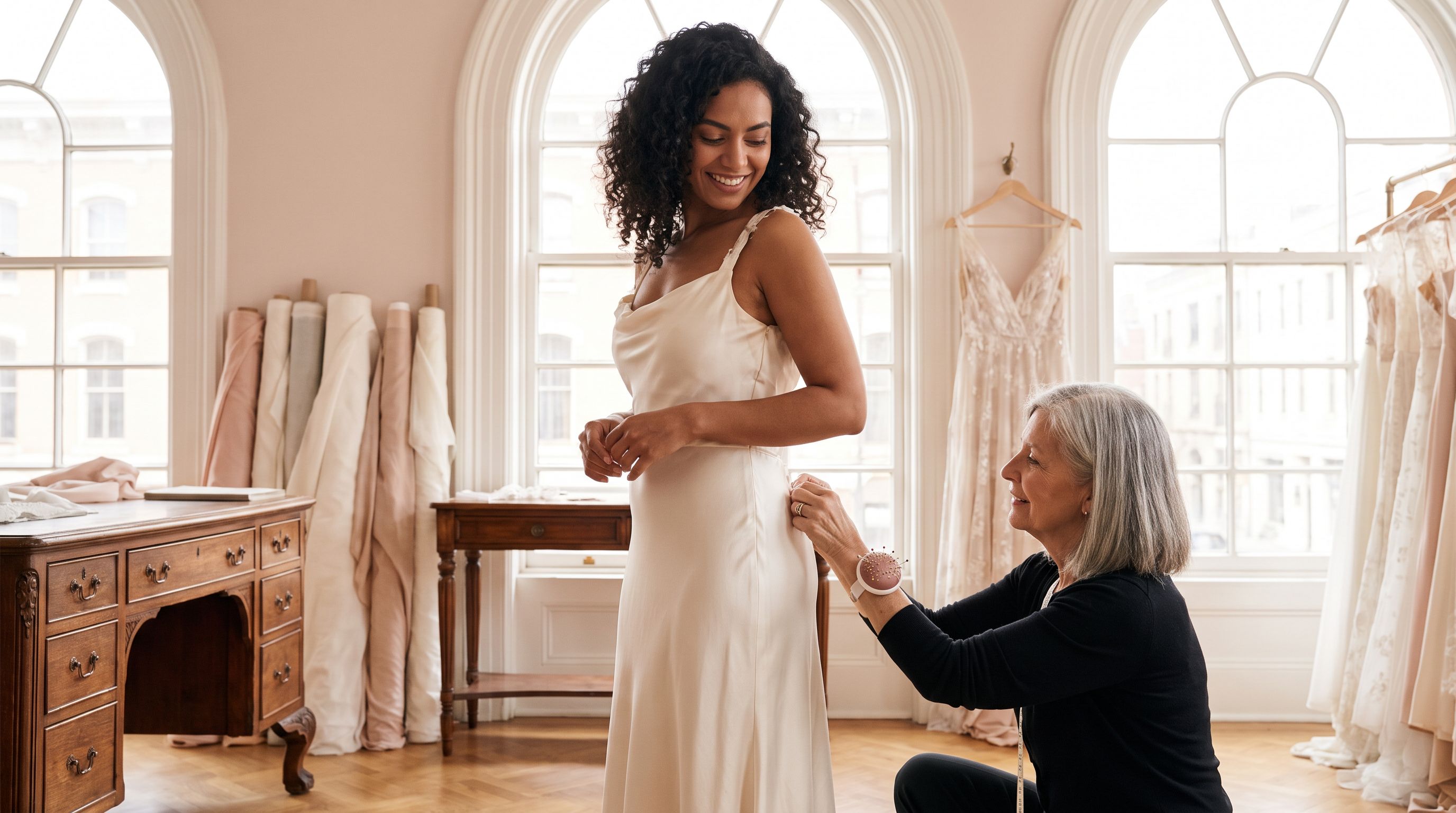
Why finding the right maker matters more than finding the perfect sketch
A custom gown is one of the very few things you’ll ever buy that doesn’t exist yet when you pay for it. You’re not buying a dress — you’re buying someone’s judgment, hands, and calendar. Which is why “who do I trust with this?” is the real question hiding underneath every search for a custom wedding dress maker near me.
There’s also a timing squeeze worth knowing about. Whenever a celebrity engagement or a viral red-carpet look sends a particular silhouette into the culture, independent ateliers are the first books to fill — because those are the makers who can actually interpret a look rather than reorder a style number. Add ordinary seasonal peaks (spring and early-summer weddings crowd the same winter workroom weeks) and the practical takeaway is simple: reach out earlier than feels necessary. A maker who is fully booked in March is not being difficult; they’re being honest about what one pair of hands can do.
The three things people mean by “custom”
Before you can compare quotes, know what you’re actually being quoted for. These are very different services at very different prices.
A third path is heavy alteration of an off-the-rack or secondhand gown, which a skilled seamstress can transform dramatically. If you’re still deciding between routes, our honest breakdown of custom versus off-the-rack walks through who each option genuinely suits.
What a fair quote looks like — and what drives it
These are starting points to adapt, not benchmarks, and all figures here are in US dollars — they’ll shift with your local market and currency. The honest drivers of your number are: fabric (a silk duchesse or French lace can cost more per yard than an entire polyester gown), hand-work (beading and appliqué are measured in hours, sometimes hundreds), internal structure (a boned corselette that lets you go strapless without a bra is skilled labor), your maker’s experience and city, and how many fittings your design needs. We break the math down further in our guide to what a custom wedding dress actually costs.
On deposits, here’s a guardrail you can act on: a request for more than 50% up front, or a deposit described as non-refundable with no milestone schedule attached to it, is worth a second opinion before you pay. Deposits should buy you a place in the calendar and a written plan of what happens when.
The questions that separate the pros from the hobbyists
Bring these to your first consultation. A good maker will be pleased you asked.
-
Can I see finished gowns you've made — on real clients?
Portfolio shots on dress forms tell you very little. Ask for photos of finished gowns on bodies, ideally including body types like yours. If you’re plus-size, tall, petite, small-busted, full-busted, or need modest coverage, ask directly: have you made this for someone shaped like me? -
Who do you enjoy making for?
A maker worth your money should be visibly comfortable working with grooms and suits, nonbinary and gender-nonconforming clients, second weddings, and commissions that aren’t a white dress at all. Listen for curiosity, not accommodation. -
Do you make a toile, and is it included?
A toile or muslin — a rough version in inexpensive fabric — is the mark of a serious maker. It’s where fit problems get solved before anyone cuts your silk. If a maker skips it entirely on a from-scratch gown, ask why. -
How many fittings, and when?
Expect roughly three to five for bespoke. Ask for approximate dates now, so you can see whether they fit your schedule and travel. -
What's your current lead time, and what's your latest safe start date?
Compare their answer against realistic industry timing — our custom gown timeline guide covers what’s genuinely achievable and where rush fees kick in. -
What happens if my body changes?
Weight fluctuation, pregnancy, medication, surgery — life happens. Ask how they build in adjustability (lace-up backs, generous seam allowances) and whether re-fitting is included or billed. -
Who owns the design, and can I see the fabric before you cut?
You should be able to touch and approve every material. Ask for swatches to take home and look at in daylight and in your venue’s lighting. -
What's in the contract?
Total price, payment schedule, deposit refundability, fitting count, delivery date, and what happens if either party can’t continue. Get it in writing before money moves.
The best makers ask you more questions than you ask them — about your venue, your ceremony, how you want to move, and what you never want to think about again once the dress is on.
Green flags, quietly noted
They measure you properly (fifteen-plus measurements, not three). They ask about your undergarments and shoes early, because both change the pattern. They talk you out of things sometimes — a fabric that will wrinkle in humidity, a beading plan that won’t survive a dance floor. They’re honest about what a photo can and can’t be recreated into; if you’re bringing inspiration images, our guide on working from an inspiration photo explains what a skilled maker will and won’t promise. And they have a workroom or studio you can visit, or, if remote, a clear video-fitting protocol.
The red flags worth walking away from
Vague timelines. No contract. Pressure to decide today. Refusal to show finished work on clients. A quote dramatically below every other quote you’ve received with no explanation — that usually means either a fabric substitution you haven’t been told about, or an unrealistic labor estimate that will surface later as a rush charge or a rushed garment. Also be wary of any maker who won’t discuss what happens if you’re unhappy at the second fitting.
Booking with confidence
Meet two or three makers before committing. Notice who listens. Notice who makes you feel like your body is a normal, workable, interesting shape rather than a problem to solve — because you’ll be standing half-dressed in front of this person several times, and that comfort matters as much as their stitching.
Whoever you meet first, come prepared: a few images, your date, a budget you’re willing to say out loud, and this list of questions. Ask upfront whether the consultation is free or carries a design fee, and if there’s a fee, whether it’s credited toward the gown should you go ahead. Then give yourself permission to sleep on it. The right maker will still be there tomorrow, and the conversation you have before you commit is the best predictor of the one you’ll have at your final fitting.
Ready to bring your dream dress to life?
Tell us what you're picturing — style, timeline, and budget — and we'll connect you with custom dressmakers who can make it. Free, no obligation.
Get matched with a dressmakerRelated guides
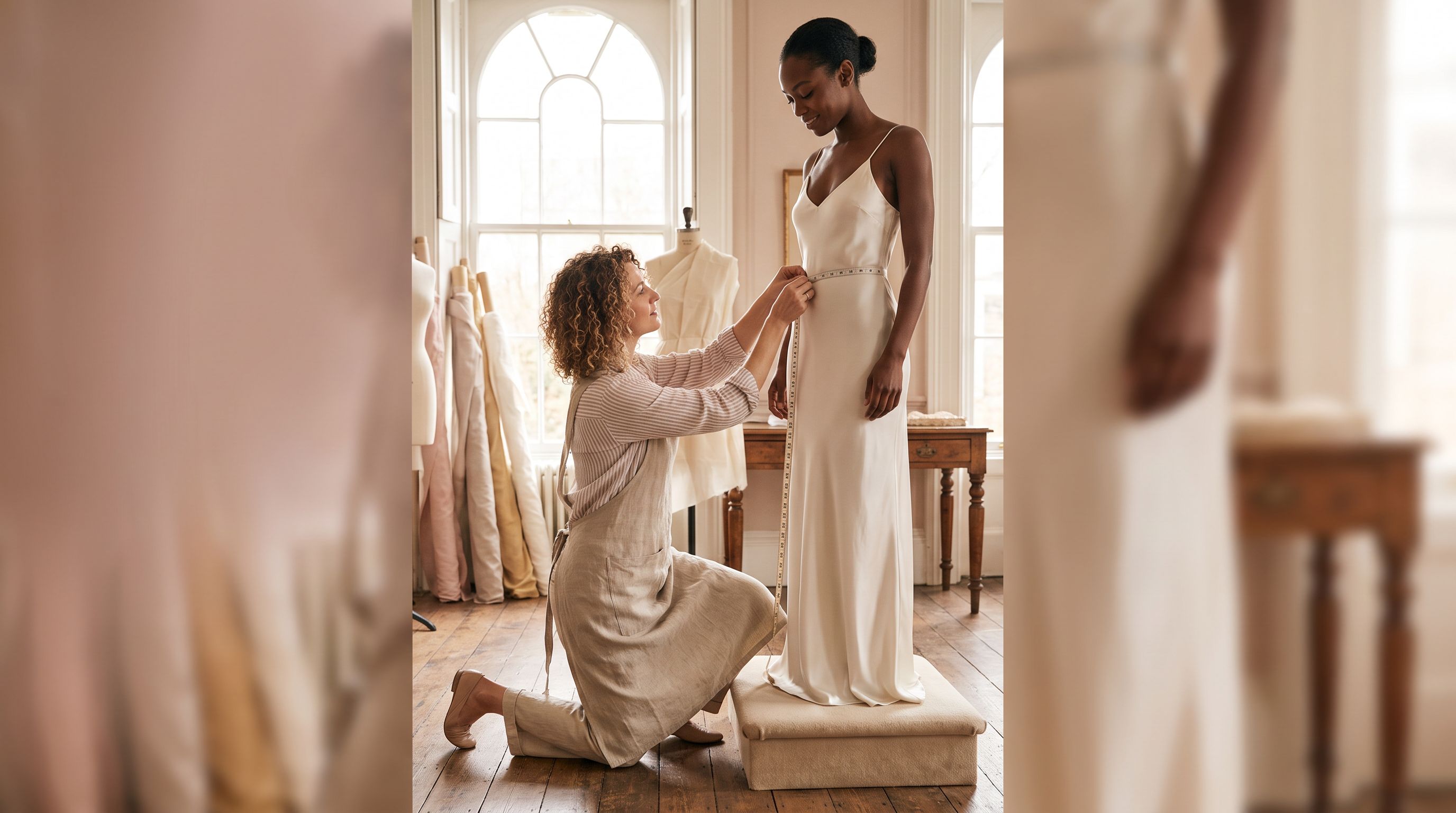
How to Measure Yourself for a Custom Wedding Dress
A step-by-step guide to taking wedding dress measurements at home: the exact list, tools, common mistakes, and how makers use them for a custom gown.
Read guide →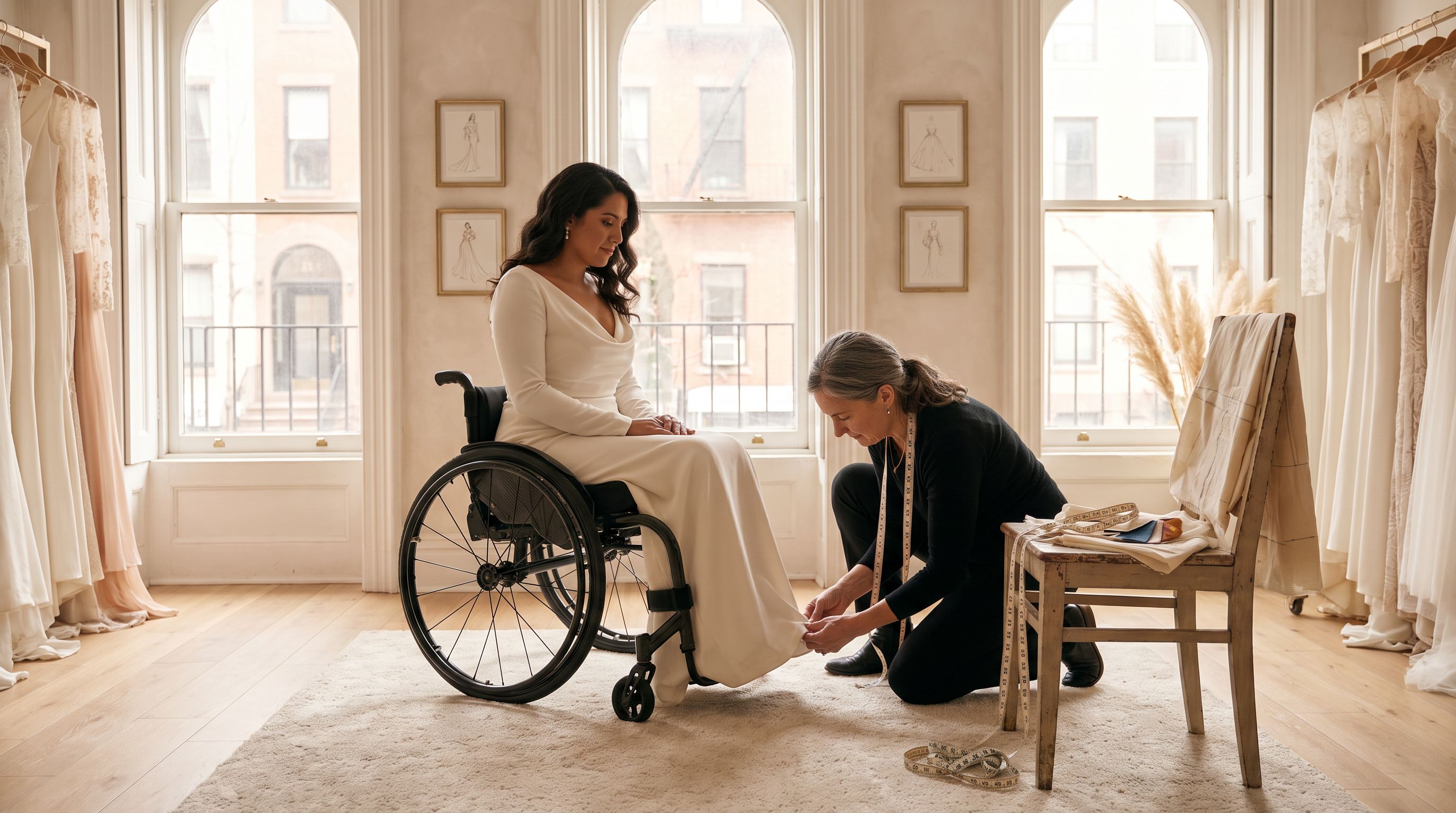
Adaptive Custom Wedding Dresses: Seated Fit and Access
How an adaptive custom wedding dress is drafted for a seated fit, easy closures, and real mobility needs — plus realistic cost ranges, fittings, and what to ask a dressmaker.
Read guide →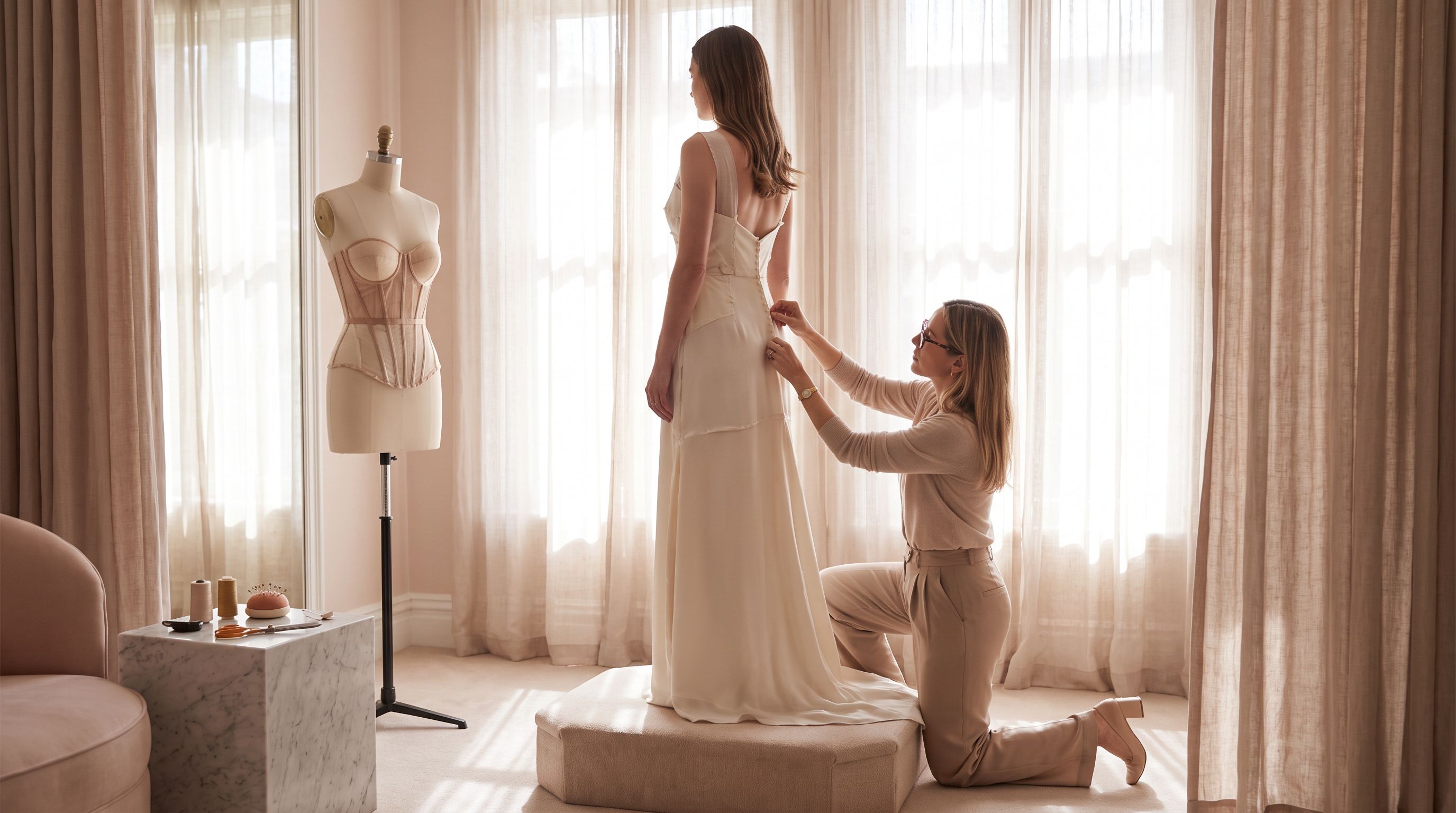
Corset vs Built-In Bra: Wedding Dress Support Explained
Corset, boning, or built-in bra cups? A clear guide to wedding dress support: what each does, what it costs in a custom gown, and how to choose for your bust.
Read guide →