 Custom
 Custom vs Off-the-Rack Wedding Dress Cost: The Real Math
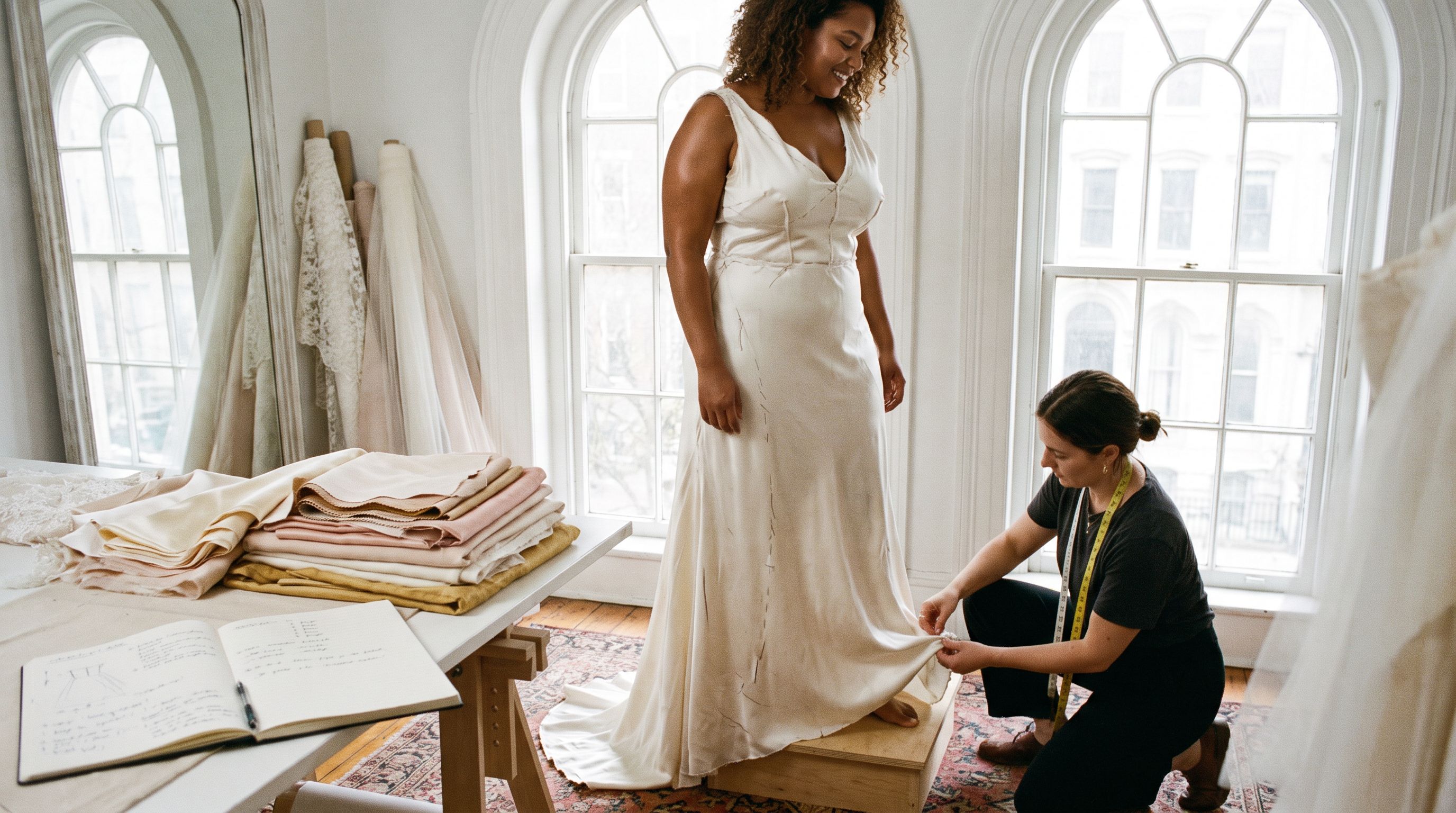
What “off the rack” actually means in bridal
This phrase gets used two different ways, which is exactly why online threads about cost contradict each other.
True off-the-rack means the gown in the store is the gown you take home that day — in-stock gowns, sample sales, and outlet racks at chain retailers. You buy the physical dress, in whatever size it exists in, and then pay a tailor to make it yours.
Made-to-order (often miscalled “custom”) is the more common boutique model: you try a sample, then the designer cuts a new gown in the closest standard size, usually over 5–8 months. It isn’t custom — it’s your body rounded to the nearest size chart — and it still needs alterations.
Made-to-measure, or true custom, means a gown drafted to your measurements, usually with a muslin (toile) fitting before the real fabric is cut. Nothing is being “taken in,” because nothing was cut for someone else.
Holding those three apart is the whole cost conversation. When one person online says custom was cheaper and another says it was double, they’re usually comparing different things.
Realistic price ranges — and why yours will be different
Treat those as scaffolding, not a benchmark. What genuinely moves the number:
- Fabric. Polyester crepe and silk duchesse satin can differ severalfold per yard — and a full gown may use 5–12 yards, plus lining and interfacing.
- Hand-beading and lace. Hand-applied appliqué and beadwork are billed in hours. This is the single biggest swing factor in custom pricing.
- Structure. A boned internal corselet, cups, and a horsehair-hemmed skirt cost more in labor than a soft slip dress — and they’re what hold you up all night.
- The maker’s experience and city. A studio in Manhattan carries different overhead than one in a smaller town, and quotes follow rent.
- Fittings included. Ask how many are in the quote, and what a seventh fitting costs.
We break these drivers down further in our guide to what a custom wedding dress actually costs.
Is it cheaper to buy a gown and tailor it?
Sometimes — and sometimes dramatically not. The honest test is how much of the dress has to change.
A useful rule: once quoted alterations exceed roughly a third of the dress price, get a custom quote before you say yes. Adding sleeves to a strapless gown, changing a neckline, or altering a heavily beaded lace bodice means unpicking and re-laying beadwork by hand — expensive, slow, and never quite invisible.
Building both totals: the line items people forget
Here’s the arithmetic that gets skipped. Build both columns before deciding.
Off-the-rack, worked through. Say you find a $900 sample-sale gown that needs real work:
- Gown: $900
- Strap change (converting spaghetti straps to a wider set): ~$180
- Full hem with lace re-application: ~$350
- Two-size take-in through bodice and waist: ~$250
- Cups sewn in plus final press: ~$70–$150
That’s roughly $780–$860 in alterations — the upper end of the $200–$900 range above — for an all-in total near $1,700–$1,800, and closer to $1,900 once a rush fee lands. Add steaming, a bustle, and travel to multiple shops if those aren’t bundled.
Custom, worked through: quoted gown price + any fabric upgrade you fall for mid-process + design changes requested after the muslin + final press. There are usually fewer surprise line items, because fittings and finishing sit inside the quote — but confirm that in writing.
The cheapest gown is the one that needs the least done to it — whoever made it.
Where custom quietly wins on value: petite and tall frames (torso length is not fixable cheaply), sizes above or below the standard bridal chart, anyone who needs sleeves and coverage for modesty or faith reasons, anyone with a significant bust-to-waist difference, grooms and non-binary clients whose silhouette isn’t stocked anywhere, and anyone whose inspiration photo simply isn’t in stores this season. For a fuller decision framework, see our guide on choosing between custom and off-the-rack.
What’s a realistic wedding dress budget?
There’s no correct number — only one that fits your whole wedding. A few grounded ways to set it:
-
Name a ceiling, out loud, before you shop
Include alterations, accessories, and cleaning in that ceiling. Most budget pain comes from quoting the gown alone. -
Split it roughly 70/30
If your ceiling is $2,500, shop gowns around $1,700–$1,800 off the rack and leave the rest for fitting work. With custom, ask what share of the quote is fixed versus variable. -
Get one custom quote as a benchmark
Even if you expect to buy off the rack. A dressmaker pricing your actual design tells you instantly whether a boutique number is fair. -
Check the calendar honestly
Under 12 weeks, rush fees narrow the gap and off-the-rack usually wins on logistics. See our realistic custom gown timeline. -
Decide what you're actually buying
Some people want a beautiful dress. Some want a garment made for their body, with three fittings and someone who knows their name. Both are legitimate — price them separately.
If your ceiling is under $1,500, you still have real options. Preloved and resale platforms regularly carry once-worn designer gowns at 40–70% off retail, and end-of-season sample sales clear floor stock as boutiques make room for new collections. Rental works well if you want a dramatic silhouette for one day and don’t need to keep it — though rentals allow only minimal, reversible alterations. On a $300–$600 gown, budget $150–$400 for fitting work and keep the scope to hem, side seams, straps, a bustle, and cups. Skip anything requiring a re-cut bodice or beadwork removal; on a low-cost dress, that work can cost more than the gown.
If you’re leaning custom, a first consultation is how you replace guesswork with a real number. Expect it to run 45–90 minutes and to include a full set of measurements, a conversation about silhouette and coverage, fabric swatches you can handle in daylight, a realistic production timeline, and an itemized written quote separating fabric, labor, and fittings. Some studios charge a modest design or consultation fee, often credited toward your gown if you proceed — that’s normal and worth asking about upfront. The warning sign is a maker who quotes only verbally, won’t itemize, or can’t tell you what a change after the muslin stage will cost. Anyone confident in their pricing will put it in writing.
Ready to bring your dream dress to life?
Tell us what you're picturing — style, timeline, and budget — and we'll connect you with custom dressmakers who can make it. Free, no obligation.
Get matched with a dressmakerRelated guides
Wedding Dress Budget: The Hidden Costs Beyond the Gown
A realistic wedding dress budget includes more than the gown. Here's what alterations, undergarments, veils, rush fees and cleaning really cost — custom or off-the-rack.
Read guide →
Beaded Wedding Dress Cost: Hand-Beading vs Appliqué
What beading really adds to a custom wedding dress cost — hand-beading vs beaded lace appliqué vs pre-beaded fabric, with realistic price ranges and cost drivers.
Read guide →
Silk vs Polyester Wedding Dress: Is Silk Worth the Cost?
Silk vs polyester wedding dress fabric, honestly compared: real price ranges per yard, how much fabric a gown needs, drape, sweat marks, and when to splurge.
Read guide →