 Custom
Buying Your Own Fabric for a Custom Wedding Dress
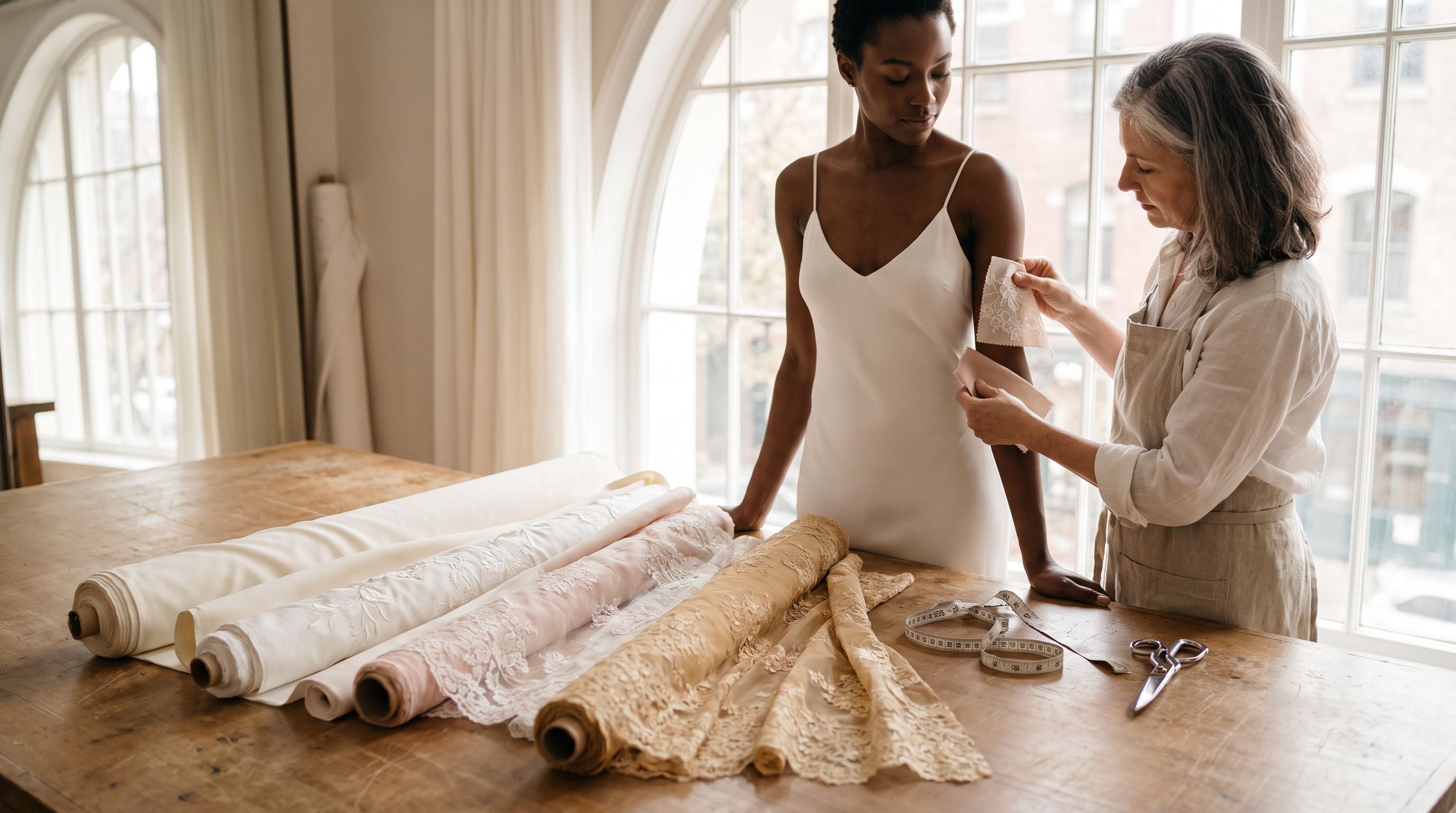
It is one of the most practical questions we hear, and almost nobody answers it honestly: can I just buy the fabric myself and bring it to a dressmaker? Usually you can. Whether you should depends on what you’re buying, how much you actually need, and how comfortable you are being the person responsible if something goes wrong at the cutting table.
One note on language before we start: brides ask this most often, but grooms in gowns, non-binary partners, either half of a two-gown couple, and people commissioning for a vow renewal or cultural ceremony all land on the same question. Everything below applies to whoever’s wearing the gown.
What you’re really paying for in a custom gown
When you look at a quote for a made-to-measure gown, materials are rarely the headline number. The bulk of the price is skilled hours: pattern drafting to your measurements, a muslin or toile, fittings, internal structure, hand-finishing, and the experience to know which seam to let out and which to re-cut.
Fabric matters — a silk-and-French-lace build will always cost more than a crepe one — but on most gowns materials represent a minority of the total. That’s why “I’ll bring my own fabric” rarely cuts a quote in half. It trims one line item, and often adds another in the form of a handling or cutting fee. If you want the full picture of how quotes are built, our breakdown of what a custom wedding dress actually costs walks through every component.
How much fabric a wedding gown really takes
This is where DIY fabric shopping goes sideways. Bridal yardage is not intuitive, especially once you add a train, lining, underlining, and a skirt with any volume.
A few things that quietly multiply the number: fabric width (45” lace eats far more yardage than 60” satin), one-way nap on velvet or satin, lace with a large repeat that must be matched across seams, a bias-cut skirt that needs panels laid diagonally, and anything over size 16 or over 5’9”, which legitimately needs more cloth. Then add lining (often nearly as much as the face fabric), underlining for structure, and tulle — a layered tulle skirt can swallow 30 yards without blinking.
What bridal fabric costs per yard
Prices vary enormously by supplier, country, and whether you’re buying retail or trade, so treat these as orientation rather than gospel. Retail polyester satin, crepe, or microfiber often sits in the $8–$30 per yard range. Silk crepe, charmeuse, or georgette commonly lands around $35–$90. Silk mikado, duchesse satin, and heavier structured silks frequently run $60–$150+. Lace spans the widest gap of anything in bridal: simple corded lace can be $20–$50 a yard, while beaded or hand-finished French laces regularly reach several hundred dollars per yard. Our guide to Chantilly, Alençon, and guipure lace explains why those numbers diverge so sharply.
Multiply any of those by realistic yardage and you can see how a “cheap” fabric plan stops being cheap the moment you choose a full skirt.
Does supplying your own fabric actually save money?
Sometimes — but less than the sticker difference suggests. Most established makers buy at trade or wholesale pricing you can’t access as a consumer, so the “markup” you’re trying to avoid is often the gap between their cost and ordinary retail, not pure profit. They’re also charging for sourcing time, swatching, shipping, and the risk of a flawed bolt.
When you supply the cloth, many workrooms add a handling or cutting fee. That charge varies widely — some makers quote a flat fee in the low hundreds, others add roughly 10–20% to the labour line, and a few waive it entirely for sentimental fabric. Because the spread is so wide, ask for the exact figure in writing before you order anything. Many workrooms will also decline to guarantee fabric they didn’t source: if your satin water-spots, your lace shreds under the needle, or you’re a yard short, replacing it is your problem and your cost.
A dressmaker’s fabric markup isn’t a tax on your budget — it’s the insurance policy that lets them re-cut a panel on a Tuesday without a difficult conversation.
When bringing your own fabric is genuinely the right call
There are situations where no amount of trade pricing beats what’s already in your hands: your grandmother’s lace, a family sari or ao dai fabric, hand-woven cloth from your home country, a mill-end silk you found on a trip, or a specific deadstock piece that matters to you for environmental reasons. In those cases the fabric is the point — and a good maker will treat it with care, test-stitch a scrap, and tell you honestly what it can and can’t support. If you’re working with sentimental material, our guide to restyling an heirloom gown covers the same conversations about fragility and limits.
How to do it without a disaster
-
Choose your maker and design first
Finalize the silhouette, neckline, train length, and sleeve plan before you shop. The pattern determines the yardage, not the other way around. -
Ask for a written materials list
Request exact yardage and width for face fabric, lining, underlining, interfacing, tulle, and any trim — plus the overage your maker wants. Get it in writing. -
Order swatches before yardage
See the cloth in daylight against your skin, drape it over your hand, crush it in your fist. Photos lie about color and weight. -
Buy one dye lot, early, with margin
Order everything at once, from a single lot, with the full overage specified. Aim to place that order at least six to eight weeks before your toile fitting — international shipping, customs holds, and backordered dye lots routinely add weeks, and fabric that arrives late pushes every fitting after it. Keep receipts and the bolt tag. -
Pre-treat if advised
Some fabrics need pre-shrinking or steaming; silk and anything blended should be tested on a scrap first. Ask your maker rather than guessing. -
Deliver early, with leftovers
Hand everything over before the toile stage, including scraps. Remnants become covered buttons, a bustle loop, or an emergency repair patch.
What to ask before you buy a single yard
A short, direct conversation protects everyone. Ask: Do you work with client-supplied fabric, and what exactly is the handling fee? What yardage and width do you need, including overage? What happens if we run short mid-build — who covers it? Will you test-stitch my fabric before cutting? Does using my fabric change your guarantee or your quote?
The answers tell you a great deal about how a maker runs their workroom. Someone who gives you precise numbers, explains the risk plainly, and offers to swatch-test is someone who has done this before. Our checklist on how to vet a custom dressmaker covers the rest of the questions worth asking at that first meeting.
If you do book that conversation, bring four things: two or three images of the silhouette you’re drawn to, any swatches or photos of fabric you already own (including heirloom pieces), the budget ceiling you don’t want to cross, and your wedding date plus any travel or shipping deadlines. With those in hand, a maker can give you honest yardage, a fabric plan, and a fitting schedule in one sitting — instead of three rounds of email.
Related reading: silk versus polyester for a wedding dress, for when the upgrade is worth paying for.
Ready to bring your dream dress to life?
Tell us what you're picturing — style, timeline, and budget — and we'll connect you with custom dressmakers who can make it. Free, no obligation.
Get matched with a dressmakerRelated guides
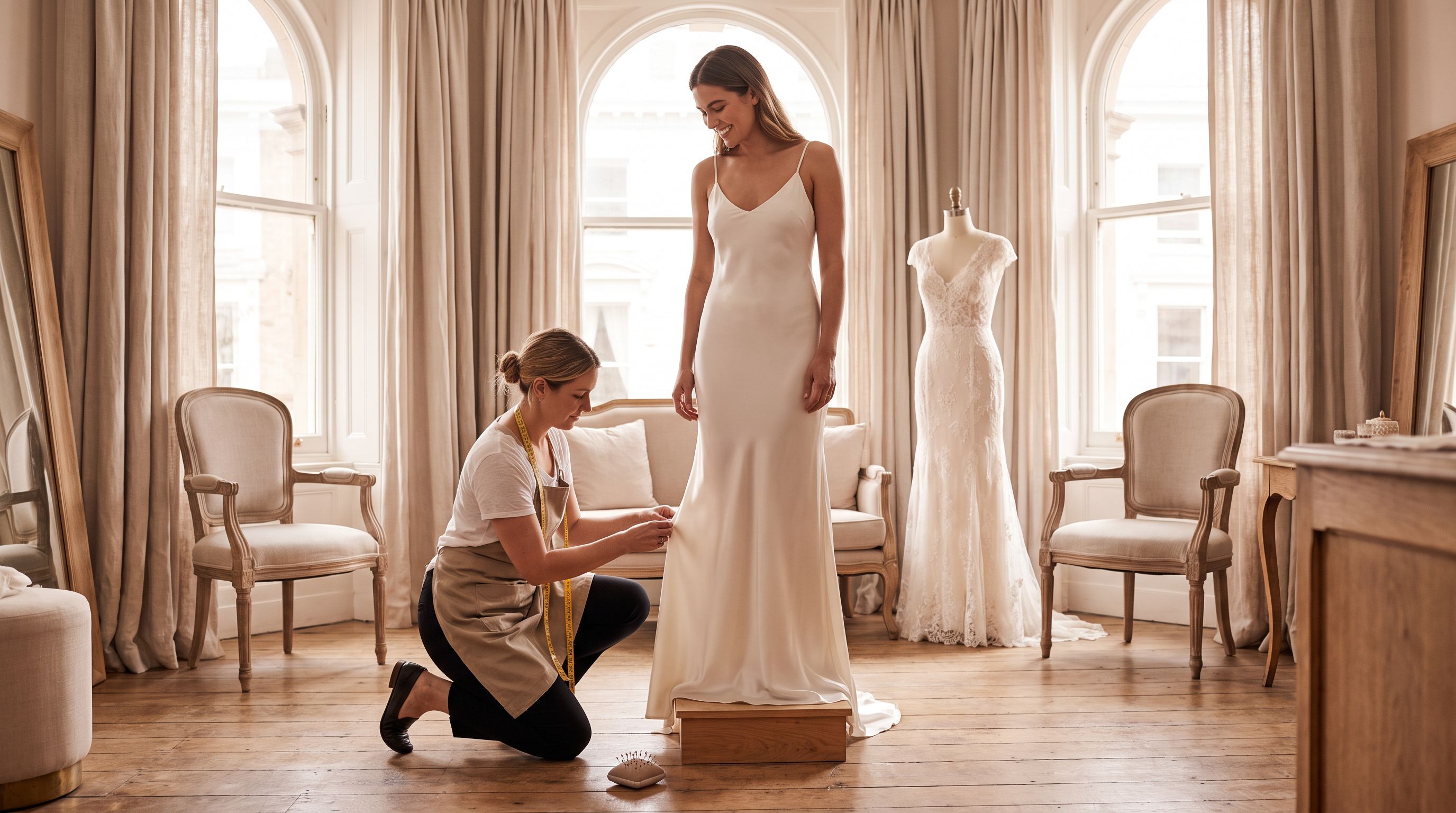
What Wedding Dress Alterations Cost, Line by Line
A realistic wedding dress alterations cost breakdown — hems, bustles, taking in, adding sleeves — plus the point where custom becomes the smarter buy.
Read guide →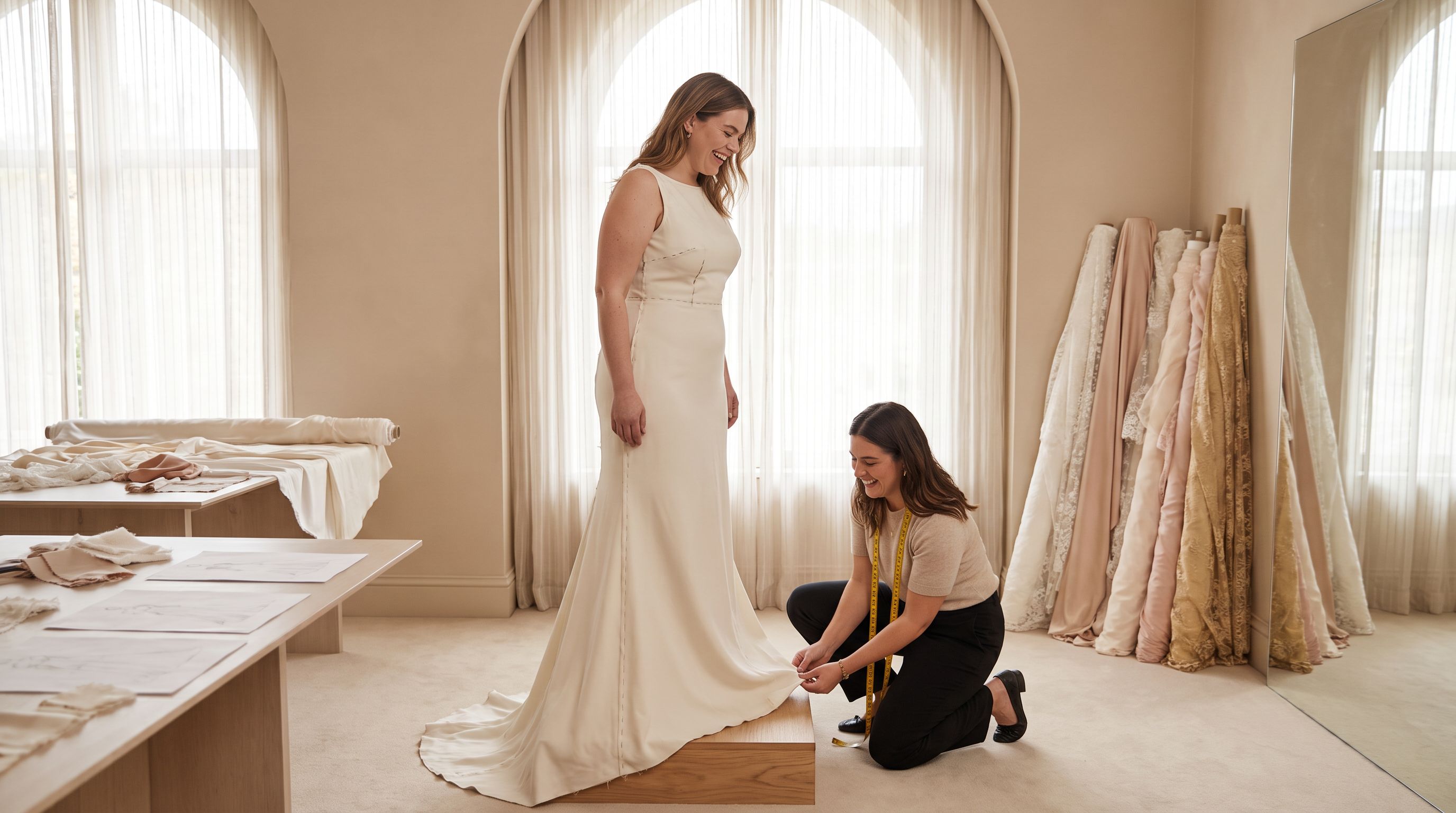
Affordable Custom Wedding Dress: How to Cut the Cost
An honest guide to getting an affordable custom-made wedding dress: where the money really goes, 9 ways to lower the price, and what you should never cut.
Read guide →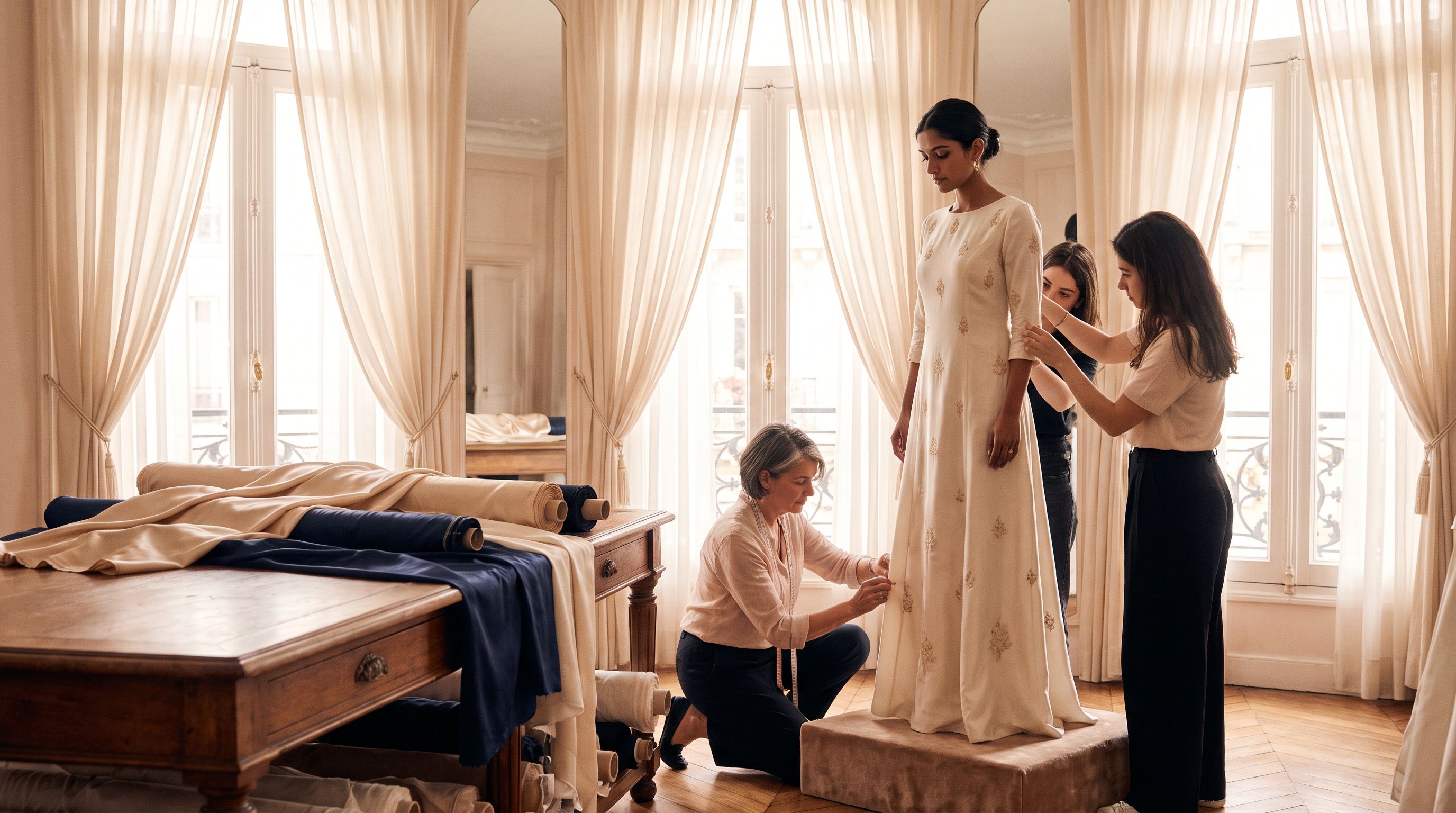
Custom Mother-of-the-Bride Dress: Cost, Fit, Timeline
What a custom mother-of-the-bride dress really costs, how it compares to off-the-rack plus alterations, and the fittings and timeline to expect.
Read guide →