 Custom
 Silk vs Polyester Wedding Dress: Is Silk Worth the Cost?
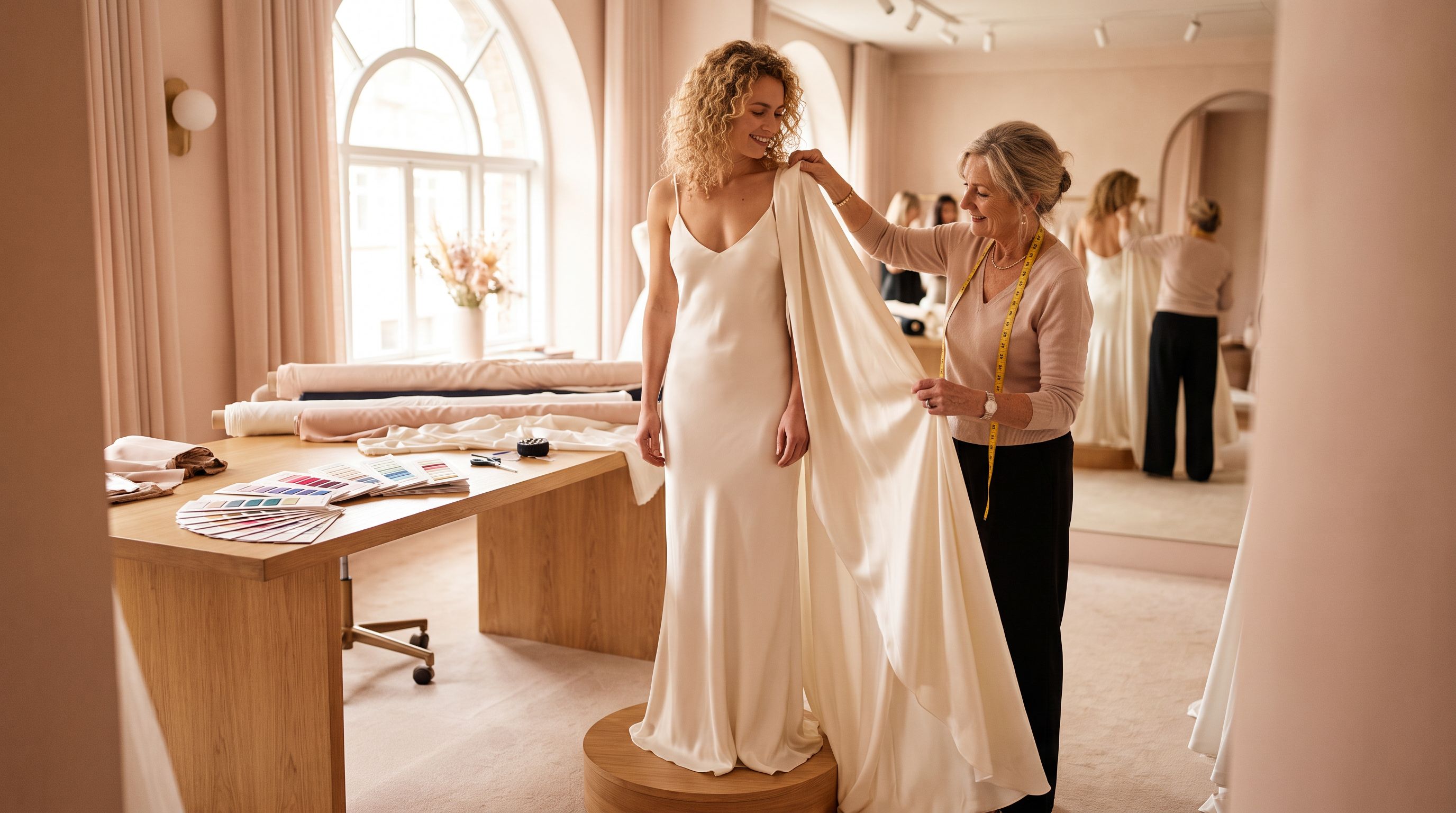
When you sit down with a dressmaker and they fan out swatches, one of the first real budget decisions arrives fast: silk or synthetic. It’s rarely explained well. Salespeople say “this one’s silk” as if that settles it, and you nod along without knowing whether you’re paying for something you’ll actually notice on the day.
So let’s take the mystery out of it.
What “silk” and “polyester” actually mean on a swatch card
Silk is a natural protein fiber. It breathes, and it has weight that falls rather than springs. Within silk there are dozens of weaves — charmeuse (that liquid satin shine), crepe de chine, georgette, dupioni, silk mikado, silk organza, silk tulle — and they behave completely differently from each other.
Polyester (and its cousins: nylon, rayon/viscose blends, acetate) is a manufactured fiber. Modern bridal polyester is far better than its reputation. A good poly crepe or poly mikado can look genuinely lovely, holds a pressed edge crisply, resists wrinkling in a car, and doesn’t water-spot.
None of this is white-gown-only territory. Silk dupioni and habotai in red, gold, and jewel tones are mainstays of Chinese, South Asian, and Nigerian wedding dressing, and heavily saturated dyes behave differently again — deep colors can show water marks and perspiration more visibly than pale ones, and if your day involves two or three outfit changes, durability and quick pressing may matter more than fiber prestige.
The honest summary: fiber content is only half the story. A high-quality polyester satin usually looks better than a cheap, papery silk — and a heavy stretch-poly “satin” from a discount roll will never look like silk charmeuse, no matter the lighting.
The price difference, in ranges you can actually use
Fabric is sold by the yard, and yardage prices swing wildly by weight, width, mill, and where you’re shopping. These are general ranges to orient you, not quotes — your maker’s suppliers, your country, and current silk markets all move the numbers.
Run the math on your own dress and the picture gets clearer. A bias-cut silk slip gown might use six or seven yards, so upgrading from poly charmeuse to silk charmeuse could land in the low hundreds. A full ballgown skirt with a chapel train and multiple layers might use twenty-plus yards, and there the same upgrade climbs into four figures fast. Size changes that math too: larger sizes need more yardage, and fabric width matters — a 55-inch silk may require fewer seams and less total cloth than a narrow 45-inch roll, while a narrow width can force extra panels. Ask your maker to price your yardage, not a generic one.
Silk tulle is the outlier worth flagging. It is extraordinary — cloud-soft, almost weightless, it falls instead of poufing — and it is expensive, both per yard and because voluminous skirts eat yardage. If you love a romantic tulle skirt, the differences between tulle, organza, and chiffon are worth understanding first.
Where each one genuinely earns its place
Drape. Silk hangs with weight. On a bias-cut slip, a column, or a soft cowl back, nothing else moves the same way.
Breathability. Real comfort in heat, and less trapped moisture over a long day.
Color depth. Silk’s irregular fiber surface scatters light, so color reads with depth rather than flat — while some polyester satins flare hot white under flash.
Hand-feel. It’s the thing you notice when you put it on and can’t quite explain.
Structure. Poly mikado and heavier synthetics hold a sculptural A-line or a crisp bow without extra interfacing.
Resilience. Wrinkles fall out, water doesn’t spot, sweat rings are far less likely, and a spilled drink is more survivable.
Travel. Packs and recovers — a real advantage for a destination wedding or elopement.
Budget. Frees money for beading, a hand-finished lining, or extra fittings.
Fabric behaves differently on different bodies, and that’s worth saying plainly. Bias-cut silk charmeuse clings and reveals everything underneath — seam lines, boning channels, the edge of shapewear — which some people love and others find unforgiving. Heavier silk crepe, mikado, or a well-lined poly crepe skims the midsection more generously while still draping. And fuller busts almost always need a structured underlayer — built-in cups, boning, or a corselet — regardless of whether the outer fabric is silk or synthetic.
The sweat, rain, and humidity conversation nobody has early enough
Most makers flag this only after the fabric is chosen. Untreated silk charmeuse and silk crepe can show water marks — a raindrop, a damp palm print at the waist where someone hugs you, perspiration under the arms and along the back. The marks often dry out, but not always evenly, and not always before photos.
If you’re marrying outdoors in July, dancing hard, or somewhere humid, that matters more than fiber snobbery. Options: choose a matte silk crepe or a textured silk over a high-shine charmeuse; line strategically; add dress shields; or choose a good polyester crepe for the body and put silk somewhere it will shine safely — an organza overlay, silk-covered buttons, a silk lining against your skin.
Aftercare belongs in this conversation too, because it’s a real cost. Silk generally needs specialist dry cleaning and more careful preservation, and boxed heirloom preservation typically runs from a couple hundred to several hundred dollars depending on the gown and your area; a straightforward clean on a polyester gown is usually cheaper and lower-risk. Prices vary widely, so call a cleaner who handles bridalwear before the wedding, not after — and ask specifically whether they’ve cleaned your fabric before.
Fiber content is a means to an end. The question isn’t “is this silk?” — it’s “does this fabric do what I need it to do on my actual wedding day?”
How to test fabric properly at your consultation
Swatches feel abstract until you handle them deliberately. Do these five things with every option, ideally side by side.
-
Drape it over your hand
Let it fall from your fist. Does it pool and ripple, or stand away in stiff folds? That’s the difference between a fluid column and a structured silhouette — and it will not change once it’s a dress. -
Scrunch and release
Crush a corner in your palm for ten seconds. Fabrics that stay creased will crease on you, in the car, and during the ceremony sit-down. -
Hold it to the window, then photograph it with flash
Daylight and flash read sheen completely differently. Some polyester satins that look soft in a showroom flare bright white in flash photos. Shoot a quick phone picture of every contender. -
Check the color against your skin in natural light
Bring the swatch to a window and hold it under your chin. This is also when to compare undertones — ivory, champagne, or blush behaves differently in silk than in synthetics. -
Ask for a damp test on a spare corner
A reputable maker will happily dab water on a scrap so you can see whether it spots and how it dries.
The hybrid approach most experienced makers recommend
Almost no custom gown is one fabric. A typical build has an outer fabric, an underlining, a lining, sometimes structural layers, boning channels, and horsehair braid in the hem. You don’t need silk in all of them.
A smart allocation: silk where it touches your skin (a crepe de chine lining feels wonderful and helps the outer layer glide), silk where the eye lands (bodice, sleeves, the front of the skirt), and synthetics in the invisible structural work. Nobody photographs your underlining. Our breakdown of what different budget levels actually buy shows where fabric sits against labor and embellishment, and if you’re still deciding between crisp and fluid, the comparison of crepe, satin, and mikado is the natural next step.
A good dressmaker will answer all of that without hesitation, will tell you when silk isn’t the right call for your venue or your budget, and will show you a hybrid plan rather than pushing the most expensive roll on the shelf. That willingness to talk you out of something is one of the clearest signs you’re in capable hands — and it’s exactly the kind of conversation worth having in person, with swatches in your lap, before you commit to anything.
Ready to bring your dream dress to life?
Tell us what you're picturing — style, timeline, and budget — and we'll connect you with custom dressmakers who can make it. Free, no obligation.
Get matched with a dressmakerRelated guides
Wedding Dress Budget: The Hidden Costs Beyond the Gown
A realistic wedding dress budget includes more than the gown. Here's what alterations, undergarments, veils, rush fees and cleaning really cost — custom or off-the-rack.
Read guide →
Beaded Wedding Dress Cost: Hand-Beading vs Appliqué
What beading really adds to a custom wedding dress cost — hand-beading vs beaded lace appliqué vs pre-beaded fabric, with realistic price ranges and cost drivers.
Read guide →
Custom Wedding Dress Deposits and Payment Plans, Explained
How much deposit a custom wedding dress maker should ask for, what a fair payment plan looks like, what your contract must say, and the red flags to avoid.
Read guide →