 Custom
Hidden Wedding Dress Details: Ideas, Timing, and Cost
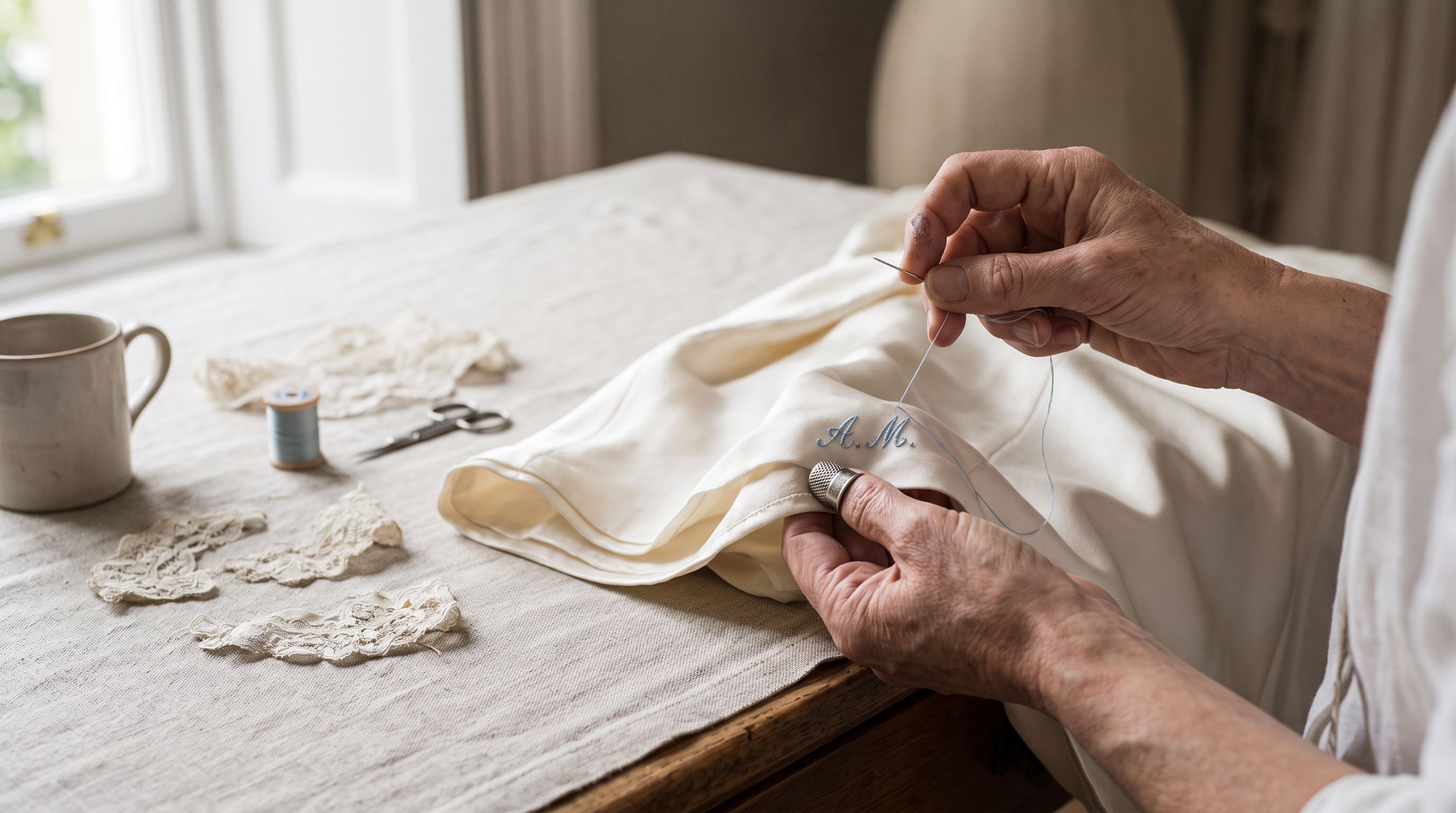
The detail no one sees is the one you remember
This keeps surfacing in wedding coverage for a reason. People has reported on a personal detail Dua Lipa connected to her Chanel wedding gown — meaning woven into the dress itself rather than worn on top of it. Vogue covered designer Francesca Miranda creating five custom looks for her daughter-in-law’s wedding in Peru’s Sacred Valley, a reminder that the custom pieces people remember are usually the ones carrying a story.
You don’t need a couture budget for this. Hidden personalization is one of the few genuinely emotional upgrades in bridalwear that stays affordable, because it’s small, it’s inside the garment, and it doesn’t change the pattern or the silhouette. A common regret we hear is from people who thought of it too late — once a lining is stitched down, the window closes.
What people actually have sewn in
Some of these are traditions; some get invented on the spot during a consultation. All are things a skilled dressmaker can execute:
- A date, initials, or monogram embroidered inside the hem, on the lining over the heart, or on the inside waistband.
- A short phrase — a line from your vows, a lyric, a family saying, a word in a grandparent’s language — stitched where only you know it is.
- Something blue, done properly: a blue ribbon bow at the center back lining, a single blue running stitch inside the hem, or blue thread used for the final hand-finishing stitch.
- Heirloom fabric: a square cut from a parent’s, grandparent’s, or chosen family member’s garment, a handkerchief, a shirt cuff, a piece of a sari or lace veil — appliquéd inside the bodice or used as pocket lining.
- A locket or charm loop: a small fabric tab inside the skirt that holds a photo locket or a relative’s ring so it travels down the aisle with you.
- Custom labels and hidden pockets: many makers will stitch in a woven label with your names and date, often free or close to it. A pocket is practical and sentimental, if the fabric allows.
The best personalization isn’t decorative. It’s the piece of the day that stays with you after the photographs are over.
What personalization costs, and what drives the price
These are illustrative ranges to help you plan a conversation — not fixed prices. What you pay depends on hand versus machine work, fabric fragility, placement, and your maker’s experience and region.
Hand versus machine. A machine-embroidered monogram takes minutes. The same lettering hand-stitched in silk thread may take two to four hours and is priced accordingly.
Fabric fragility. Embroidering onto sturdy lining is straightforward. Working into silk charmeuse, fine tulle, or 50-year-old lace that’s gone brittle means stabilizing first, testing on scraps, and working slowly — all billable time.
Placement and timing. Inside the hem is quick. Over the heart on a boned, underlined, fully finished bodice means opening and re-closing construction if requested late. Two things that break budgets quietly: many makers have a minimum charge for any add-on, so a tiny monogram may still bill at the shop minimum rather than a few dollars — and anything asked for after the lining is closed can carry a reconstruction or rush surcharge.
Condition of an heirloom. This is where budgets move most. Our guide to restyling your mother’s wedding dress covers what survives the process and what doesn’t. For larger visible work — embroidered motifs, florals up a sleeve, hand-painted artwork — see what custom embroidery and hand-painted artwork cost.
When to bring it up during the custom process
-
At the first consultation
Say it out loud even if it’s vague: “I’d like to include something of my grandmother’s — can we find a way?” That lets your maker plan the lining, allow fabric, and quote it properly. Bring the heirloom if you have it; our consultation prep guide covers what else to pack. -
Before fabric is cut
If an heirloom will be used structurally — a lace overlay, a bodice panel — decide now, because it changes yardage and pattern layout. -
At the toile (muslin) fitting
Confirm placement on your body, not on a drawing. Chalk the spot while wearing the toile. “Inside the hem” means different things on a cathedral train and a tea-length skirt. -
Before the lining is closed
The deadline for anything living between the layers. Ask directly: “When is my last chance to add something inside?” -
At the final fitting
Look for it. Check the thread color reads the way you wanted and nothing shadows through in daylight. Add it to your final fitting checklist.
If your gown isn’t custom, you still have options
Most of this is still possible on a salon or off-the-rack purchase. Your alterations seamstress can add a label, a ribbon, a blue stitch, a locket loop, or hem-lining embroidery while the garment is already open for hemming. Ask at your first alterations appointment, not the last.
What gets harder: reaching a finished, boned, fully lined bodice, or integrating heirloom lace into an existing design. That often means partially deconstructing something you’ve already paid for — labor that can approach the cost of having a panel made from scratch. Where alterations end and custom begins walks through those limits honestly.
Where this fits in a realistic budget
Treat personalization as part of your finishing budget alongside the veil, bustle, and alterations — not the gown price. It’s usually a modest line item with an outsized emotional return. If money is tight, prioritize one meaningful detail done well over three done cheaply.
The wedding dresses people still talk about decades later — Grace Kelly’s antique lace by Helen Rose, Carolyn Bessette-Kennedy’s spare silk slip — share something. None of them won on embellishment. They won on fit, restraint, and the sense that the dress belonged specifically to that person. That’s what a hidden detail does: it makes the garment yours rather than a style you selected.
How to tell a maker will do this well
Ask these four questions and listen to how quickly the answers come:
- “Have you incorporated heirloom fabric before — can I see it?” Someone who has will have photos and a clear process for assessing condition.
- “What’s your deadline for adding something inside the dress?” A good answer names a specific stage of construction, not “oh, anytime.”
- “Will you test for show-through on my fabric?” Yes, with a swatch, is the right answer.
- “What happens if the heirloom lace can’t be saved?” Honest makers say upfront that some vintage fabric fails, and suggest alternatives — framing the original, or sourcing new lace in the same pattern.
Someone who answers these calmly and specifically is the person you want handling something irreplaceable.
Ready to bring your dream dress to life?
Tell us what you're picturing — style, timeline, and budget — and we'll connect you with custom dressmakers who can make it. Free, no obligation.
Get matched with a dressmakerRelated guides
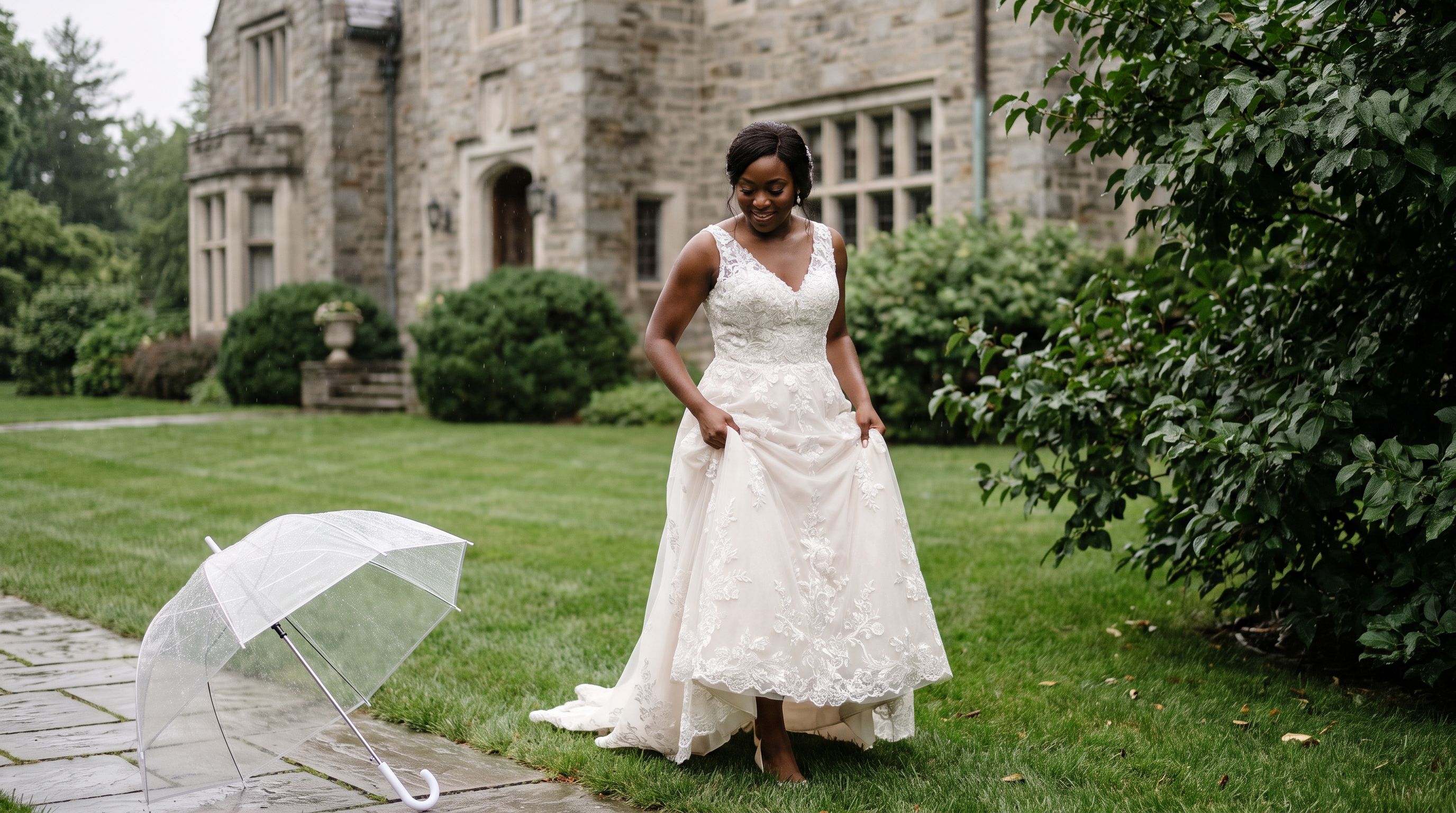
Outdoor Wedding Dress: Rain, Grass, and Humidity Guide
How to choose a custom outdoor wedding dress that survives rain, grass, wind, and humidity — fabric picks, hem strategy, and what weatherproofing costs.
Read guide →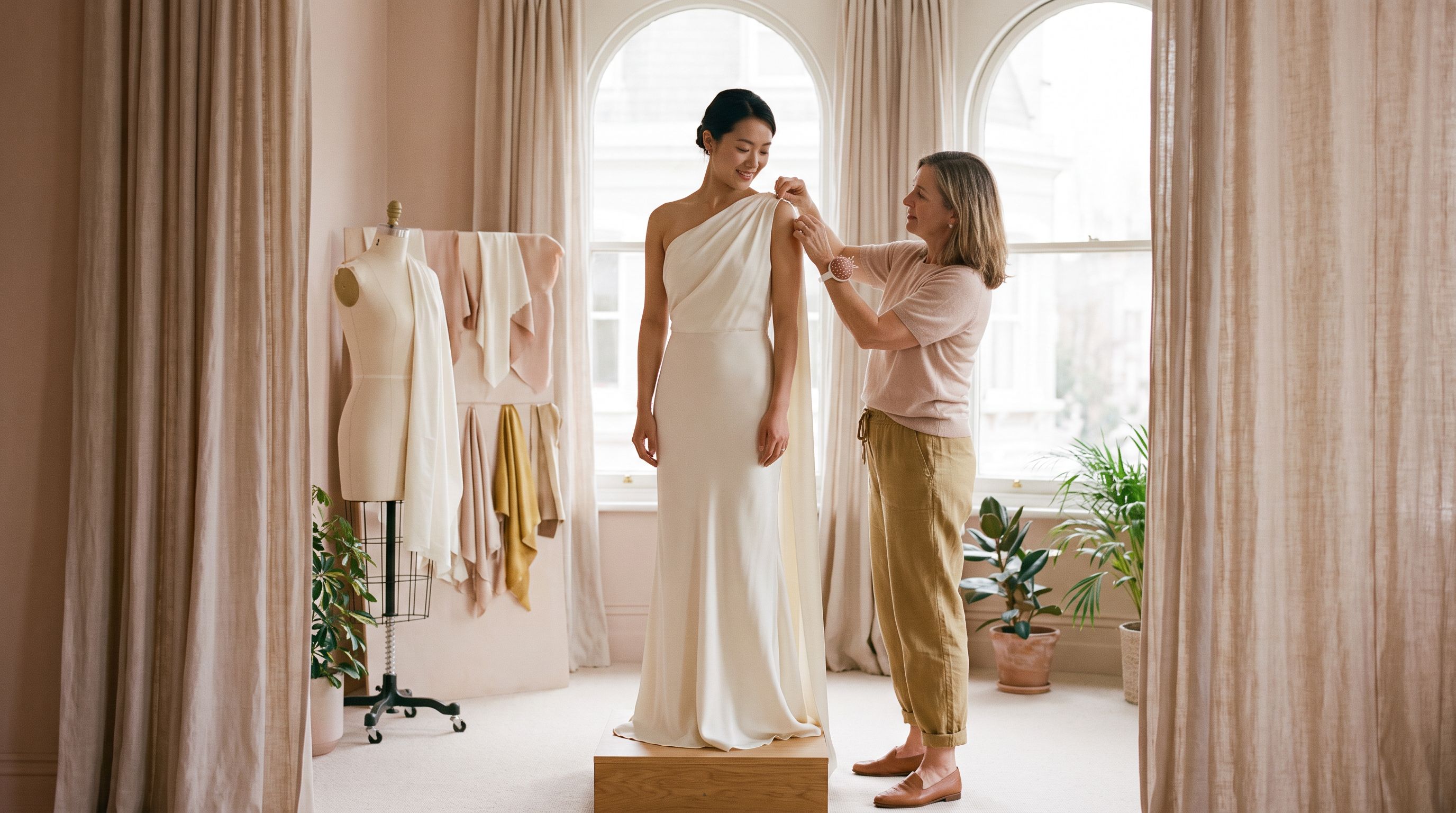
Halter vs One-Shoulder vs Asymmetric Gown: Fit & Cost
Halter vs one-shoulder wedding dress: how each neckline carries weight, flatters different shoulders and busts, what it costs custom, and what to ask your maker.
Read guide →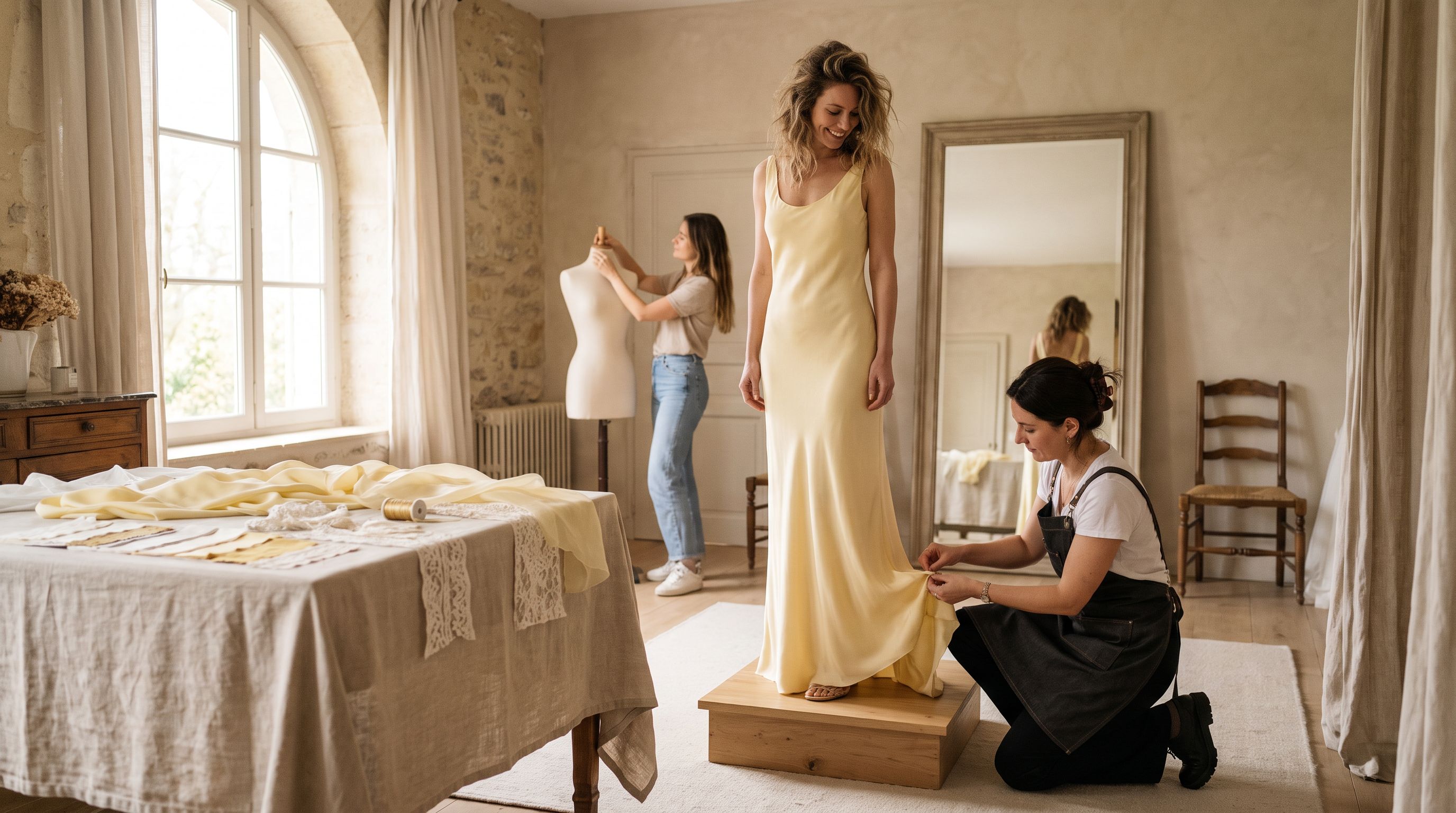
Butter Yellow Wedding Dress: Custom Color, Fit, Cost
Butter yellow is bridal's softest new neutral. Here's how custom dyeing works, which fabrics hold the shade, what it costs, and how to pick your tone.
Read guide →