 Custom
 Off the Rack Wedding Dresses: What It Means and Costs
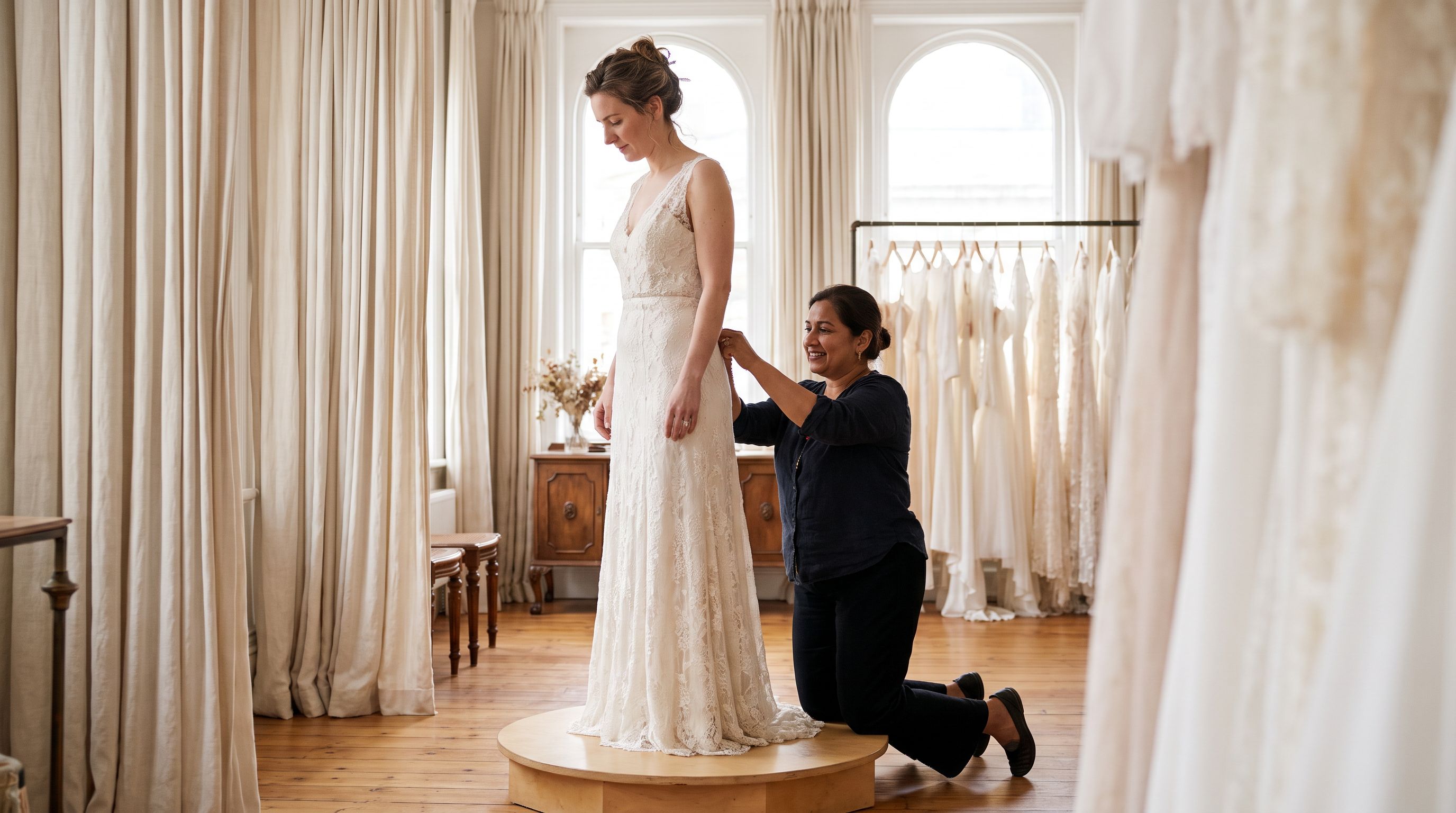
The bridal vocabulary nobody explains at the door
Walk into three shops and you’ll hear four phrases for what feels like the same thing. Here’s what they actually mean — with rough timelines, which vary a lot by maker, season, and how booked they are:
Off the rack — the gown on the hanger is the gown you leave with. Big chains keep in-stock racks for exactly this (David’s Bridal and Luv Bridal are examples of the category, not recommendations), and independent salons often sell their samples the same way. Timeline: today, plus a few weeks for alterations.
Made-to-order — the salon takes your measurements, picks the closest size on the designer’s chart, and the brand cuts a new gown in that standard size. This is what most bridal boutiques do. It is not custom — nothing is shaped to your body. Commonly quoted around six to nine months, plus alterations on top.
Made-to-measure — a gown built from an existing pattern, but that pattern is adjusted to your actual measurements before anything is cut. Often four to eight months, depending on the maker.
Custom / bespoke — design and pattern are both developed for you, usually with a muslin (toile) fitting before the real fabric is touched. Also often four to eight months; heavy beading or hand-work can need longer. Rush timelines usually exist in both, at a premium.
Preowned and resale — marketplaces list gowns worn once or never worn at all (Still White is one example, not an endorsement). The price is low; the fit is entirely your problem.
If the difference between the middle two matters to you, we’ve broken it down properly in semi-custom vs made-to-measure vs bespoke.
Are off-the-rack gowns actually cheaper?
Often yes on the tag, and sometimes dramatically. But the honest answer is: cheaper depends on how close that gown already is to your body.
A size that fits your bust and hips and just needs a hem and a side seam nip is a genuine bargain. A gown three sizes too big through the torso, cut for someone eight inches taller, with a corset back that has to be rebuilt — that’s a renovation project, and renovations in bridal are not cheap.
There’s a second catch that trips people up: sample and in-stock gowns are usually final sale, and they’ve often been tried on dozens of times. Before you commit, inspect the hem edges, underarms and zip for makeup marks, snags, pulls or missing beads, then ask three questions — does the price already reflect that damage, is it returnable or exchangeable at all, and what will professional cleaning cost? Factor cleaning into your total, not as an afterthought.
Those are starting points to adapt, not benchmarks. Alterations pricing in a major metro can be double what it is two hours away. A beaded lace bodice costs far more to take in than a plain crepe one, because every seam means lifting beads, reshaping motifs, and re-hand-tacking them back down.
The sticker price is the first number, not the real one. The real number is the sticker plus everything it takes to make that dress fit you.
What drives the price in each route
Same four levers, weighted differently:
- Fabric. Silk, real Mikado, and hand-made lace cost multiples of their polyester equivalents. Most off-the-rack gowns are synthetic — that’s a large part of why the tag is low, and for many people it’s a perfectly good trade.
- Labour. Hand-finishing, boning, lining, underlining, and beading are hours. Hours are the single biggest driver in custom.
- Distance from your measurements. Off the rack, this shows up as an alterations bill. In custom, it’s built into the pattern from day one.
- Time. Rush fees are real in both worlds.
If you want the full arithmetic laid out side by side, including what happens at each budget tier, read the real math on custom vs off-the-rack cost.
Why the size on the tag isn’t your size
This surprises almost everyone: bridal sizing tends to run smaller than street sizing, and the charts haven’t been modernised the way ready-to-wear has. Someone who wears a 12 in everyday clothes often lands a size or two up in bridal, sometimes more. Nobody is judging you, and the number means nothing.
What matters practically is how the size gets chosen: it’s taken from that specific designer’s own chart, usually by your largest measurement, then altered down elsewhere. So rather than assuming a rule of thumb, bring or request the actual chart for the label you’re considering. It also explains why a take-home rack may simply not stock gowns in the range that fits you. We explain the whole system in bridal sizing vs street size.
This is also where off the rack quietly fails certain bodies. If you’re very petite, very tall, long-torsoed, full-busted with a small waist, broad through the shoulders, or you need sleeves and coverage the rack doesn’t offer, the “cheap” gown may need so much reconstruction that custom was the better value all along.
When each route genuinely wins
- Your wedding is soon — weeks, not months
- You’ve tried gowns on and something close to your size feels right
- Your budget is firm and modest, and you’d rather spend elsewhere
- You’re proportionally close to standard sizing
- You don’t have a strong vision the racks aren’t meeting
- Nothing in stores fits two areas of your body at once
- You need sleeves, a specific neckline, modesty coverage, or accessibility features
- You need a second ceremony outfit, a colour other than white, or a silhouette no local rack stocks
- You have a clear picture in your head that shops keep almost-matching
- You’re combining ideas from several gowns, or reworking an heirloom
- You value fabric quality and construction you can feel
Setting a budget that holds up
A realistic budget is one number that covers the gown and everything required to wear it. Build it like this:
-
Decide your all-in ceiling first
One figure for dress, alterations, undergarments, veil or headpiece, shoes, and cleaning or preservation. Protect roughly 20–30% of it for the non-gown items before you fall in love with anything.
-
Price the finished gown in every route
At each shop ask: what is the gown, what will alterations realistically cost for a body like mine, and are there rush or shipping fees? Get the estimate in writing where you can. Many salons charge separately; some don’t alter at all.
-
Test the rack honestly
Spend one appointment trying in-stock gowns. If two or three feel close, off the rack may well be your answer. If every one needs the same structural change, that’s your signal that made-to-measure is the cheaper path in disguise.
-
Get two second opinions, not one
Book a fitting consult with an independent alterations specialist and with a custom dressmaker, then compare what each says is achievable in your budget and timeline. A good alterations pro will tell you a rack gown is salvageable; a good dressmaker will happily say “buy off the rack and let me alter it.” Many makers offer a free first consultation — ask upfront, since some charge a design fee that may be credited to your order.
How to recognise a maker worth your deposit
Whether you’re hiring someone to alter a rack gown or build one from scratch, the same signals apply. Look for a maker who takes full measurements rather than eyeballing, who talks about a muslin or first fitting before cutting good fabric, who gives you a written quote separating fabric from labour, and who tells you honestly when your inspiration photo won’t translate to your fabric or budget. Ask how many fittings are included, what happens if your body changes, and what a rush costs. Vague answers on any of those are worth walking away from — more on that in how to vet a custom dressmaker.
There’s no morally superior route here. A polyester off-the-rack gown that fits beautifully will photograph and feel better than a silk one that gapes, and plenty of couples split the difference — one route for one outfit, another for the second. The goal is simply to know which number you’re comparing, and to walk in with enough vocabulary that nobody can quote a price the person wearing it doesn’t understand.
Ready to bring your dream dress to life?
Tell us what you're picturing — style, timeline, and budget — and we'll connect you with custom dressmakers who can make it. Free, no obligation.
Get matched with a dressmakerRelated guides
Chapel vs Cathedral Train: Length, Cost, and Bustles
Chapel vs cathedral train for a custom wedding dress: real length measurements, what extra train costs, bustle types and prices, and how to decide at your fitting.
Read guide →
Bridal Sizing vs Street Size: Why Gowns Run Small
Bridal sizing vs street size explained: why wedding dresses run 2–3 sizes small, what off-the-rack really means, alteration costs, and when made-to-measure wins.
Read guide →
Renting vs Buying vs Custom Wedding Dress: Cost Guide
Renting a wedding dress vs buying off the rack vs going custom: real cost ranges, hidden alteration fees, fit limits, and how to pick the smartest option for you.
Read guide →