 Custom
 Bridal Sizing vs Street Size: Why Gowns Run Small
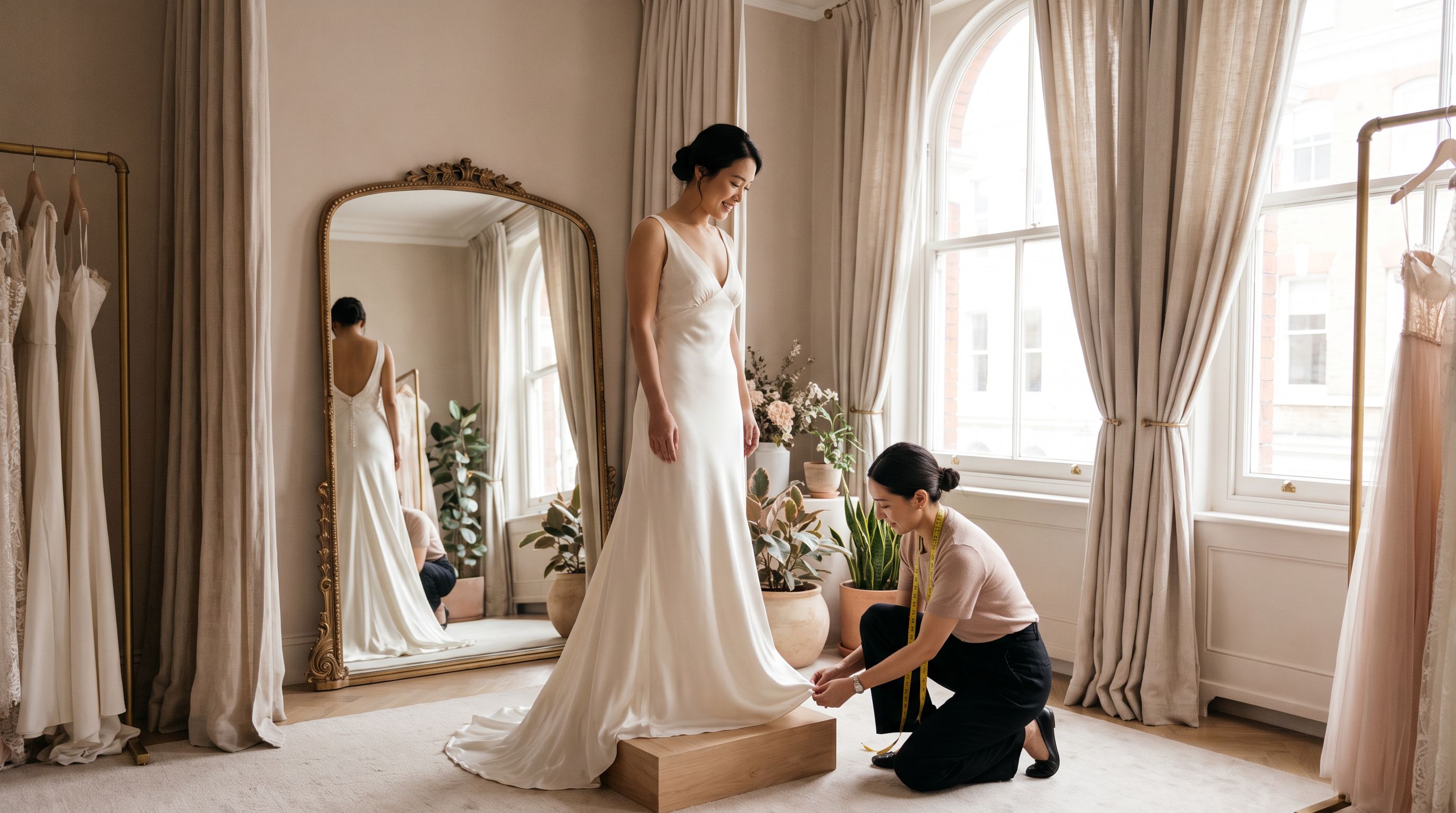
What “off the rack” actually means in a bridal shop
There are three very different things happening in bridal stores, and the words blur together fast. Everything here applies whether you’re a bride, a groom in a gown, or a nonbinary partner — sizing charts are the same problem for everyone.
Off the rack means you buy the physical gown in the shop — the sample, or stock the boutique holds — and walk out with it that day or within a couple of weeks. It’s the fastest route, common at sample sales and outlet-style stores, and when people search off the rack wedding dresses near me, this is what they mean. You get whatever sizes the shop happens to own. Even then, reserve roughly six to ten weeks for alterations.
Special order is what most traditional salons actually do, even though it feels like shopping off a rack. You try on samples, then the boutique orders a new gown from the designer in the closest standard size to your measurements. Production is commonly quoted at around four to eight months, and you’ll want another two to three months for fittings on top — so once you’re inside about six months of the date, special ordering usually means rush fees or a different plan. It’s still a stock-sized dress made to a chart, not to you.
Made-to-measure or custom means the gown is drafted or graded to your own numbers from the start, with fittings built into the process. Independent makers often ask for four to eight months; simpler silhouettes in uncomplicated fabrics can sometimes be done in eight to twelve weeks. A good maker will tell you honestly when a date isn’t workable.
Understanding which one you’re in changes how you read every price tag. (We break the full financial comparison down in custom vs off-the-rack wedding dress cost.)
Why bridal sizes run two to three sizes smaller
Bridal sizing largely descends from older standards that never got updated the way ready-to-wear did. While mainstream brands quietly enlarged their garments over the decades, bridal designers mostly kept their charts where they were — and many bridal houses still use their own individual charts. The result is a system where the number on the tag means almost nothing across brands.
How a boutique picks your size — and why the gown arrives roomy
Here’s the part that surprises people. When a salon special-orders for you, they measure bust, natural waist, and hip, compare all three to the designer’s chart, and order to the largest measurement. Fabric can be taken away; it usually can’t be added.
So if your bust puts you in a 14 but your waist reads a 10, you get a 14 and the waist gets taken in by hand. If you’re long-waisted or short, hollow-to-hem length gets adjusted too. That’s why so many wearers describe their gown arriving “huge” — it’s working as designed. The dress is raw material, and the alterations room does the actual fitting.
This is also why the limits of alterations matter so much. A seamstress can move a lot. A seamstress can’t lengthen a bodice that’s structurally too short, invent a sleeve that isn’t there, or reprint a lace motif that gets cut in half when the side seam moves three inches.
And about the question most people ask quietly: what if my measurements change? Order or draft to your current measurements, not a goal, and schedule the final fitting close to the date — often two to three weeks out. Then ask directly how the design absorbs fluctuation: corset or lace-up backs, adjustable straps, and generous seam allowance left in the side seams buy room in both directions. If you’re pregnant, postpartum, nursing, or on medication that shifts your shape, say so at the first appointment so it can be planned into the construction rather than patched later.
The math nobody shows you on the price tag
A reasonable way to compare options is total landed cost: gown + alterations + any undergarments the fit demands.
Those numbers move with your city, the gown’s construction, and how much handwork the lace demands. Beading is the biggest multiplier: every seam that moves through a beaded panel has to be de-beaded, stitched, and re-beaded by hand. Boning, horsehair hems, and layers of tulle each add hours.
So when people ask whether it’s cheaper to buy a wedding dress off the rack, the honest answer is: often yes, if the dress fits close to begin with. A gown that needs $1,400 of reconstruction is no longer a bargain. At that point you’re paying custom-level money for a stock silhouette, so it’s worth getting a parallel quote.
What a realistic wedding dress budget looks like
There’s no honest national average worth repeating — the spread is enormous and depends on market, fabric, and finish. A framework is more useful.
Off-the-rack and sample-sale gowns often land in the lower hundreds to low thousands, plus alterations. Special-order designer gowns from a traditional salon commonly sit in the low-to-mid thousands before alterations. Made-to-measure work from an independent dressmaker frequently overlaps that same mid range, with simple silhouettes coming in lower and heavily beaded or silk-heavy designs climbing above it.
Set your budget as a ceiling that includes alterations, undergarments, and a cleaning buffer — then shop inside it. Wearers who budget only for the gown are the ones who get blindsided in the fitting room.
A dress isn’t your size because the tag says so. It’s your size when the seams sit where your body actually is.
When sizing up works fine — and when measured is worth it
Off-the-rack or special order is a strong choice when your measurements fall reasonably close to one bridal size, you love a gown that already exists, the fabric is forgiving (crepe, unbeaded satin, plain tulle), and you have time for two or three alteration appointments.
Made-to-measure tends to pay for itself when your bust, waist, and hip land in three different sizes; when you’re very petite or very tall and length is never right; when you need specific support built in; when coverage or sleeves are non-negotiable because of modesty requirements or a religious ceremony’s rules about shoulders and décolletage; when you need a second look for a tea ceremony or a reception change; when you want a sari- or lehenga-influenced silhouette no bridal chart was ever drafted for; or when you’re at the top of a designer’s range with nothing above it. People shopping plus-size custom options often find that the sample-size problem — trying on gowns clipped four sizes away from reality — is itself the reason to be measured instead.
-
Get measured properly, once
A trained fitter measures over the undergarments you’ll actually wear, including hollow-to-hem in your wedding shoes. Ask for a written copy of your numbers. -
Compare against the real chart
Not a generic chart — the specific designer’s. Ask which measurement is driving the size choice and how much take-in that implies. -
Price the alterations before you sign
Ask the shop for an estimate range for a gown like the one you’re choosing, and whether alterations are in-house or referred out. -
Get a parallel custom quote
Send your inspiration and measurements to a dressmaker. Many makers offer a free or low-cost first consultation — ask upfront whether there’s a fee and whether it’s credited toward the gown. -
Decide on total cost, not tag price
Gown plus alterations plus undergarments. Then choose the route that gives you the most dress for the same money.
If your measurements have never cooperated with a size chart, that’s not a flaw to solve with a bigger number on a tag — it’s information about how you’re built. Take your numbers and inspiration photos to both a salon and a dressmaker, and compare total landed cost before you commit. One route hands you a finished gown you can see and try today; the other drafts a pattern around the person wearing it. Either can be the right answer — price them side by side and decide with the full figure in front of you.
Ready to bring your dream dress to life?
Tell us what you're picturing — style, timeline, and budget — and we'll connect you with custom dressmakers who can make it. Free, no obligation.
Get matched with a dressmakerRelated guides
Off the Rack Wedding Dresses: What It Means and Costs
What "off the rack" really means in bridal, how off-the-rack wedding dress costs compare to custom and made-to-measure, and how to set a realistic budget.
Read guide →
Chapel vs Cathedral Train: Length, Cost, and Bustles
Chapel vs cathedral train for a custom wedding dress: real length measurements, what extra train costs, bustle types and prices, and how to decide at your fitting.
Read guide →
Renting vs Buying vs Custom Wedding Dress: Cost Guide
Renting a wedding dress vs buying off the rack vs going custom: real cost ranges, hidden alteration fees, fit limits, and how to pick the smartest option for you.
Read guide →