 Custom
 Wedding Dress Sleeves: Types, Fit, and Cost
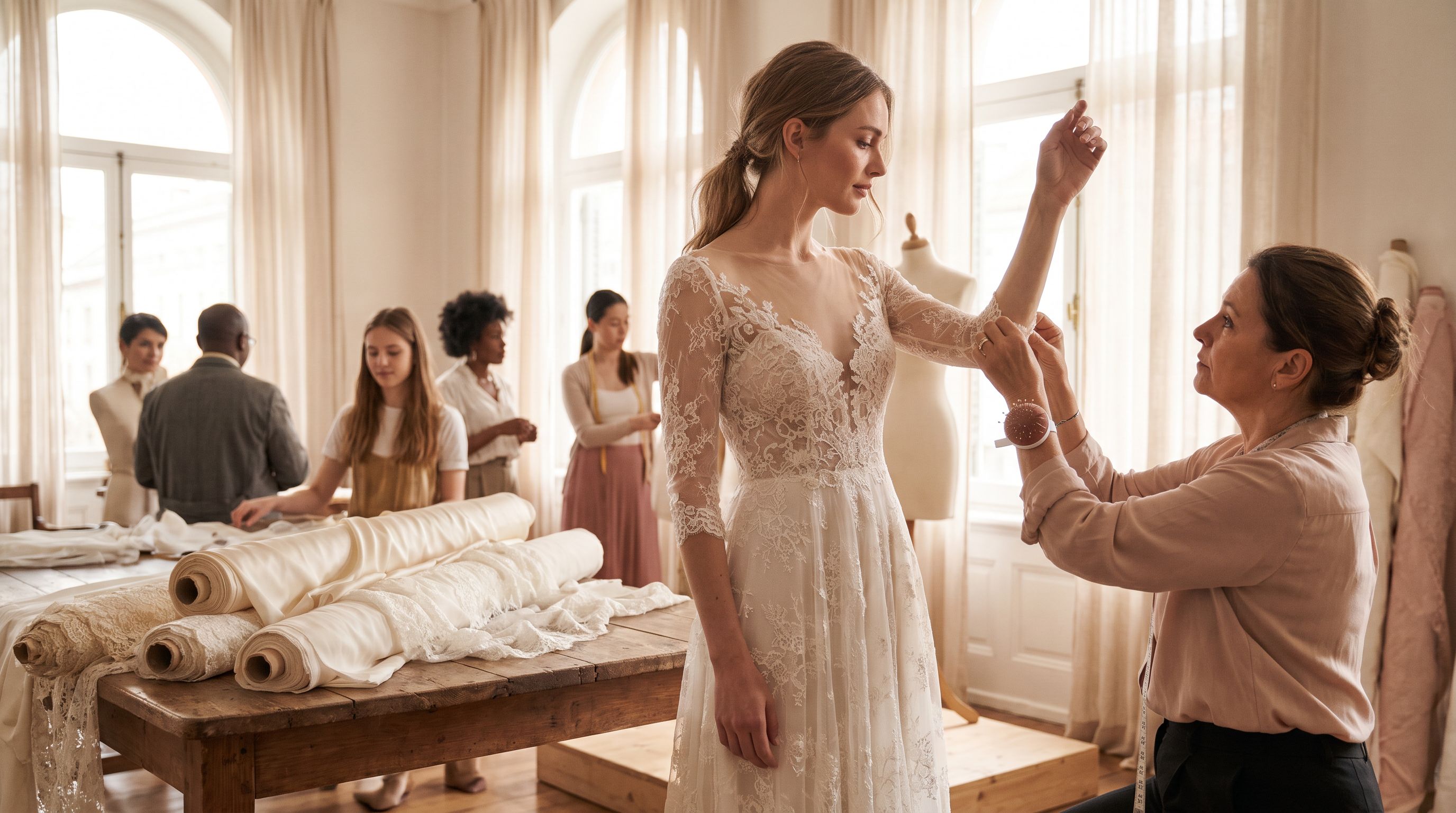
Why sleeves are the hardest part of a gown to get right
A bridal bodice is engineered to sit still. Sleeves have to move — and that’s exactly where most gowns fail their wearers. You’ve probably tried on a sample with sleeves and found you couldn’t lift your arms past shoulder height, or that the fabric dragged the whole neckline down when you reached for a hug.
That’s not your body’s fault. It’s the armscye (the armhole) sitting too low and too wide, which is how ready-to-wear sleeves are cut to fit the broadest possible range of people. A higher, closer armhole with a properly shaped sleeve cap actually gives you more movement, not less — counterintuitive, but it’s the oldest trick in tailoring.
This is one of the clearest arguments for having sleeves made for you rather than hoping an off-the-rack gown’s sleeves cooperate. Upper arm circumference, shoulder slope, and the distance across your back vary enormously between people of the same dress size.
A quick tour of sleeve styles and what each one actually does
- Cap sleeve — a small extension over the shoulder joint. Softens a bare shoulder without real coverage. Flattering and light, but it does nothing for the upper arm, so be clear with your maker about what you’re hoping it will do.
- Flutter or petal sleeve — a loose, falling drape of chiffon, organza or tulle. Beautiful in movement and photographs, very forgiving on the arm, and one of the cooler options for warm weather.
- Short puff — volume gathered into the sleeve cap. It keeps coming back for durable reasons rather than fashionable ones: it balances a fuller skirt, adds width at the shoulder to offset the hip, and photographs well in the waist-up frames that make up most of your album. Puff size is the whole conversation — ask to see it in your actual fabric, because crisp mikado puffs very differently from soft tulle.
- Three-quarter sleeve — ends mid-forearm. Quietly elegant, easy to move in, and a kind choice if you want coverage without heat.
- Fitted long sleeve — in crepe, satin or lace. The most formal, most architectural option. Needs the most precise fitting, and almost always needs a closure (loops and buttons, or a tiny invisible zip) at the wrist.
- Bishop or balloon sleeve — full through the arm, gathered into a cuff. Dramatic and romantic, and generous to the upper arm because the volume doesn’t cling.
- Bell or trumpet sleeve — fitted at the shoulder, flaring open at the wrist. Lovely for a cathedral ceremony, less practical for a buffet line or a long dinner.
- Illusion long sleeve — fine tulle or net with lace appliqué placed on top, so the lace appears to float on skin. One of the shapes we’re asked for most often in the workroom, and the one with the most technical variables.
- Off-shoulder band — technically a sleeve, and the style that asks the most of you in terms of mobility: a band sitting below the shoulder joint limits how high you can lift your arms, and it can shift when you reach. It works well when it’s built with stretch in the band, anchored with a hidden strap or clear loop, and paired with a bodice that supports itself completely — so the band is decorative rather than structural.
- Detachable sleeves or a capelet — a separate piece that attaches at the shoulder or sits over a strapless bodice.
A sleeve isn’t just coverage. It’s the frame around your face in every photograph taken from the waist up — which is most of them.
Detachable or sewn-in: how to choose
What sleeves add to the price
Sleeves are priced on three things: fabric quantity, labor hours, and how much the fabric fights back. A plain crepe sleeve is a quick, clean build. A hand-placed Alençon lace sleeve where every motif is cut and positioned to flow from the bodice into the arm is slow, skilled work.
The cost drivers to ask about directly:
- Lace cost and yardage. Beaded or corded lace can be a significant share of the sleeve price on its own. Our guide to Chantilly, Alençon and guipure lace explains why the price gap is so wide.
- Hand placement. Cutting motifs apart and reassembling them so the pattern travels continuously from bodice to sleeve is hours of work, and it’s the difference between “custom” and “nice.”
- Beading. Any hand-beading on a sleeve adds labor and weight — and weight is the enemy of a sleeve that needs to hold its shape.
- Extra fittings. Sleeves frequently need one more fitting than a sleeveless gown. Ask whether that’s included.
- Closures. A row of twenty covered buttons and hand-worked loops at each wrist is a line item, not a free flourish.
If those ranges sit above your budget, there are honest ways down. Ready-made detachable sleeves or a simple capelet can be bought separately and fitted to a gown you already own — often the cheapest route to a covered ceremony look. A flutter, petal or cap sleeve in plain chiffon or tulle skips the placement labor entirely and still frames your shoulders. And you can ask your maker to use a less expensive lace on the sleeve than on the bodice: at any distance beyond arm’s length, sleeve lace reads as texture, not as a matched motif. Skipping beading on the sleeve alone can move the number meaningfully.
The fit details most people never think to ask about
Bicep ease. Your maker should measure your upper arm and build in movement allowance. Too little and the sleeve pinches when you bend your elbow; too much and a fitted sleeve looks sloppy. If you have fuller upper arms, say so plainly and ask how they’ll handle it — the answer should be about pattern shaping, not about talking you out of sleeves.
Armhole height. This is the measurement that decides whether you can move, and it’s worth checking yourself in the mirror. The armhole seam should sit high into your underarm — close to the crease where your arm meets your body, near enough that you can feel it resting there without it chafing. Roughly a finger’s width of space is right; if you can slide a whole fist into the gap, it’s too low. A too-low armhole looks like a soft pool of extra fabric under the arm, a side seam that’s visible from the front when your arms hang down, and a neckline that lifts away from your chest or slides sideways the moment you raise your hands. Raising an armhole is a quick correction at the toile stage and a major rebuild once the lining is in — so check it early, and check it standing, sitting, and with your arms overhead.
Illusion tulle shade. Illusion fabric is sold in a range of tones, and the effect only works when it reads as your skin, not as a beige film over it. Ask to see swatches held against your inner arm in daylight. A maker who stocks or sources a true range of illusion shades is telling you something good about who they serve. If your maker only has one or two “nude” options, push for more.
Stretch. Two-way or four-way stretch tulle makes a fitted illusion sleeve genuinely wearable. Non-stretch net looks identical on the hanger and far less forgiving on a dance floor.
Shoulder slope and back width. If you have broad or athletic shoulders, sleeves need a different cap shape entirely — our fit guide for athletic and broad-shouldered brides goes deeper on this.
Sleeves, climate, and comfort
Long sleeves in silk charmeuse at an August garden wedding will be hot. Long sleeves in fine illusion tulle will barely register. Fabric matters far more than coverage does, which is why hot-weather fabric choice is usually the real conversation. For a cold-weather wedding, the opposite logic applies: a lined sleeve in a substantial crepe is genuinely warm, and much more elegant than a wrap you’ll keep losing.
If coverage is a requirement rather than a preference — for faith, culture, or simply your own comfort — our guide to modest custom gowns covers sleeve length, opacity, and neckline together.
How the sleeve gets built, step by step
-
Bring sleeve-specific references
Three photos: one for shape, one for lace density, one for length. Say what you like about each — “the fullness here, but ending at the elbow” is far more useful than a mood board. -
Decide sewn-in vs detachable early
It changes how the bodice is engineered, so this is a first-consultation decision, not a later tweak. -
Test the sleeve in the toile
Insist that the muslin includes a sleeve, even a rough one in calico. This is where armhole height gets solved cheaply. -
Check lace placement before it's stitched
Ask to see motifs pinned on while you’re wearing the gown, so you can see how the pattern travels across your shoulder and down your arm. -
Do the mobility test at every fitting
Arms up, arms crossed, a real hug. Repeat it in your actual shoes and undergarments at the final fitting.
Finding someone who makes sleeves well
When you’re reviewing a dressmaker’s portfolio, look specifically for sleeved gowns — and for photos of clients with their arms moving, not just posed. A maker who lights up when you ask technical questions about armholes is usually the one who enjoys solving them.
If you’re heading into a first consultation, bring three reference photos (shape, lace density, length), a note of your budget ceiling, and a top you can move freely in. Then ask: does your toile include a sleeve? What illusion shades can you source, and can I see them against my arm in daylight? Can you quote the sleeves as a separate line? Is the extra sleeve fitting included? What’s the cheapest version of this shape you’d be happy putting your name to? Worth asking when you book, too, whether there’s a consultation fee — policies vary a lot by maker and region.
From there, the decision is yours: which of those answers made you feel like your arms were being designed for, rather than worked around.
Ready to bring your dream dress to life?
Tell us what you're picturing — style, timeline, and budget — and we'll connect you with custom dressmakers who can make it. Free, no obligation.
Get matched with a dressmakerRelated guides
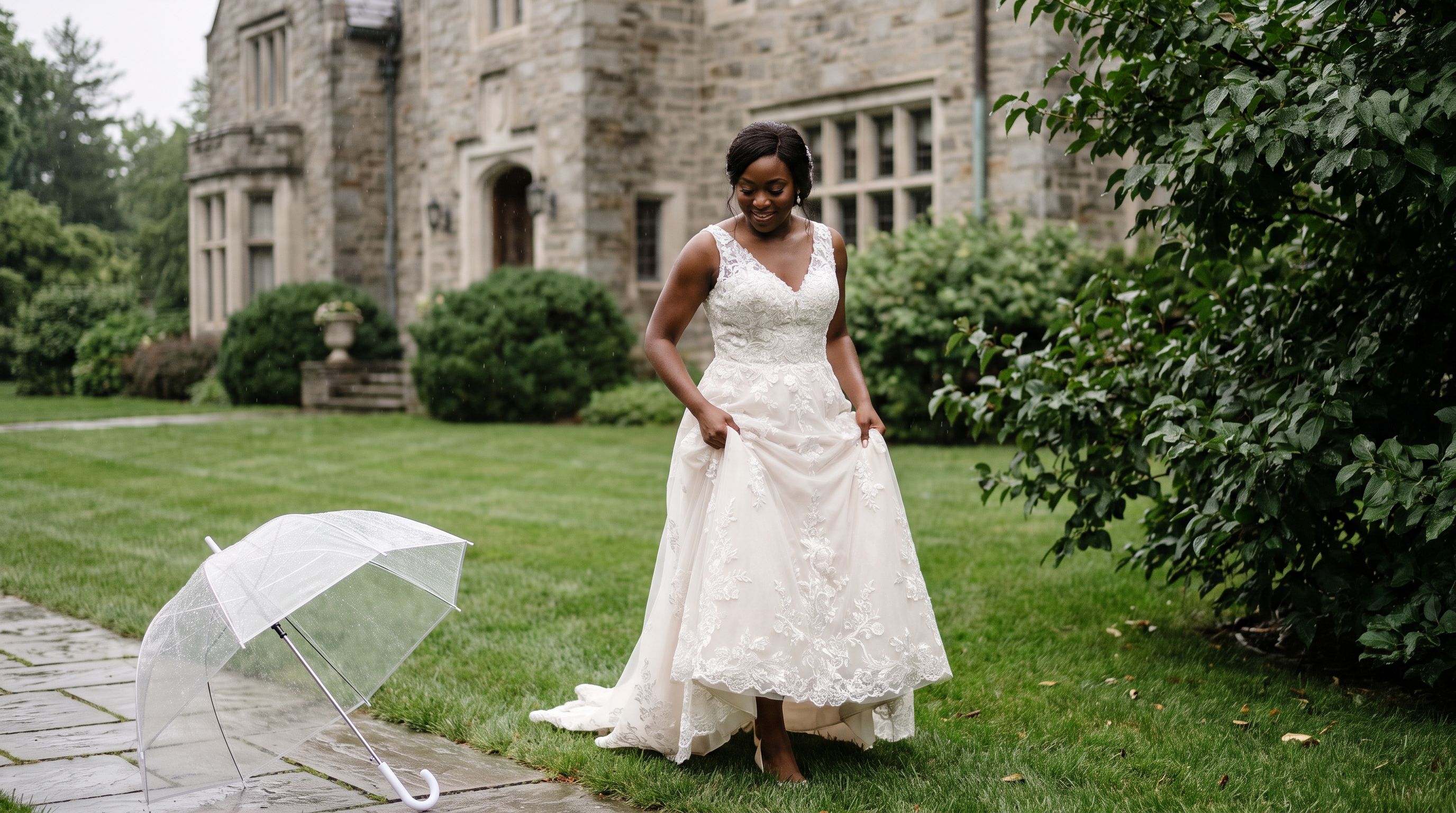
Outdoor Wedding Dress: Rain, Grass, and Humidity Guide
How to choose a custom outdoor wedding dress that survives rain, grass, wind, and humidity — fabric picks, hem strategy, and what weatherproofing costs.
Read guide →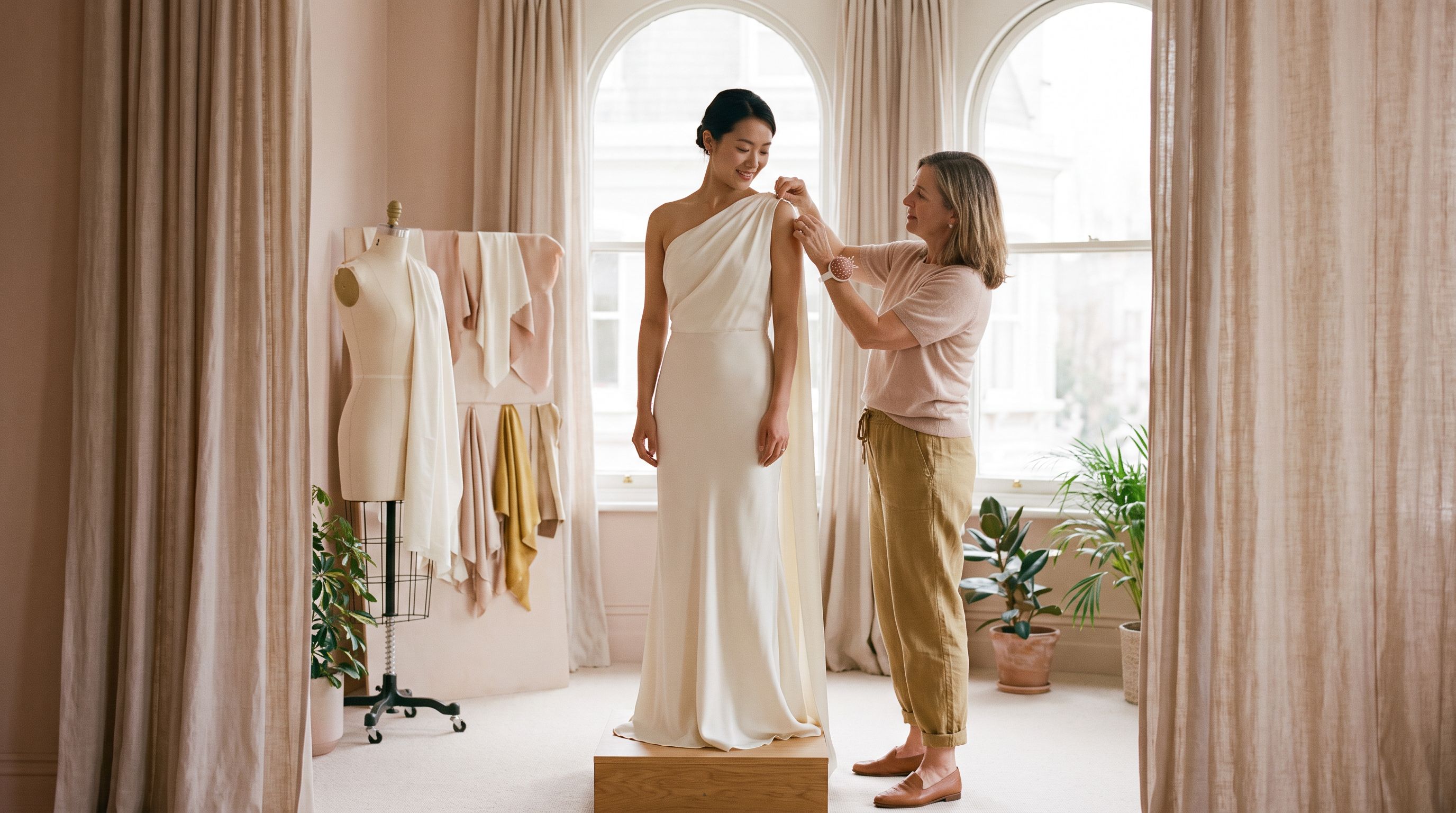
Halter vs One-Shoulder vs Asymmetric Gown: Fit & Cost
Halter vs one-shoulder wedding dress: how each neckline carries weight, flatters different shoulders and busts, what it costs custom, and what to ask your maker.
Read guide →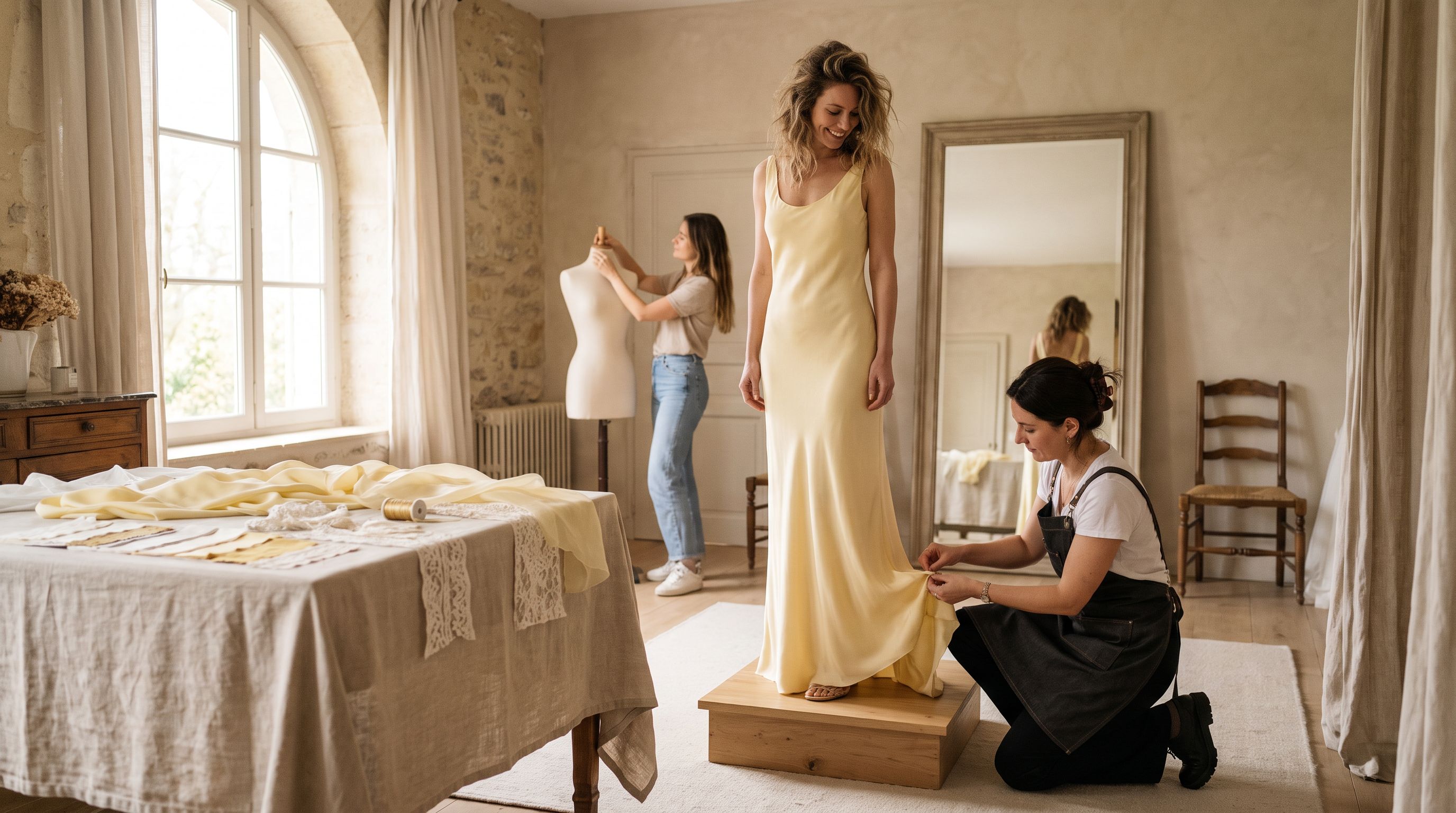
Butter Yellow Wedding Dress: Custom Color, Fit, Cost
Butter yellow is bridal's softest new neutral. Here's how custom dyeing works, which fabrics hold the shade, what it costs, and how to pick your tone.
Read guide →