 Custom
 Wedding Dress for Rectangle-Shaped Brides
How to Tell If You’re Working With a Straight Silhouette
Forget the fruit charts for a second. The practical test is numbers. Measure your fullest bust, your natural waist (the narrowest point, usually just above the belly button), and the fullest part of your hips.
Here’s the working rule of thumb patternmakers use: most commercial bridal blocks are drafted with roughly an 8–10 inch drop from bust to waist and a similar waist-to-hip difference built in. So if your waist is less than about seven to nine inches smaller than your bust or hip measurement, you sit outside what the standard block assumes, and most bridal patterns will read “straight” on you. It isn’t a diagnosis — it’s a drafting threshold, and makers differ on exactly where they draw it.
That’s a drafting fact, not a flaw. Straight, columnar proportions show up on bodies of every size — a size 2 with a long, lean torso and a size 22 with an even, columnar shape can run into exactly the same problem on the sample rack. Athletic builds, long-waisted frames, and many postpartum and post-menopausal bodies land here too.
If you haven’t taken your own numbers yet, our guide to measuring yourself for a custom wedding dress walks through where the tape actually goes — and why the waist measurement people take themselves is so often an inch or two off.
Where Custom Genuinely Changes the Outcome
A dressmaker building for you can do three things a finished gown cannot.
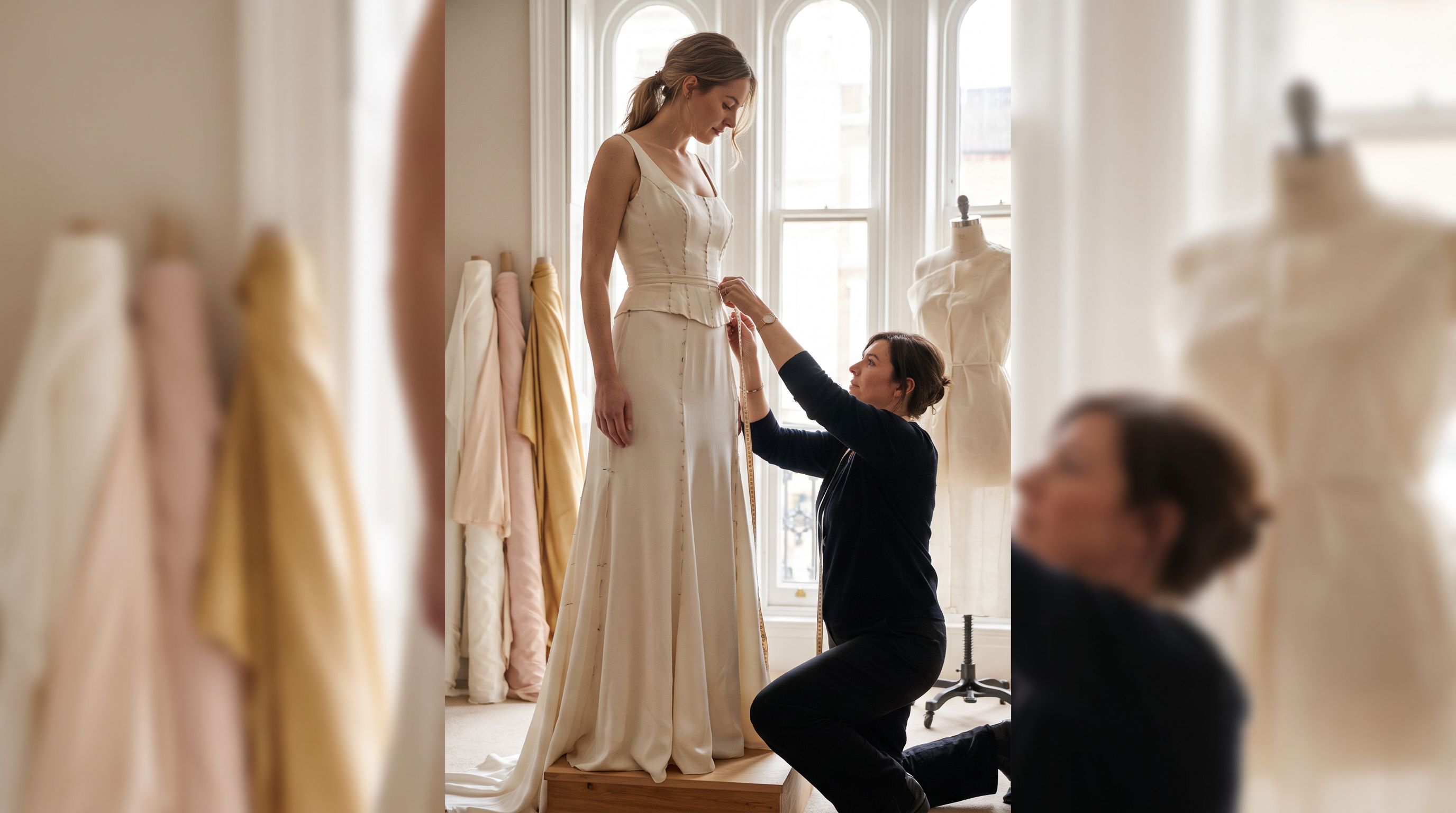
Curved seaming. Princess seams, side-front panels, and shaped side seams let a maker remove fabric exactly where your waist is and release it exactly where you want fullness. More seams equal more control. A bodice built with six or eight vertical seams can sculpt a waistline that a two-seam bodice simply cannot.
Internal structure. A corselette (an inner foundation layer, usually boned and sometimes with a waist stay) does the shaping so the outer fabric can stay smooth. This is the single biggest lever for a straight frame, and it’s the thing most people underestimate. If you’re weighing support options, our breakdown of a corset versus a built-in bra explains what each construction actually does under the fabric.
Waist placement. You are not stuck with a natural waist. A basque (V-shaped) waistline elongates the torso and creates the optical illusion of a narrower middle. A drop waist shifts the eye to the hip and lets volume start lower. A high empire line skims past the waist entirely. Our guide to empire versus drop waist versus natural waist is worth reading before your consultation — deciding this early changes how the whole gown is drafted.
On a straight frame, a waistline isn’t found — it’s built. Seams and structure do the work that shapewear never quite manages.
Silhouettes That Work — and the Ones That Fight You
The silhouettes that tend to fight a straight figure are the unstructured ones: a soft, unlined chiffon A-line with no internal foundation, or an unboned slip in a stiff fabric. Both hang from the bust and widen the whole torso. If you love that romantic, floaty look, the fix is usually an invisible inner bodice under a soft outer layer — not abandoning the style. Our comparison of A-line, ball gown, and sheath goes deeper on how each shape behaves once it’s fitted to you.
Fabric Does Half the Shaping
Structured fabrics hold the shape your maker builds. Mikado, duchesse satin, faille, and heavy crepe will keep a carved waistline crisp. Lightweight tulle, chiffon, and georgette drape beautifully but need something underneath them to create definition.
What This Costs, and Why Structure Adds to the Bill
There is no reliable national “average” for a custom gown — the number swings enormously by city, by fabric, and by how established the maker is. What’s more useful is understanding the drivers: labor hours, fabric yardage and quality, hand-finishing, beading, and how much internal engineering your design requires.
For a straight frame, that last item matters. A heavily seamed, boned bodice takes meaningfully more hours than a simple lined one, and it usually needs an extra fitting to perfect.
Is custom cheaper than buying off the rack? Sometimes — particularly if an off-the-rack gown would need the bodice rebuilt, which is a common recommendation for straighter frames. A full bodice rebuild is usually one of the most expensive line items an alterations specialist quotes, and on a beaded or silk gown it can climb steeply; that’s a rough expectation, not a fixed figure, so get a written alterations quote on the specific dress before you decide. Sometimes custom isn’t cheaper, especially against a sample sale find in a fabric you love. The honest answer depends on how far the ready-made option sits from your body. Custom is most cost-effective exactly when standard patterns are furthest from your proportions — which, if you’re reading this, may well be your situation.
Your Fitting Roadmap
-
Consultation and measurements
Bring inspiration images, your shoes if you have them, and the undergarments you’d realistically wear. Say the quiet part out loud: “I don’t have much waist definition and I want the gown to create some” — or “I like my straight shape and I don’t want it disguised.” Either brief is completely valid; your maker needs to know which one you mean. -
The toile (muslin)
A calico mock-up of the bodice is where waist placement is decided. Expect your maker to pin and re-pin the waist seam, raise or lower it, and show you the difference. Take photos from the side and back — straight frames read very differently in profile. -
Structure fitting
The inner corselette is fitted before the outer fabric is cut. This is the appointment that determines whether your gown holds its shape through dinner and dancing. -
Fabric fittings
Usually two: one with the gown basted together, one refining seam curves, hem, and closure. Walk, sit, and raise your arms each time. -
Final fitting
Full look — shoes, veil, jewelry. Check that the waist seam sits level all the way around and that no diagonal lines pull from the bust toward the hip.
What to Ask Before You Commit
A good maker will answer these easily: How many seams will the bodice have, and why? Will there be an internal foundation layer, and is it included in the quote? Can you show me a gown you’ve built for a client with similar proportions? Where exactly will you place the waistline, and can we test two options at the toile stage?
If you’ve been quietly assuming that gowns “just don’t look right” on you, it’s worth one conversation with someone who drafts from scratch. Many makers offer a free first consultation; others charge a design fee that’s often credited toward your gown — ask when you book. Either way, seeing a waistline pinned exactly where you want it tends to change the whole conversation.
Ready to bring your dream dress to life?
Tell us what you're picturing — style, timeline, and budget — and we'll connect you with custom dressmakers who can make it. Free, no obligation.
Get matched with a dressmakerRelated guides
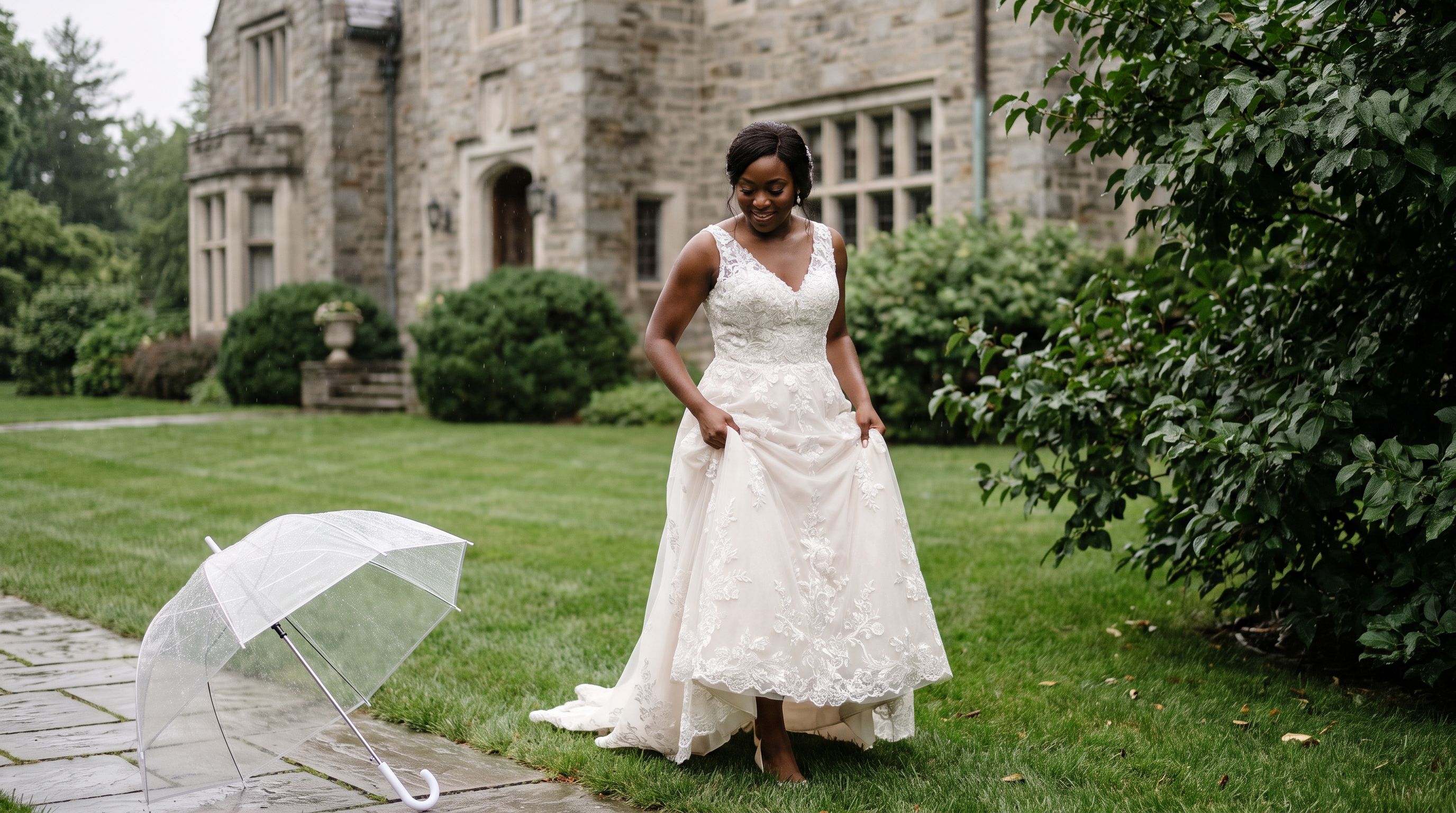
Outdoor Wedding Dress: Rain, Grass, and Humidity Guide
How to choose a custom outdoor wedding dress that survives rain, grass, wind, and humidity — fabric picks, hem strategy, and what weatherproofing costs.
Read guide →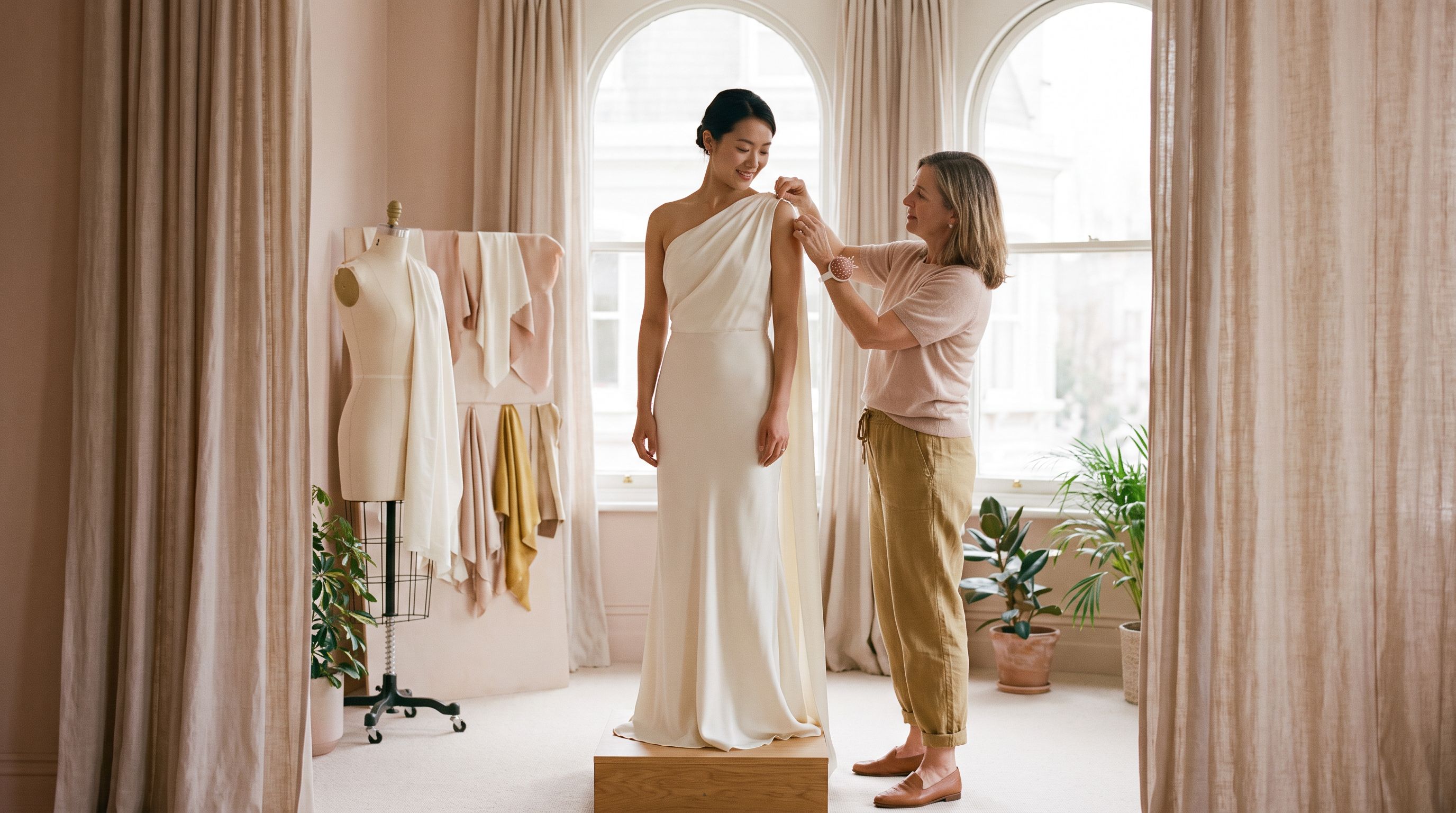
Halter vs One-Shoulder vs Asymmetric Gown: Fit & Cost
Halter vs one-shoulder wedding dress: how each neckline carries weight, flatters different shoulders and busts, what it costs custom, and what to ask your maker.
Read guide →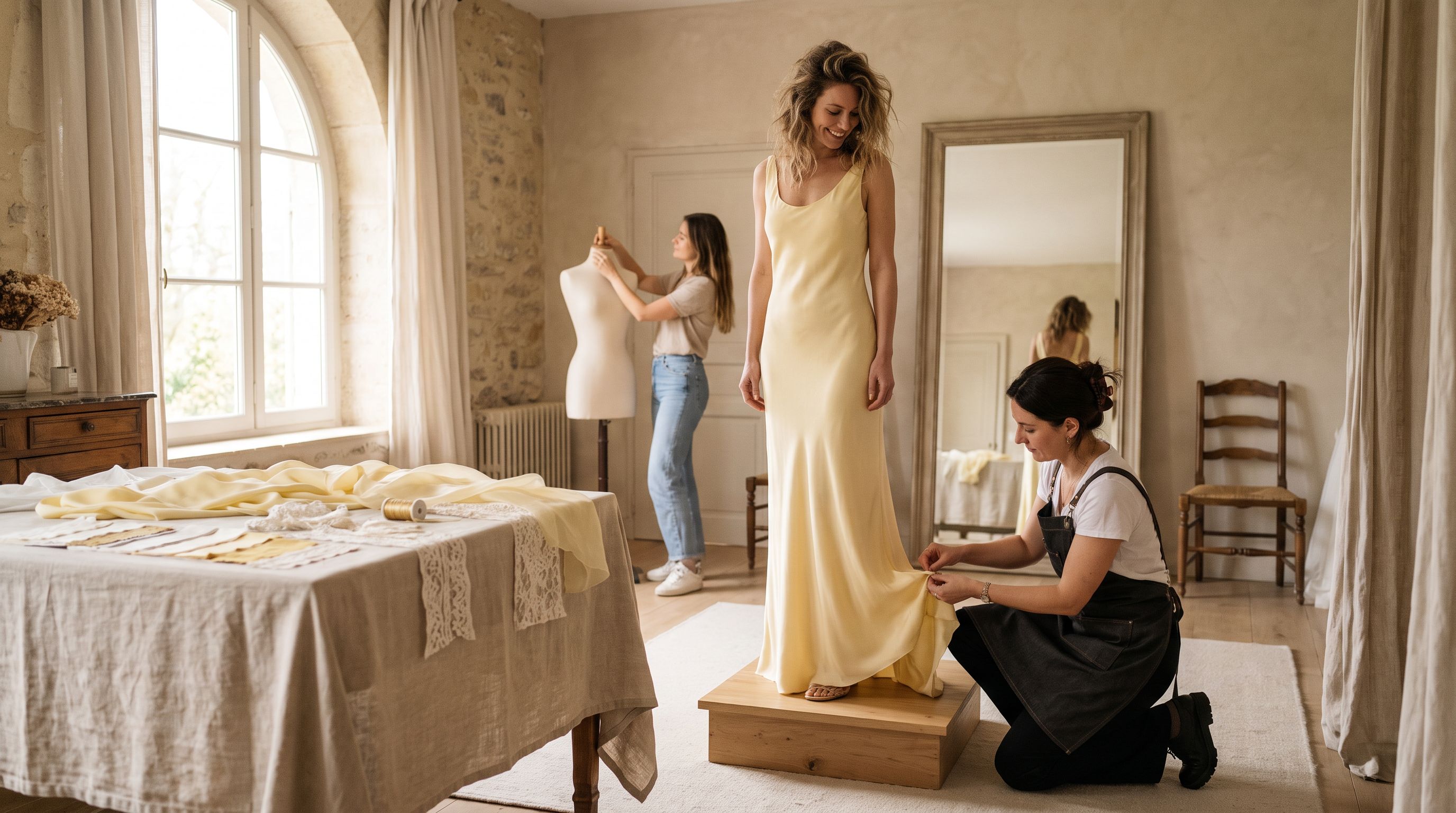
Butter Yellow Wedding Dress: Custom Color, Fit, Cost
Butter yellow is bridal's softest new neutral. Here's how custom dyeing works, which fabrics hold the shade, what it costs, and how to pick your tone.
Read guide →