 Custom
A-Line vs Ball Gown vs Sheath: Custom Fit Guide
When people describe their dream dress, they usually reach for one of three words: A-line, ball gown, or sheath. Those words carry a lot of weight, because the silhouette you choose determines your fabric budget, your fitting schedule, how you’ll sit through dinner, and whether you’ll be dancing at 11pm or quietly plotting an escape to your hotel room.
Here’s what each one really is, what it costs to have made for your measurements, and how to tell which one belongs to you.
What each silhouette actually means
A-line is fitted through the bodice and flares gradually from around the natural waist or just below, forming a soft triangle. It skims the hips rather than gripping them. There’s no hard rule about how wide the hem gets — a narrow A-line reads almost like a column, while a full A-line edges toward ball gown territory.
Ball gown is a fitted bodice with a dramatic, full skirt that starts at the waist and stands away from the body. The fullness comes from yardage, from gathering or pleating, and almost always from an internal support layer: horsehair braid, crinoline, tulle underskirts, sometimes a light hoop.
Sheath (also called a column) follows the body straight down from shoulder to hem with minimal flare. It’s the most architectural of the three in the sense that there’s nowhere for a seam to hide — every line you see is doing exactly what the pattern told it to do.
If you find yourself wanting something that hugs through the hip and then bursts open, that’s a different family entirely — see our guide to mermaid, trumpet and fit-and-flare shapes.
How much fabric and structure hides inside each one
This is the part the hanger never tells you, and it’s the single biggest driver of what your gown will cost to make.
Multiply those yardages by your fabric price and the gap opens fast. A silk mikado at a luxury price point in ball gown quantities can cost more than an entire finished A-line in a mid-range crepe. Then add the labour: a ball gown skirt has to be gathered, balanced, hemmed in a circle that may run 5–7 yards (4.5–6.5 m) around, and supported from the inside so it holds its shape without hanging off your hips like a weight.
As a very general frame, a fully made-to-measure gown from an independent dressmaker often starts in the low four figures and climbs with fabric, beading, train length and the number of internal layers. Moving from an A-line to a full ball gown in the same fabric commonly adds a meaningful percentage — fabric cost plus extra construction hours — rather than a fixed dollar amount.
That is not the only route to these silhouettes, and it shouldn’t be. A simple off-the-rack gown bought on sale and then heavily altered by a skilled seamstress can give you a beautifully fitted A-line for a fraction of a from-scratch build, and the same is true of a secondhand or sample gown re-fitted to your measurements. A clean sheath in a mid-range crepe, made locally with minimal beading, is also one of the most affordable custom builds there is — the cost lives in embellishment and yardage far more than in the shape itself. For a fuller breakdown of what drives the number, see what a custom wedding dress actually costs.
How each one behaves when you’re actually wearing it
The A-line sits between them, which is why it’s the shape most dressmakers are asked for most often. It gives you waist definition without compression, hides whatever you’d rather not think about, and lets you climb stairs without a strategy meeting.
Choosing for your body — honestly
There is no body type that is forbidden from any of these shapes. What changes is how your maker builds it.
- Fuller hips or thighs: A-line and ball gown both skim rather than cling. The adjustment that matters is where the flare begins — starting it slightly higher creates a cleaner line than a dress that grips and then releases.
- Broad shoulders or an athletic frame: a ball gown balances the upper body beautifully; so does an A-line with a defined waist seam. Sheaths work too, with a softer neckline and strap placement.
- Petite frames: full ball gowns can overwhelm, but they don’t have to — the fix is a shorter rise to the waist seam, a lighter underskirt, and a hem that stops exactly at the floor with your actual shoes. A narrow A-line or sheath lengthens the line most easily.
- Fuller bust: all three work when the bodice is engineered with real support. A sheath needs the most internal structure here, not the least.
- Wheelchair users and seated ceremonies: skirt bulk pools in your lap and catches in wheels and footplates. A sheath or narrow A-line with a shortened front hem and the length and train loaded toward the back is usually the practical build, with the waist seam set so it doesn’t dig when seated.
- Changing bodies: A-lines and ball gowns are the most forgiving across a long engagement; a sheath leaves almost no margin.
The silhouette doesn’t flatter you — the construction does. The same ball gown shape can look regal on one body and borrowed on another purely because of where the waist seam sits.
Fabric changes everything
A sheath in stiff mikado is a totally different garment from a sheath in silk crepe. Crepe clings and drapes; mikado stands away from the body and reads sculptural. A-lines in tulle look romantic and weightless; A-lines in satin look clean and modern. Ball gowns in organza hold volume with less weight than the same gown in taffeta.
Before you lock in a silhouette, read our guide to tulle, organza and chiffon skirts — swapping the skirt fabric is often how you get the look you pinned without the cost or weight you feared.
When one day means more than one outfit
Plenty of weddings aren’t a single white gown worn for a single ceremony. You may be changing for the reception, wearing a separate garment for a cultural or religious ceremony on another day, or choosing colour — red, gold, blush, deep blue — because white was never the plan. All three silhouettes translate; what changes is the sequence. If one gown has to carry two events, a detachable overskirt or removable tulle underlayer is the single most useful piece of engineering available to you: ceremony volume that lifts away in thirty seconds for dinner and dancing. If you’re commissioning two outfits, tell your maker upfront so the budget and the fitting calendar are planned as one project rather than two.
How to decide, step by step
-
Start with the venue and the season
A ball gown in a 90°F / 32°C garden ceremony is a long afternoon. A sheath on uneven lawn with a long cathedral train is a trip hazard. Let the setting narrow the field first. -
Try all three on, even the one you've ruled out
Sample gowns won’t fit — that’s normal, and bridal sizing runs small. You’re testing proportion and feeling, not fit. -
Notice how you move, not just how you look
Sit down. Walk ten steps. Lift your arms. The dress you forget you’re wearing is usually the right one. -
Bring your two or three images to a consultation
A good dressmaker will tell you which elements are doable in your fabric and budget, and which ones quietly push the price up. -
Confirm it at the toile stage
The muslin fitting is where a silhouette becomes real. Fullness, waist height and hem width can still be adjusted here — this is the moment to speak up.
When you can’t choose
You don’t always have to. A detachable overskirt lets you wear a sheath for dinner and ball gown volume for the ceremony. A soft A-line with a full tulle underlayer that can be removed gives you two moods in one gown. These are exactly the conversations that happen easily in custom work and almost never happen off the rack.
If you’re circling two silhouettes and can’t commit, that’s not indecision — it’s a design brief. Before you talk to anyone, do this: photograph yourself from the front and side in fitted clothing, note your height in the shoes you’ll actually wear, and write down the three things you most want to be able to do in the dress (sit comfortably, dance, manage stairs, stay cool). Those three photos and that short list will tell a dressmaker more than a dozen pinned images ever could.
Ready to bring your dream dress to life?
Tell us what you're picturing — style, timeline, and budget — and we'll connect you with custom dressmakers who can make it. Free, no obligation.
Get matched with a dressmakerRelated guides
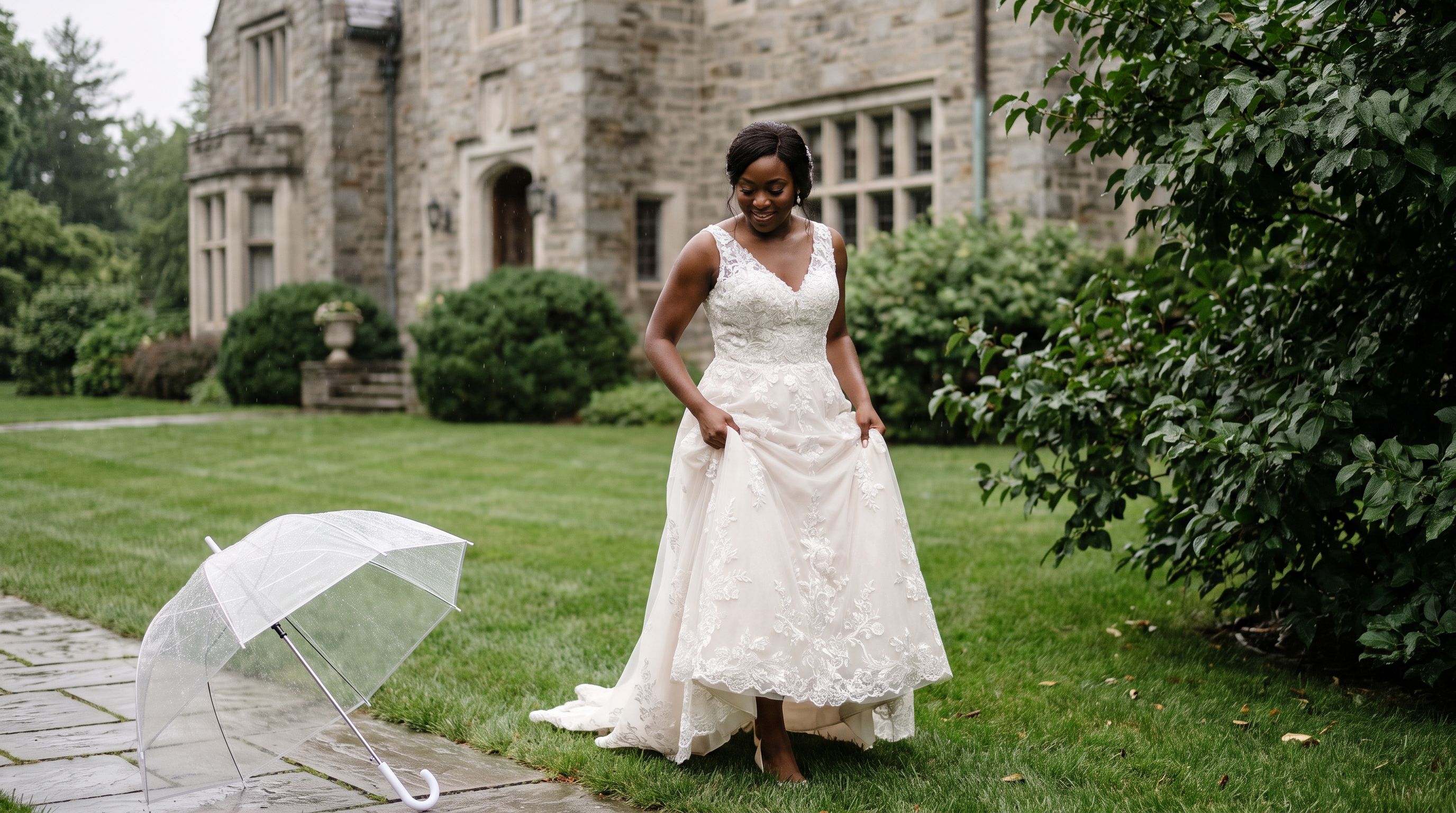
Outdoor Wedding Dress: Rain, Grass, and Humidity Guide
How to choose a custom outdoor wedding dress that survives rain, grass, wind, and humidity — fabric picks, hem strategy, and what weatherproofing costs.
Read guide →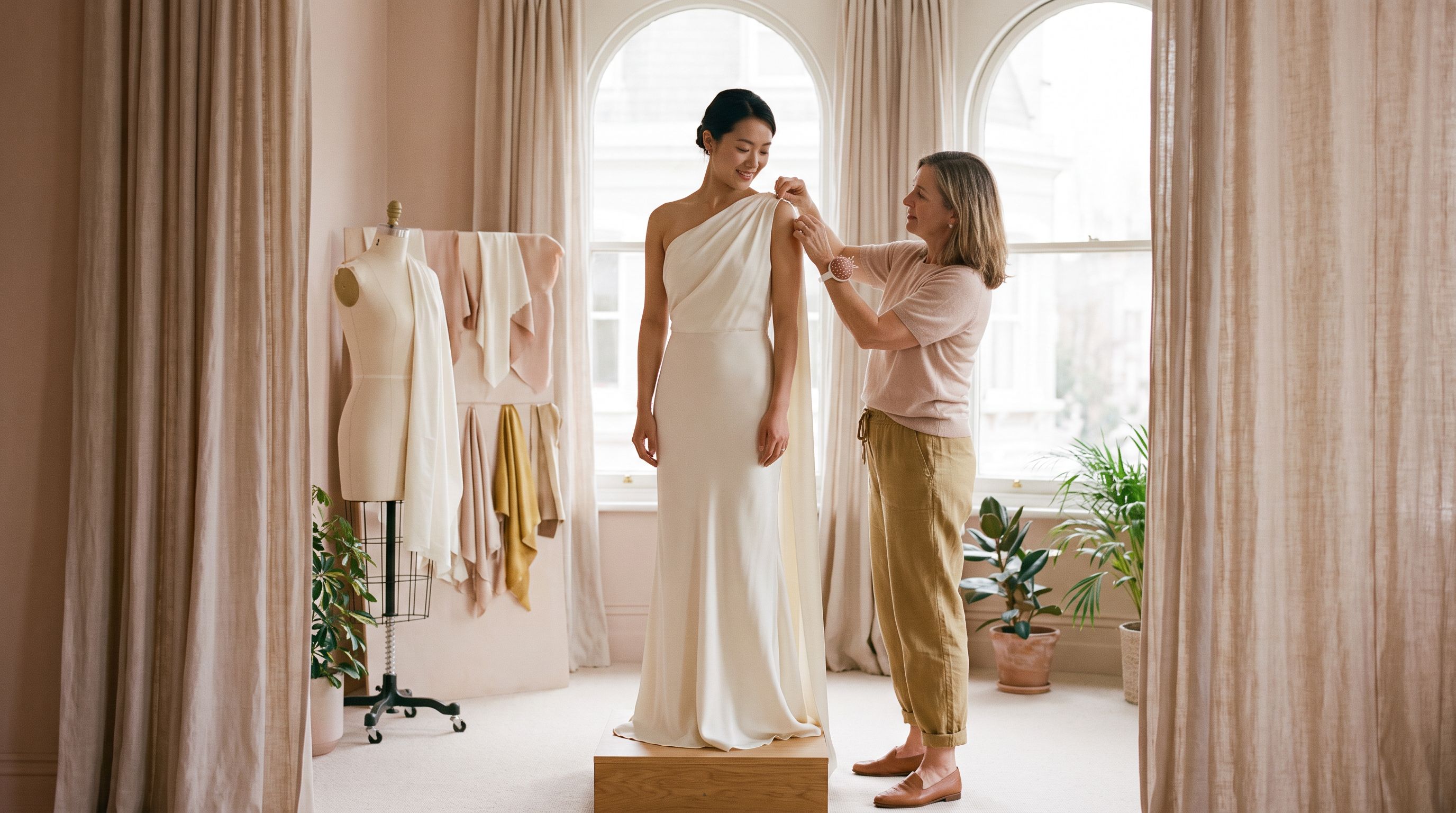
Halter vs One-Shoulder vs Asymmetric Gown: Fit & Cost
Halter vs one-shoulder wedding dress: how each neckline carries weight, flatters different shoulders and busts, what it costs custom, and what to ask your maker.
Read guide →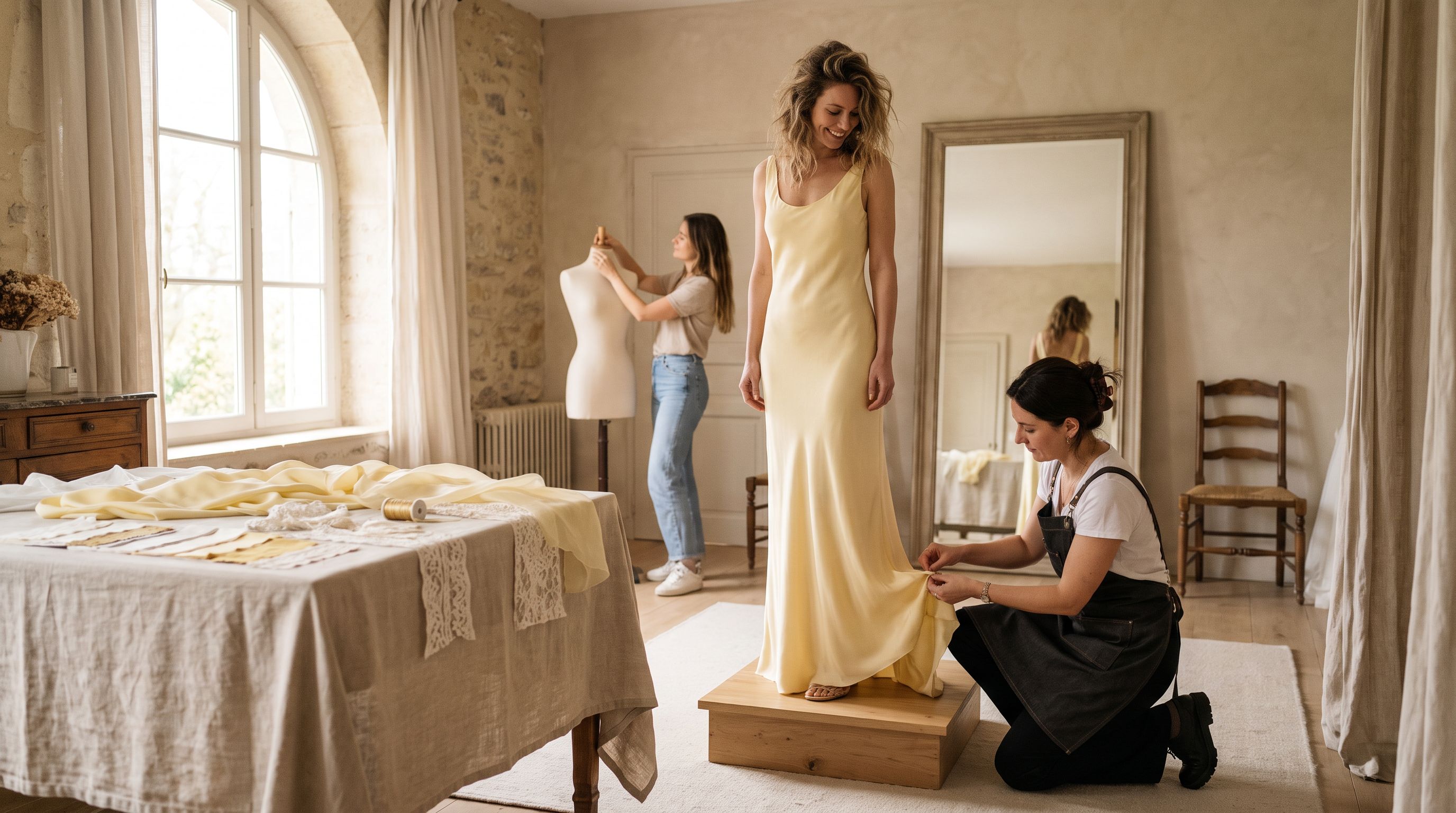
Butter Yellow Wedding Dress: Custom Color, Fit, Cost
Butter yellow is bridal's softest new neutral. Here's how custom dyeing works, which fabrics hold the shade, what it costs, and how to pick your tone.
Read guide →