 Custom
Mermaid vs Trumpet vs Fit-and-Flare: Custom Fit Guide
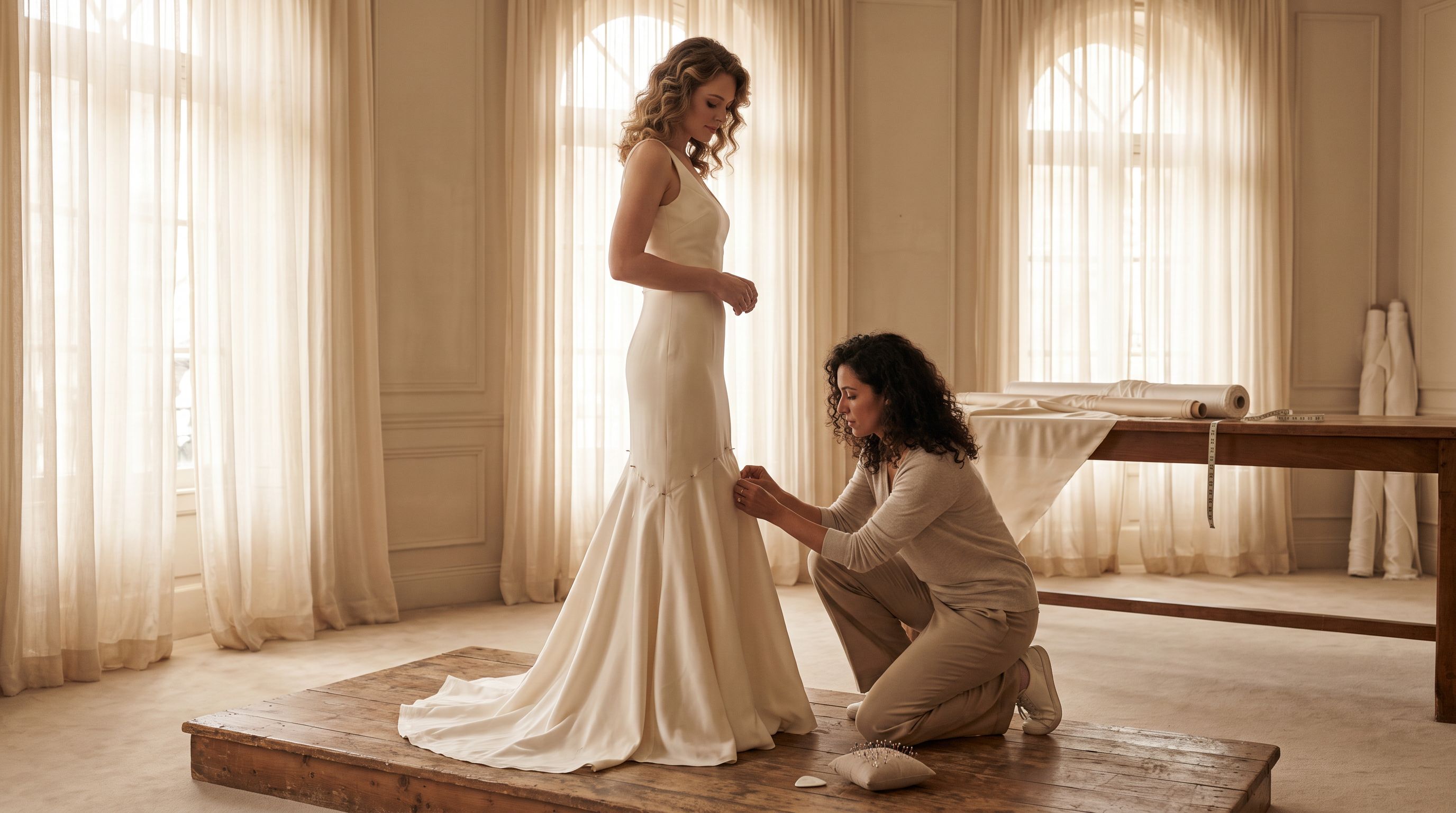
If you’ve been saving photos and noticed the same dress labeled “mermaid” on one site and “trumpet” on another, you’re not imagining it. Bridal vocabulary is loose, and shops use the words interchangeably all the time. But when you’re commissioning something made for your body, the distinction matters enormously — because the flare point is the single detail that decides whether your dress feels like a second skin or a beautiful trap.
Here’s the honest breakdown, from someone who has watched a lot of brides discover on their third fitting that they can’t get into a car.
Where each silhouette actually releases
Think of it as one continuous spectrum with three named stops.
Mermaid is the most dramatic. The gown is fitted through the bust, waist, hips, and thighs, and doesn’t release until around the knee or just below it. The flare is usually sharp and full — sometimes a separate flounce, sometimes godets set into the seams. It creates the most sculptural hourglass and the least freedom.
Trumpet releases higher, generally mid-thigh, and flares more gradually. It reads as fitted-but-walkable. It’s the silhouette most people think they want when they say mermaid.
Fit-and-flare is the gentlest. The skirt starts easing out somewhere around the upper thigh or even the high hip, so it skims rather than grips through the lower body. It still shows your waist clearly but forgives everything below it.
How each one feels to actually wear
Trumpet sits between the two and is, for many people, the sweet spot: you get most of the mermaid drama with roughly half the constraint.
Choose your silhouette for the hour you’ll spend hugging people, not the ninety seconds you’ll spend posing.
Choosing by proportion, not by body-type charts
Ignore the old rules that assign silhouettes to fruit shapes. What actually matters is where your own curves and lengths fall.
- If your hip is significantly fuller than your bust, a higher flare point (fit-and-flare, or a trumpet released a touch early) keeps the skirt from gripping the widest part of your thigh. Our guide for pear-shaped brides goes deeper on seam placement here.
- If you have a full bust and a defined waist, all three work — your decision comes down to support and movement rather than shape. What matters more is the internal structure, and the corset versus built-in bra question is worth reading before your first appointment.
- If you’re petite, a true mermaid can visually shorten the leg, because the flare starts low on an already-short lower body. Raising the release point restores your proportions instantly.
- If you’re tall or long-legged, mermaid is genuinely your friend — you have the length to carry the low break.
- If your midsection is where you feel least at ease, a fitted silhouette is not off-limits. Boned, well-engineered fitted gowns are often more comfortable and smoothing than a loose A-line, because the structure lives in the dress instead of on your body.
What fitted silhouettes cost to make custom
Fitted gowns are the most labor-intensive shape a dressmaker can build. There’s nowhere to hide: every seam sits directly on the body, so the pattern has to be exact, and the toile usually goes through more revisions than a flowing A-line would.
The cost drivers to ask about specifically:
- Number of seams and panels. A six-panel fitted skirt costs more to draft and sew than a two-panel one, but it fits better.
- Godets or a separate flounce. Inserting shaped panels into the flare is fiddly, precise work — especially in lace, where the pattern has to be matched across each insert.
- Internal structure. Boning channels, a corselet, horsehair braid in the hem, and a waist stay all add hours.
- Fabric behavior. Stretch crepe forgives; silk satin and mikado do not. Read our crepe vs satin vs mikado comparison before you fall for a fabric that fights your silhouette.
- Train and bustle. A fitted gown with a long train needs a bustle that respects the flare — usually a French or ballroom bustle with more points than average.
The fitting process for a close-fitting gown
-
Measurements and silhouette conversation
Your maker measures you and — crucially — asks about your day. Venue, stairs, seated time, dancing, weather. This is where the flare point gets decided, ideally with chalk marked on your leg in front of a mirror. -
Toile (muslin) fitting
A calico mock-up, usually with the flare pinned rather than sewn so it can be moved. Walk in it. Sit. Climb a step. Say out loud if it feels tight — nobody can see your discomfort from behind a pin cushion. -
Second toile or first fabric fitting
Fitted gowns often need a second toile. Don’t read that as a bad sign; it’s a sign your maker is being careful. -
Structure fitting
Boning, cups, waist stay, and linings go in. Your silhouette suddenly appears. Check the flare point again now that the bodice is holding you differently. -
Final fitting and hem
Hem is set with your exact shoes and any undergarments. Bustle is pinned and someone you trust learns it, on camera.
What to ask before you commit
Bring these to a consultation: Where exactly will the flare start, in inches from the floor? Will you pin the toile flare so we can test it before sewing? Can I walk and sit in the toile? How many fittings are included in the quote, and what happens if I need a sixth? Is the bustle included? How much ease do you build in at the hip for a full day’s wear?
A maker who answers these precisely — and who asks you about stairs and dinner before showing you sketches — is the one you want. If you’re at the point of comparing silhouettes seriously, a consultation with someone who’ll chalk the flare line on you in a mirror is worth far more than another hour of scrolling. Many dressmakers offer that first conversation free, and it costs nothing to find out what they’d recommend for your body and your day.
Ready to bring your dream dress to life?
Tell us what you're picturing — style, timeline, and budget — and we'll connect you with custom dressmakers who can make it. Free, no obligation.
Get matched with a dressmakerRelated guides
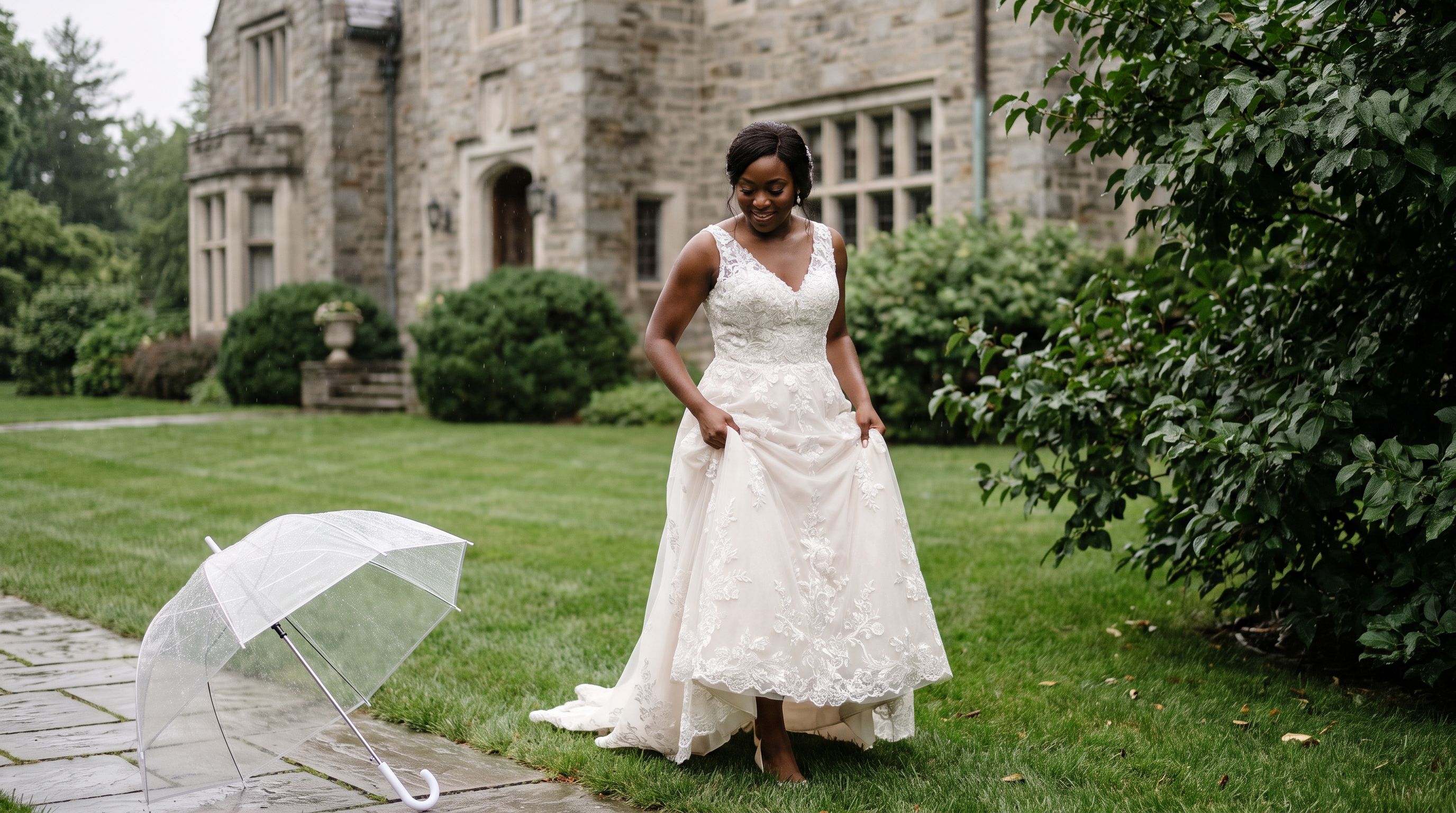
Outdoor Wedding Dress: Rain, Grass, and Humidity Guide
How to choose a custom outdoor wedding dress that survives rain, grass, wind, and humidity — fabric picks, hem strategy, and what weatherproofing costs.
Read guide →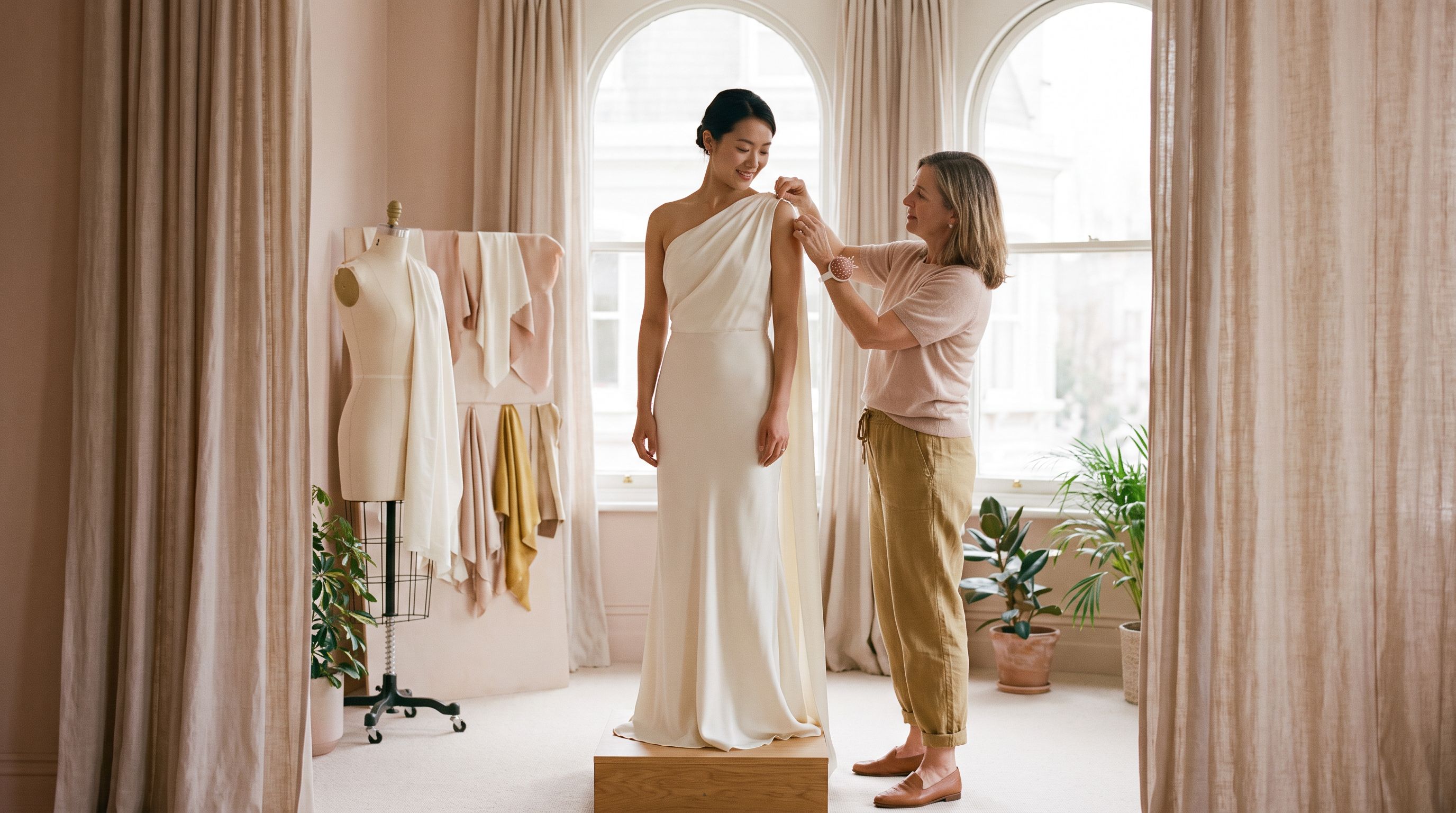
Halter vs One-Shoulder vs Asymmetric Gown: Fit & Cost
Halter vs one-shoulder wedding dress: how each neckline carries weight, flatters different shoulders and busts, what it costs custom, and what to ask your maker.
Read guide →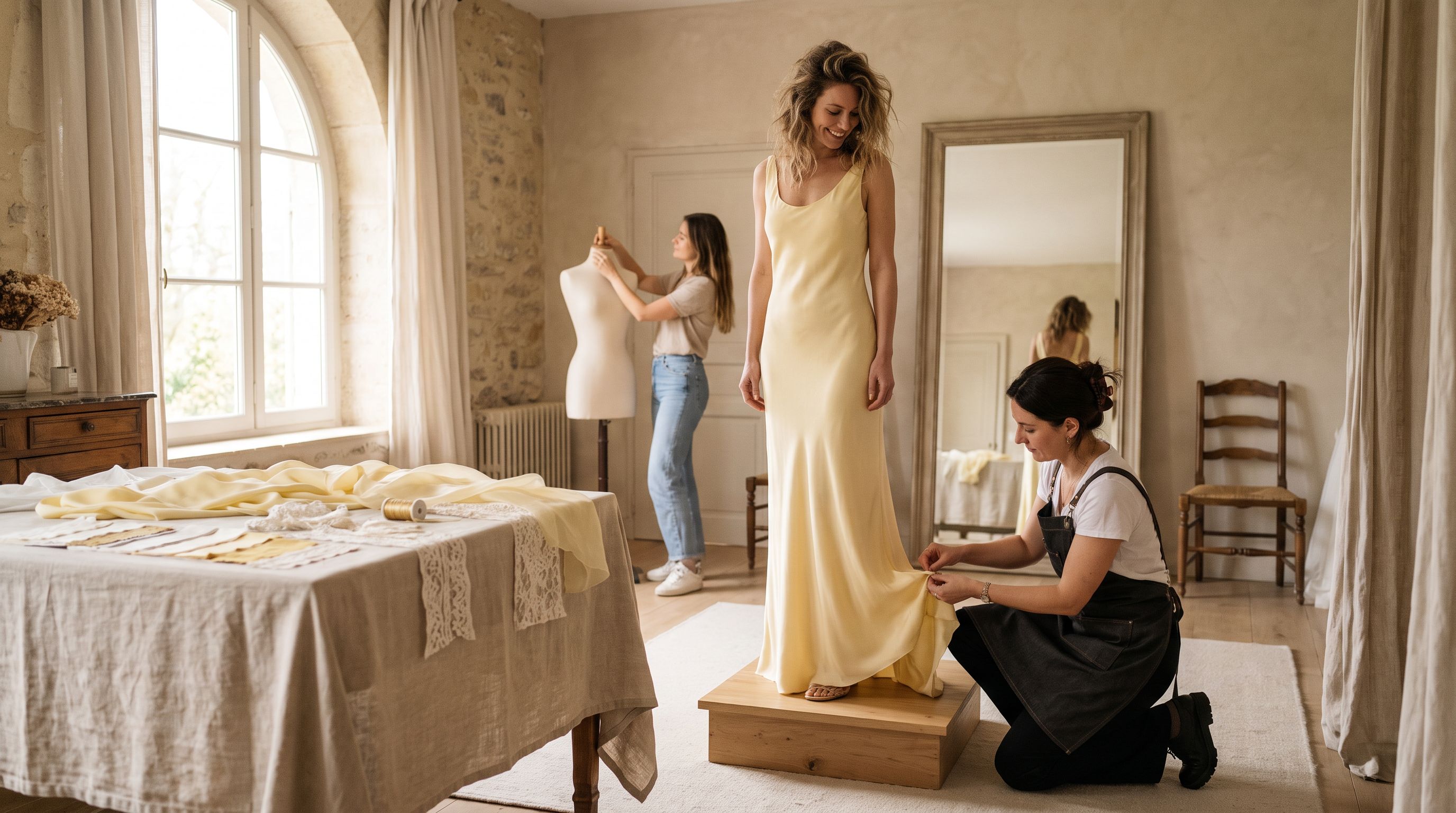
Butter Yellow Wedding Dress: Custom Color, Fit, Cost
Butter yellow is bridal's softest new neutral. Here's how custom dyeing works, which fabrics hold the shade, what it costs, and how to pick your tone.
Read guide →