 Custom
 Wedding Dress for Brides Over 50: A Fit Guide
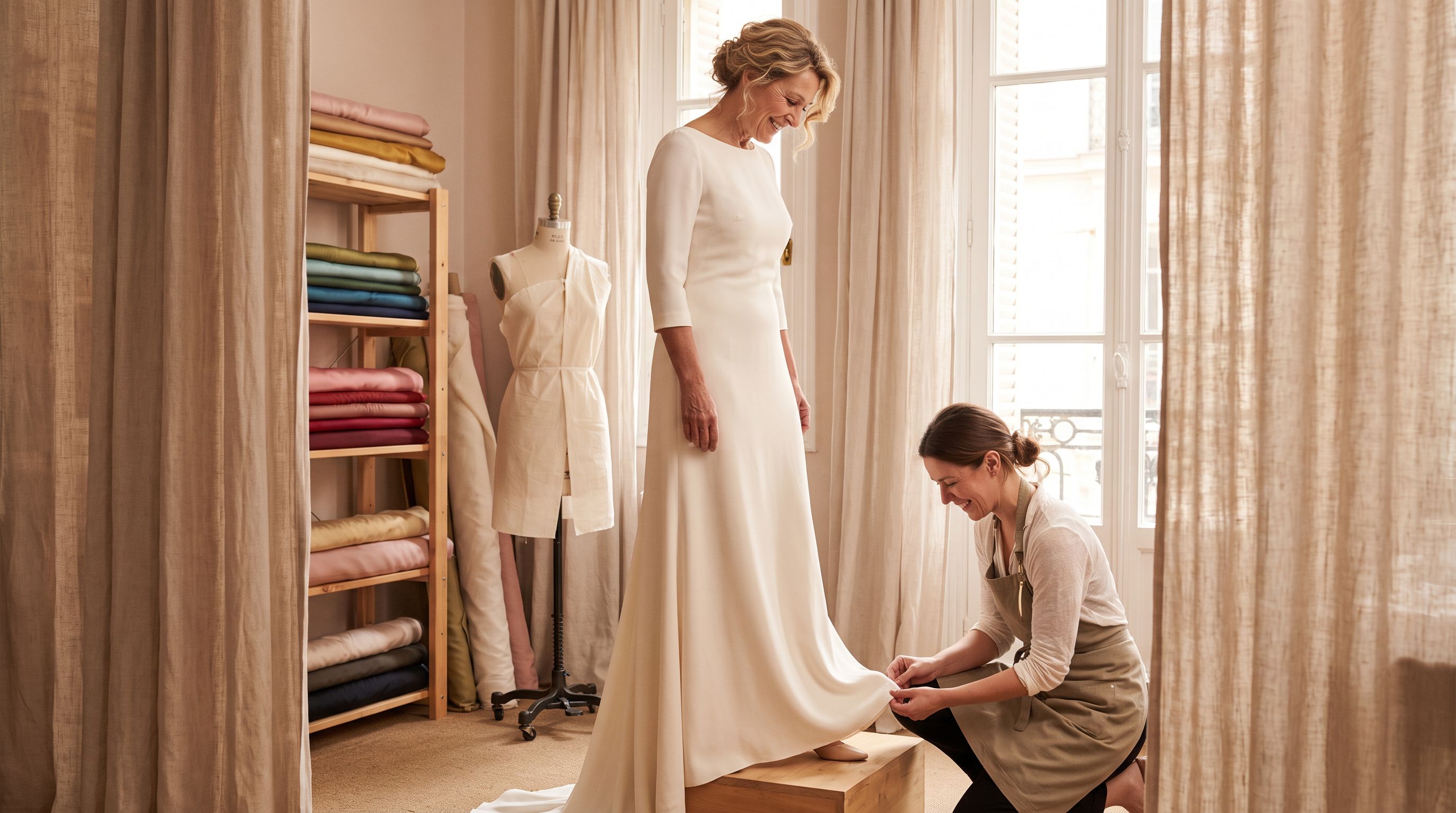
Why the “older bride” bridal aisle feels so limiting
Go looking and you’ll find two extremes: stiff beaded jackets in a narrow range of beiges, or the same strapless ballgown everyone else is wearing, photographed on a 22-year-old. Neither reflects what most brides over 50 actually want, which is usually simple to describe and surprisingly hard to buy: beautiful fabric, a clean line, a neckline you feel good in, and sleeves or straps that stay put all night.
The reason off-the-rack struggles here isn’t age. It’s that bridal samples are cut on one fit model, in one size, with strapless bodices as the default — because a strapless bodice is the cheapest thing to grade across sizes. Everything you might want layered on top of that (a sleeve that fits your actual arm, a waist that sits where your waist is now, a built-in bra engineered for your bust) is either an upcharge, an alteration, or simply not possible on that dress.
A custom or made-to-measure gown starts from the opposite direction: your measurements, your posture, your preferences, then the design.
Sleeves and coverage: the most requested change, by far
If there’s one near-universal request in this group, it’s some form of sleeve or strap — often less for coverage than for comfort, for photographs, for an evening ceremony, or simply because a strapless bodice means thinking about your dress all day.
What custom gives you that a bolero or an added-on sleeve rarely does is a sleeve cut as part of the garment. The armhole gets shaped for your shoulder, the sleeve cap is drafted to let you raise your arms (hugging a hundred people is a workout), and the fabric matches the bodice exactly rather than almost. Popular choices include a soft three-quarter sleeve in matching crepe, an illusion tulle sleeve with scattered lace that reads light rather than covered, a flutter or cap sleeve for warm weather, and a wide off-shoulder band that frames the collarbone while taking the weight off a strapless edge.
If you’re weighing which style suits your arms, your season, and your budget, our breakdown of sleeve styles, fit, and cost walks through what each one adds to the price.
Support that doesn’t depend on squeezing
The second thing worth spending your custom budget on is internal construction. A good dressmaker builds support into the gown: a boned inner corselet or a structured underbodice that carries the dress, so the outer layer can skim rather than grip. The result is a gown that stays up without compression — which matters enormously if you’re wearing it for ten hours.
This is also where custom quietly outperforms alterations. An alterations specialist can take in an existing bodice, but they can’t always add real support to a dress that was never engineered for it.
A gown that holds you up is more comfortable than a gown that holds you in. Those are two different pieces of engineering.
Comfort and access details worth naming out loud
These are easy to design in and nearly impossible to retrofit, so raise them at the first appointment. Closures: forty tiny fabric loops look lovely and are miserable if your hands or shoulders are stiff — ask for a side or back zip, larger covered buttons over a concealed zip, or a hook-and-bar placket you can manage with one helper. Boning: tell your maker you want to sit comfortably through a long dinner; channels can be shortened at the front hip and softer spiral boning used so nothing digs in when you bend. Weight: a cathedral train and five layers of tulle are heavy by hour eight — lighter linings, a shorter train, or a detachable overskirt keep the look without the load. And pockets are one of the great quiet luxuries of custom: a seam pocket deep enough for reading glasses, hearing-aid batteries, an inhaler, or lipstick costs very little to add.
Fabric and colour choices that read modern
The fastest way to make a gown look dated is heavy, shiny, synthetic satin with visible structure underneath. The fastest way to make one look expensive is beautiful fabric cut cleanly. Silk or high-quality crepe, soft mikado, fine wool crepe for winter, silk georgette for heat — these drape, move, and photograph with depth.
Colour is worth real attention too. Stark optic white can be unforgiving against many complexions under warm reception lighting; ivory, champagne, oyster, or a soft blush often sit more kindly. Bring swatches to a window in daylight and hold them against your face, not your hand. Our ivory, champagne, and blush comparison covers how each behaves on camera.
And white is only one tradition among many. Custom suits a red qipao or lehenga for a Chinese or Indian ceremony just as well, or a jewel-toned gown for a registry office, a second marriage, or a day where you want two looks — ceremony and party. A good dressmaker can source Banarasi silk, hand-embroidered borders, or a specific dyed shade as readily as bridal ivory; ask to see work they’ve done in colour.
What a custom gown typically costs, and what moves the number
There’s no reliable “average” to quote you — pricing varies enormously by city, by maker, and by how much hand-work your design involves. What’s more useful is a range plus the levers that move it.
The real cost drivers, in rough order of impact: labour hours (hand-beading, boning, linings, covered buttons, a hand-finished hem), fabric (silk crepe versus a good polyester crepe can be a multiple, and a full skirt eats metres), the maker’s experience and location, and changes of mind after the toile stage. Sleeves, support, and pockets add modestly. A cathedral train adds fabric and a bustle.
If four figures is more than you want to spend, say so plainly — there are real options below that range. Made-to-measure from a dressmaker’s existing block costs less than a gown drafted from scratch. A simpler unlined design in a good crepe, with one fitting instead of four, brings the labour down sharply. Many makers work remotely with guided self-measurement and a posted toile. And restyling a gown you already own, or an heirloom from your mother or grandmother, is often the most meaningful route of all.
Custom, off-the-rack, or altering something you already love?
Is custom cheaper? Sometimes — especially if the gown you love needs a hem, a bodice rebuild, straps added, and a bustle. Sometimes not, particularly against a sample sale. The useful question isn’t which is cheaper in the abstract, it’s which is cheaper for the dress you actually want; we ran the numbers in custom versus off-the-rack cost.
The timeline, step by step
-
Consultation (6–12 months out)
Bring inspiration images, shoes if you have them, and the undergarments you expect to wear. Talk through venue, season, and how long you’ll be in the dress. -
Measurements and design sign-off
Twenty-plus measurements, a sketch or technical drawing, fabric swatches, and a written quote with a payment schedule. -
Toile / muslin fitting (around 3–4 months out)
A calico mock-up you can pin, mark, and criticise freely. Sleeve height, neckline depth, and waist placement get decided here — change your mind now, not later. -
Fittings in real fabric (2–3 appointments)
Bodice first, then skirt and hem, then finishing: closures, bustle, hem length with your actual shoes. -
Final fitting (2–4 weeks out)
Full dress-rehearsal fitting with undergarments, jewellery, and a bustle lesson for whoever will tie it.
If you’re inside three or four months, say so at the first phone call. Many dressmakers can work to a short timeline with a simplified design — it’s late changes, not short notice, that cause trouble.
If you’re remarrying, there’s more nuance around tone, colour, and what you want this dress to say — we covered that in custom gowns for a second wedding or vow renewal.
When you’re ready, the most useful next step is simply talking to a maker who has built this kind of gown before — bring two or three images and your date, and let them tell you honestly what’s possible in your budget and timeline.
Ready to bring your dream dress to life?
Tell us what you're picturing — style, timeline, and budget — and we'll connect you with custom dressmakers who can make it. Free, no obligation.
Get matched with a dressmakerRelated guides
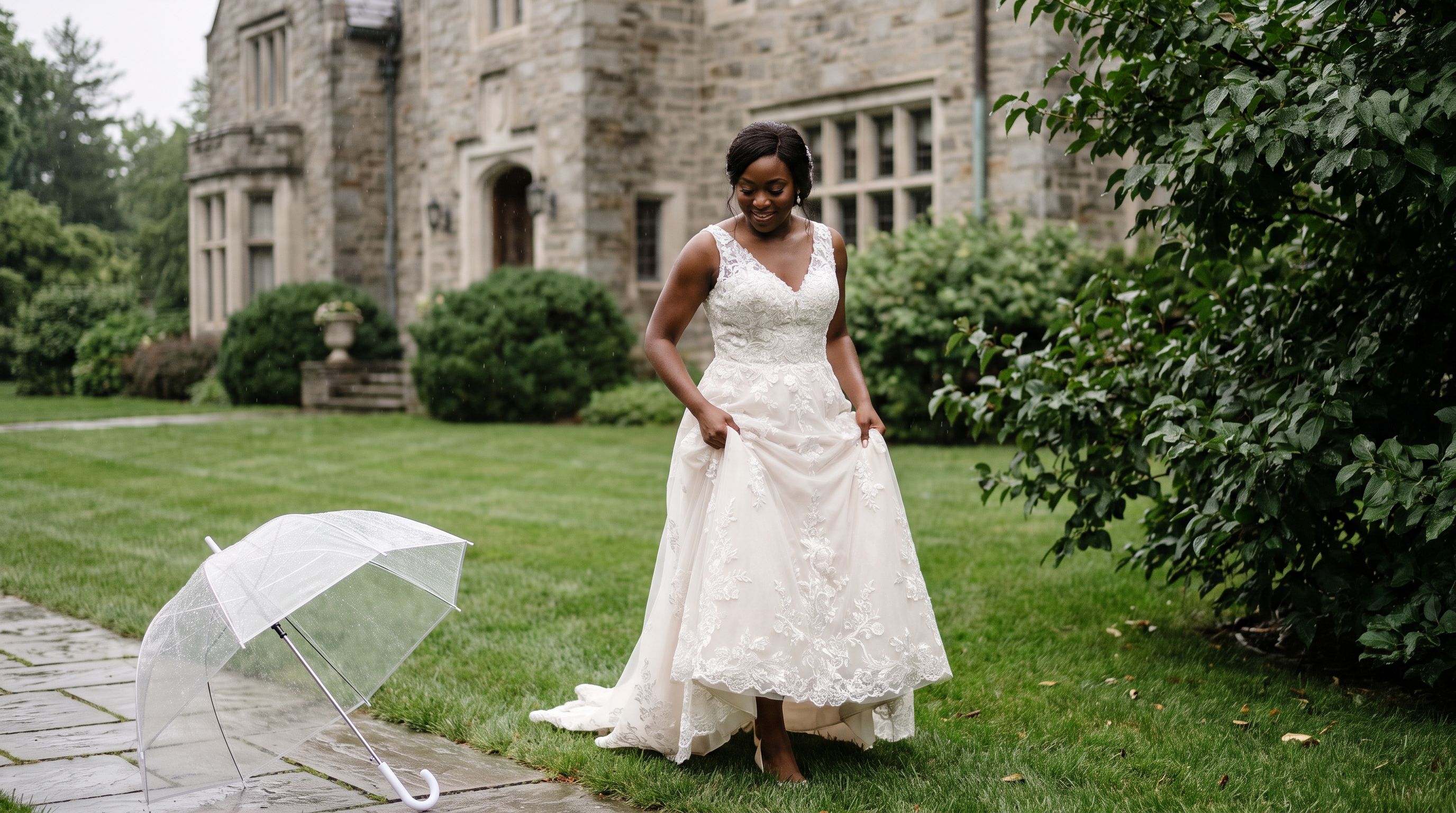
Outdoor Wedding Dress: Rain, Grass, and Humidity Guide
How to choose a custom outdoor wedding dress that survives rain, grass, wind, and humidity — fabric picks, hem strategy, and what weatherproofing costs.
Read guide →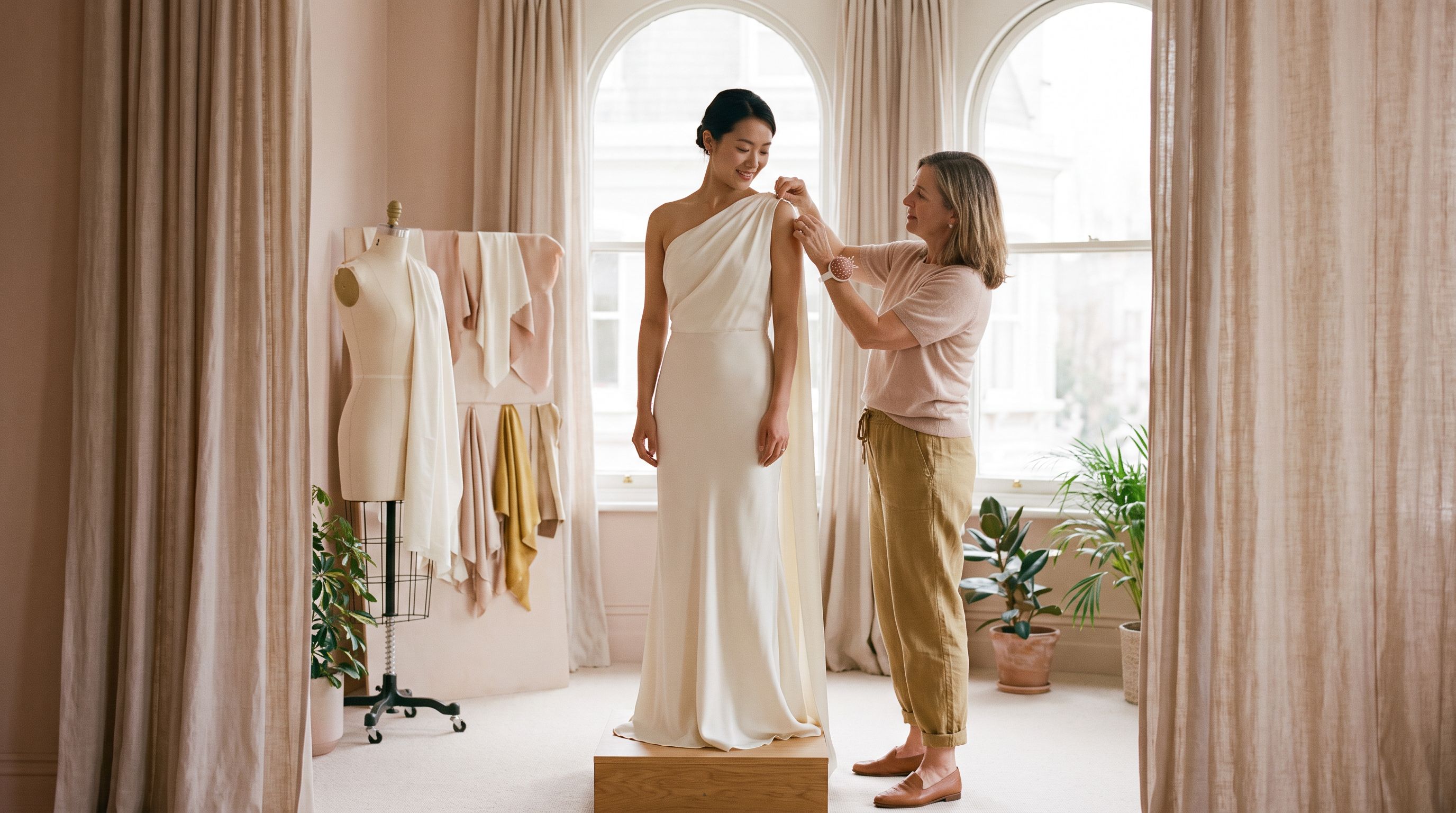
Halter vs One-Shoulder vs Asymmetric Gown: Fit & Cost
Halter vs one-shoulder wedding dress: how each neckline carries weight, flatters different shoulders and busts, what it costs custom, and what to ask your maker.
Read guide →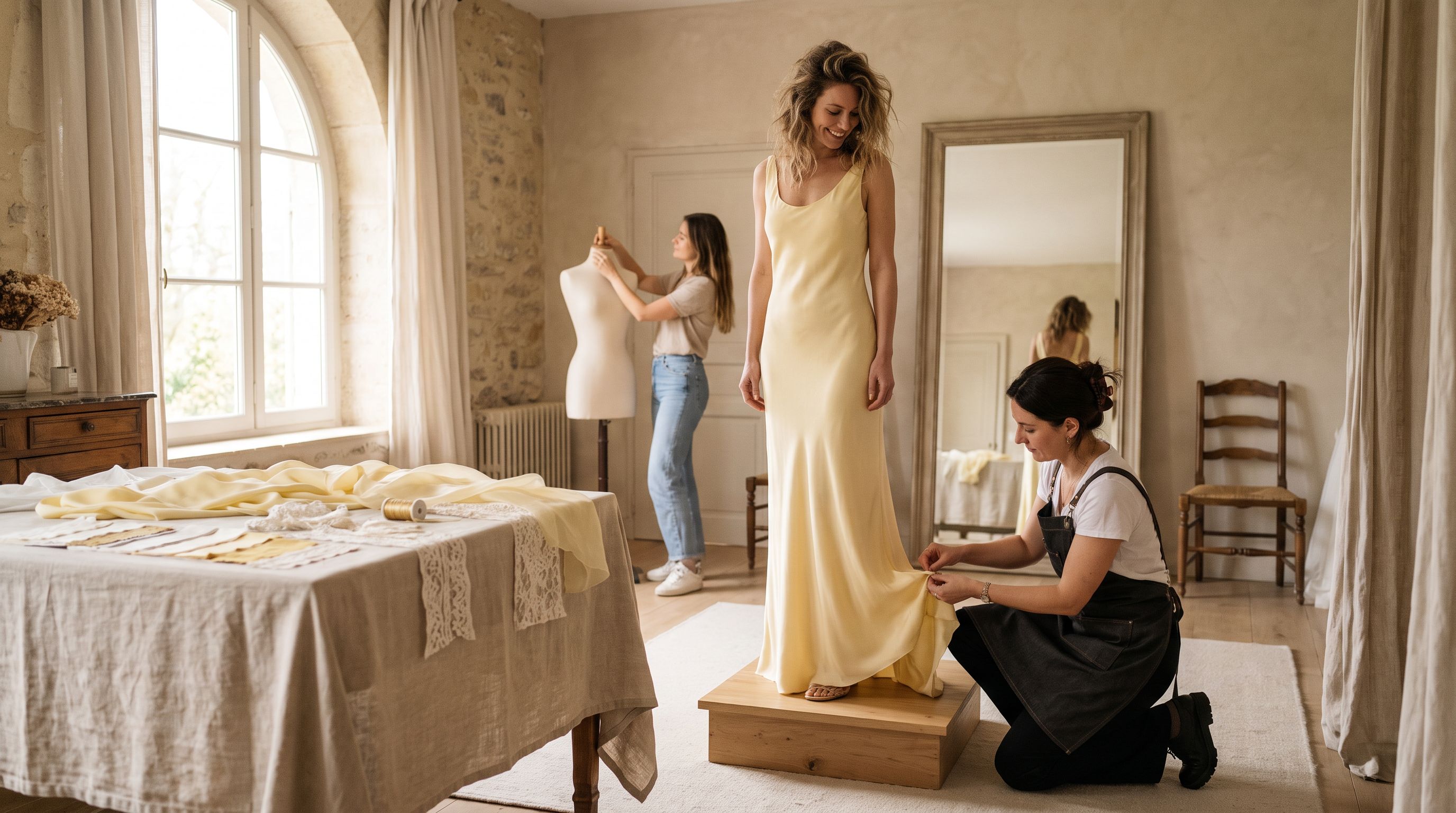
Butter Yellow Wedding Dress: Custom Color, Fit, Cost
Butter yellow is bridal's softest new neutral. Here's how custom dyeing works, which fabrics hold the shade, what it costs, and how to pick your tone.
Read guide →