 Custom
 Colored Wedding Dress: Black, Blue, or Red
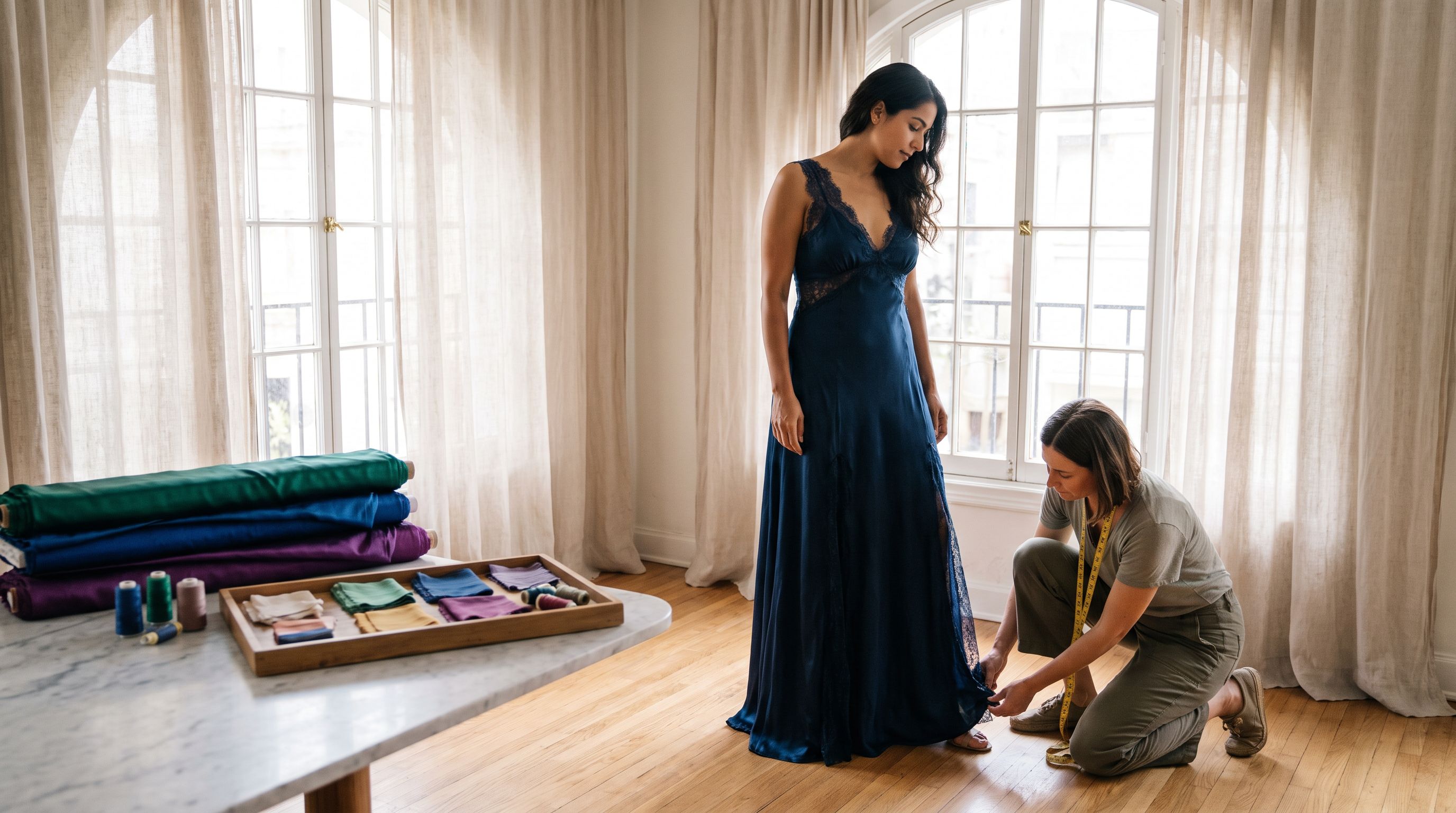
Why color is one of the best reasons to go custom
Walk into most bridal salons — including the big, famous ones — and you’ll find a wall of white, ivory, diamond white, and champagne, with maybe a few blush styles. A designer releases a colored gown or two a season; resale sites carry whatever happened to be made. If you want a specific shade — not a blue dress, but your blue — the ready-to-wear supply chain simply isn’t set up to deliver it.
That makes color one of the clearest, least agonized-over reasons to work with a dressmaker: you’re not paying custom prices for a silhouette you could have bought. People getting married arrive at color from many directions. Second weddings and vow renewals where white feels beside the point. Red and gold in Chinese and many South Asian ceremonies, where the shade carries meaning around luck, prosperity, and blessing — and where, in parts of East Asia, white has historically been the color of mourning. Multi-outfit wedding days, where a qipao, lehenga, or áo dài shares the schedule with a Western-style gown. And people who have never worn white in their lives and aren’t going to start now.
Three ways a dressmaker can give you color
Sourcing woven-color fabric. Silk crepe, satin, mikado, velvet, and taffeta are milled in dozens of colors. This is the most reliable route — the color is consistent, colorfast, and quality-controlled. The limit is availability: your perfect emerald might only exist in a weight that’s wrong for your silhouette.
Dyeing white or ivory fabric. This gets you a precise shade, and it’s often the only way to match a swatch, a flower, or a photo. Natural fibers take dye beautifully; synthetics need different chemistry; mixed-fiber laces dye unevenly — sometimes a stunning tonal effect, sometimes a mess.
Colored lining under sheer overlays. Ivory Chantilly over dusty blue, or a nude base under black tulle, gives depth without committing the whole gown to dye, and lets you use beautiful lace in its original ivory while the underlayer does the color work.
What color actually adds to the price
Color itself is usually a modest line item, not a doubling of your budget. Price is still driven by fabric quality, yardage, construction complexity, hand-beading, and the maker’s experience and location. Color layers on top.
That third figure is one route, not the only one. Color is very achievable on a smaller budget. An independent seamstress can dye and alter a simple existing gown — a plain crepe or cotton piece takes color far better than a heavily beaded one. Mill-dyed polyester or rayon crepe costs a fraction of silk and holds deep shades permanently. You can also limit color to one removable piece: a cape, a sash, a tulle overskirt over an ivory base. And commissioning only a colored reception dress, with a borrowed or secondhand ceremony gown, keeps the custom work small and the impact high.
Where color does push costs up: if beading, appliqué, or embroidery must match or contrast a dyed base, each component has to be sourced or dyed to coordinate. A colored gown you find ready-made will nearly always cost less upfront — the alterations math that narrows that gap is in our custom versus off-the-rack cost breakdown.
Ivory is forgiving. Garnet silk is an exam — every pressing mark, seam shadow, and puckered stitch sits right there on the surface.
Picking a shade that looks right on you — and on camera
- Undertone matters more than depth. Warm golds, rusts, olives, and tomato reds behave differently against your skin than cool berry, emerald, and ice blue. Hold large swatches — at least a half-yard — against your bare neck and chest in daylight.
- Consider depth and sheen together. Deep saturated shades read as one unbroken mass, which many people with a fuller bust or hip love for its long, clean line. High-sheen satin does the opposite, throwing a bright highlight wherever fabric curves over the body. Matte crepe or velvet gives you the same depth without the glare.
- Test under your actual lighting. Candlelight warms everything; tungsten uplighting pushes amber; overcast light cools a shade down. Deep green can read almost black indoors at night. Photograph swatches in several lights, including flash.
- Look at your venue and your party. A navy gown in front of a navy bridesmaid lineup disappears, as does black against dark paneling.
The fabrics that take color beautifully — and the ones that fight it
Silk is the star. Silk crepe holds deep color with matte sophistication; silk satin turns it luminous; mikado gives structured saturation that photographs like paint. Our guide to crepe versus satin versus mikado explains how each behaves in a gown — all three dye or source well.
Velvet is gorgeous for autumn and winter, but it has a nap direction: panels cut the wrong way read as two different shades, and that mismatch is far more obvious across wide panels. Polyester holds color permanently and resists staining but needs disperse dyeing. Beaded lace is trickiest — net, cord, sequins, and beads can all react differently to one dye bath.
The details that give a colored gown away
This is where an experienced maker earns their fee. Ask how they’ll handle:
- Thread color for topstitching, hems, and hand-finishing
- Zipper tape, hook-and-eye closures, and covered buttons
- Boning channels, horsehair braid, and interfacing that may shadow through
- Lining and built-in support — a white bra cup under a red bodice shows in photos
- Color transfer: deep dyes on silk can rub onto skin or a white veil with heat and friction
-
Bring color references, not just dress references
Paint chips, a flower, a fabric scrap. Say out loud what you want the color to feel like — moody, warm, jewel-bright, dusty. -
Ask how they'd achieve it
Source, dye, or layer? Have they made this shade before, and in what fabric? -
Approve the swatch in writing
Staple it to your contract or photograph it with a date. This protects you both if final yardage differs. -
Check color at the toile stage
Pin the real fabric to your muslin and see the shade against your face, full length, in a mirror. -
Confirm interiors and finishes
Lining, thread, zipper, and support structure color — settled before cutting begins.
If you’re torn between a colored gown and a white one
You don’t have to choose. Many people commission an ivory ceremony gown and a colored second look, or build in a removable colored overskirt or cape — sheer black tulle over ivory silk is one of the most striking, lowest-risk versions of this.
And if you’re planning a second wedding, a vow renewal, or a ceremony where white was never the plan, color stops feeling like a statement and starts feeling like common sense. Our guide to dressing for a second wedding or vow renewal covers that mindset in more depth.
When you book that first conversation, come prepared: half-yard swatches rather than chips, photos of your venue taken at the actual hour your ceremony starts, and a written budget ceiling you’re comfortable saying out loud. Then ask three things — how they’d achieve your shade, whether they can show you prior colored work photographed both in daylight and at night, and what their colorfastness and cleaning plan is. An hour spent that way will teach you more about your color than weeks of scrolling.
Ready to bring your dream dress to life?
Tell us what you're picturing — style, timeline, and budget — and we'll connect you with custom dressmakers who can make it. Free, no obligation.
Get matched with a dressmakerRelated guides
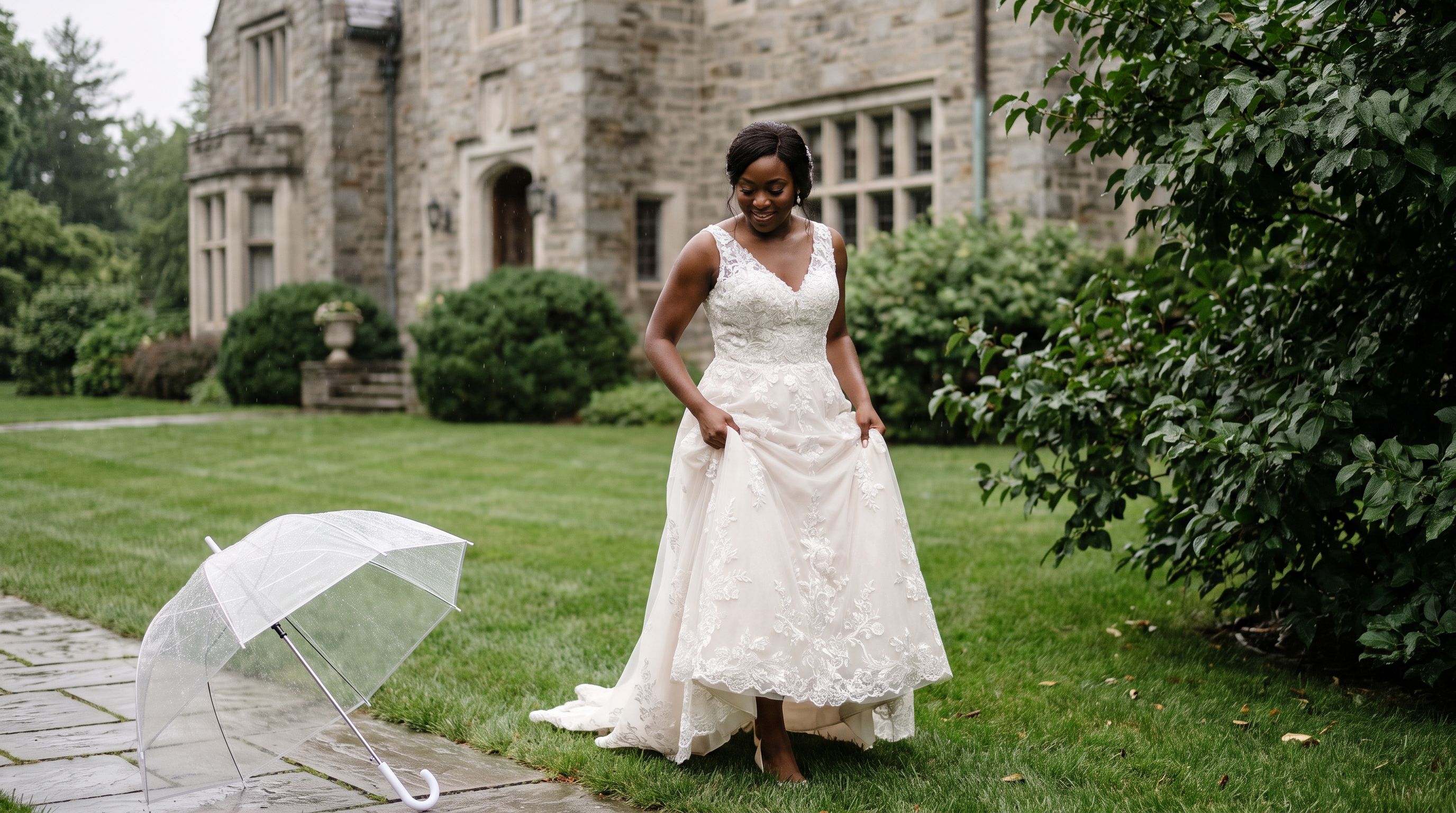
Outdoor Wedding Dress: Rain, Grass, and Humidity Guide
How to choose a custom outdoor wedding dress that survives rain, grass, wind, and humidity — fabric picks, hem strategy, and what weatherproofing costs.
Read guide →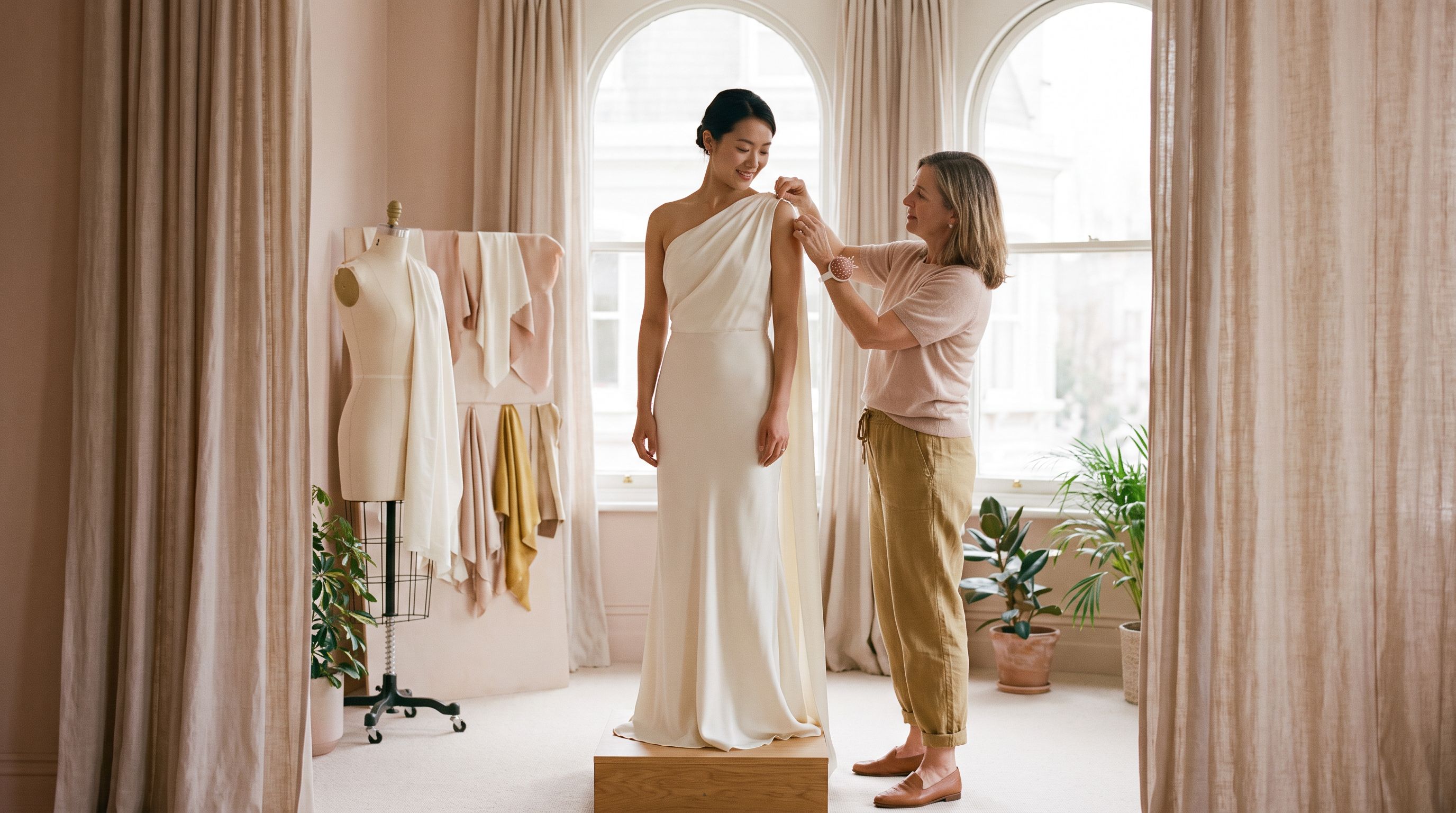
Halter vs One-Shoulder vs Asymmetric Gown: Fit & Cost
Halter vs one-shoulder wedding dress: how each neckline carries weight, flatters different shoulders and busts, what it costs custom, and what to ask your maker.
Read guide →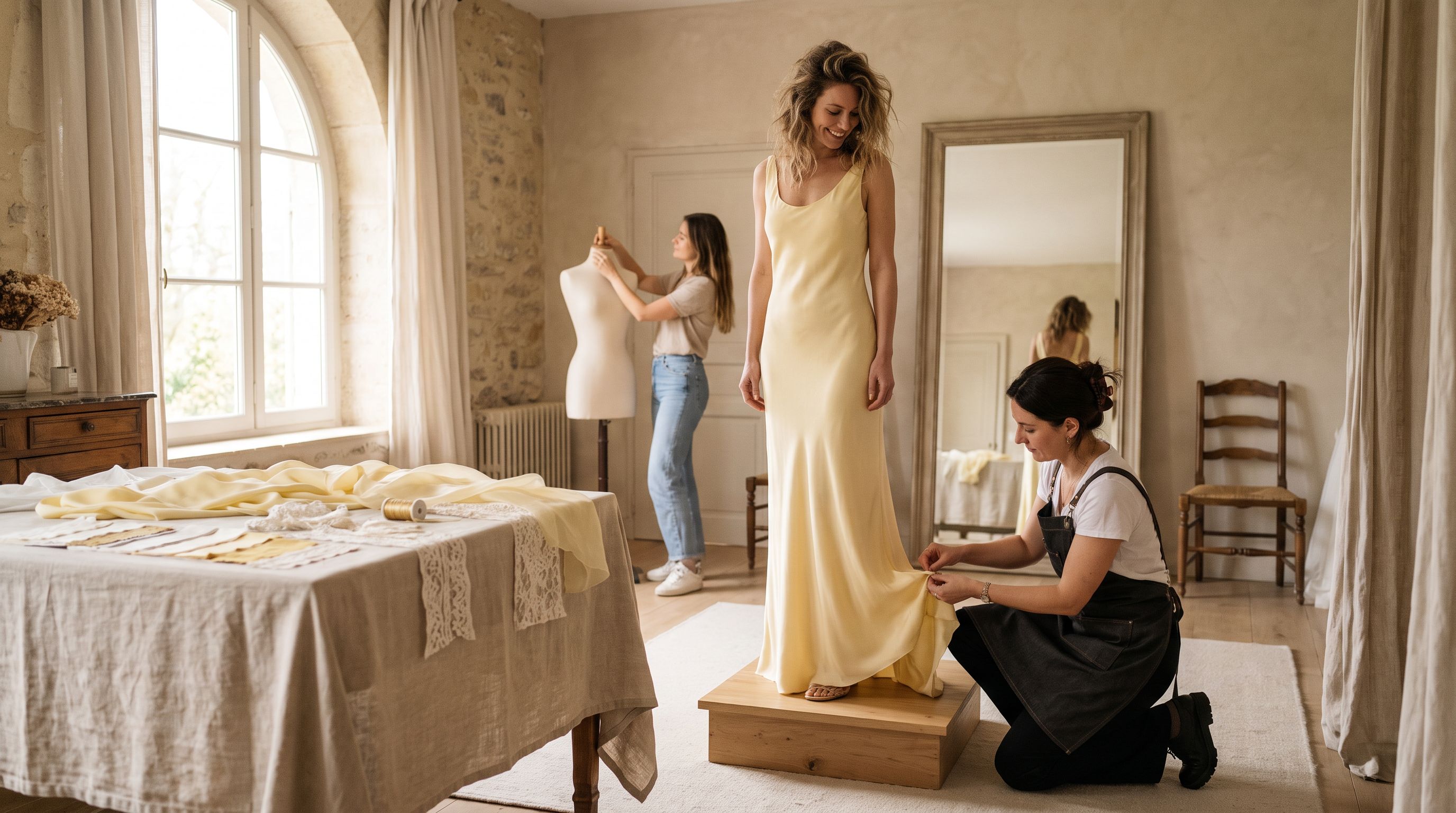
Butter Yellow Wedding Dress: Custom Color, Fit, Cost
Butter yellow is bridal's softest new neutral. Here's how custom dyeing works, which fabrics hold the shade, what it costs, and how to pick your tone.
Read guide →