 Custom
Wedding Dress Regret: Restyle, Resell, or Go Custom?
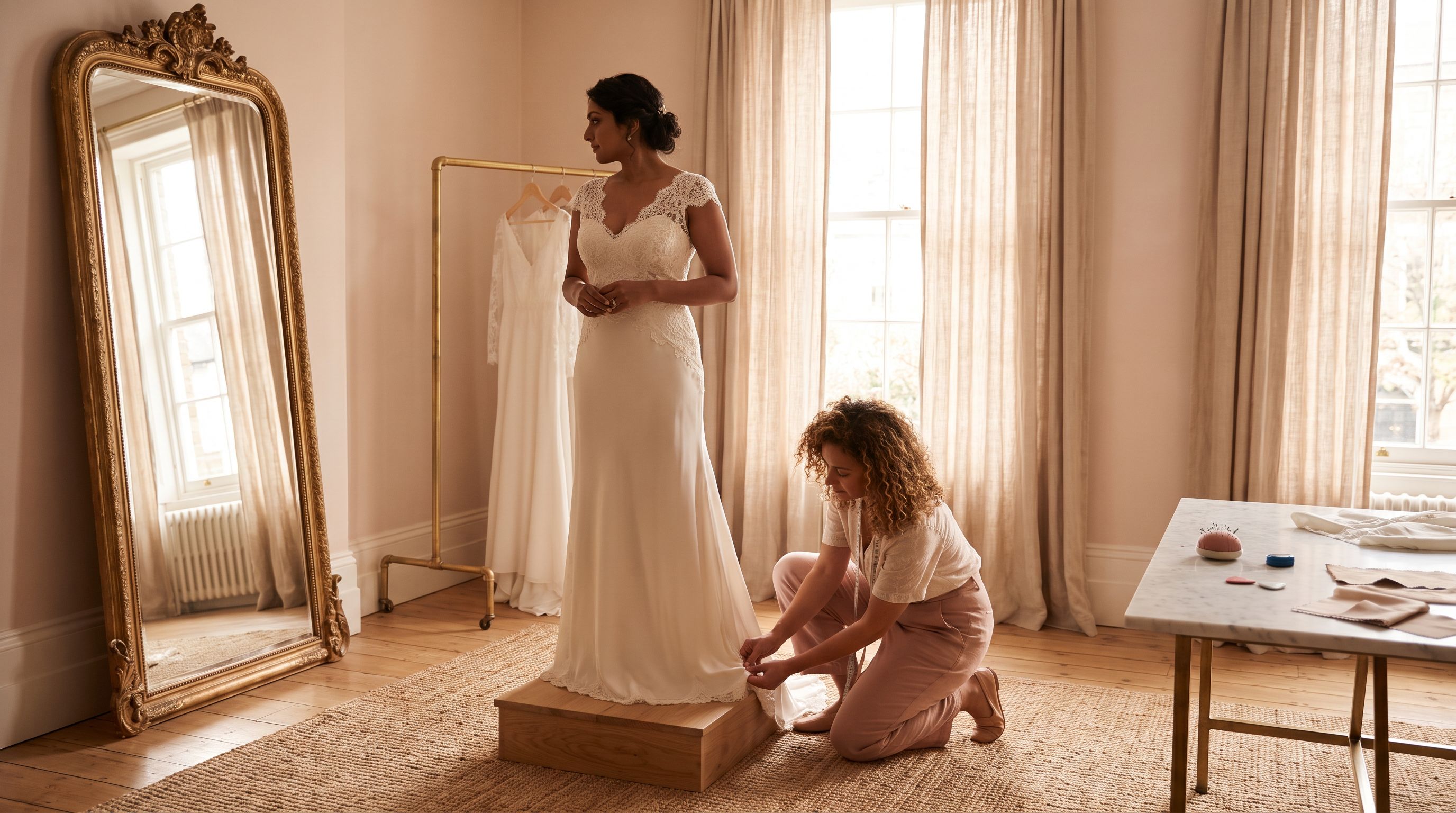
There’s a particular kind of silence that happens about three weeks after the dress arrives. You hang it up, you look at it, and something in you doesn’t sing. Maybe you said yes under pressure from a salon timer and a room of opinions. Maybe you ordered online from a photo. Maybe your body, your venue, or your whole vision of the day has shifted since.
(A note before we go further: not everyone wearing a gown is a bride — you might be a partner, a second-wedding guest of honour, a vow-renewer, or wearing it for a reception, a court ceremony, or a cultural celebration. Everything here applies to whoever’s wearing the dress.)
This is far more common than the industry admits, and it is usually fixable. Let’s work through it calmly.
First, name exactly what’s wrong
“I hate it” isn’t actionable. Put the dress on again — in daylight, with the undergarments and shoes you actually plan to wear, and ideally with one person whose taste you trust rather than a group chat. Then write down three specific sentences.
Almost every complaint falls into one of three buckets:
- Fit. It gapes at the bust, strains across the hips, swallows your waist, pools on the floor, or the bodice sits an inch too low on your torso. This is normal for an unaltered gown and is usually a solved problem, not a crisis.
- Design. The fit is fine, but the neckline is wrong, you want sleeves, the skirt is too much (or not enough), the back is too bare for your ceremony, the beading reads heavier in person than online.
- The dress itself. Nothing is technically wrong. It simply isn’t yours. You don’t feel like you when you wear it.
Check your contract before you check your feelings
Before you spend emotional energy, spend ten minutes on paperwork. Find out: Has the gown actually been cut and ordered, or is it still just a deposit? Is any portion refundable? Is there a cancellation or restocking clause? Does the salon offer a credit toward a different gown from the same designer?
Most bridal orders are non-refundable once placed — that’s standard, not a scam, because the gown is being made for you. But some salons will quietly exchange within a window, especially if the designer hasn’t cut yet. Ask politely, and ask in writing.
Option one: restyle the gown you already own
More is possible than most people assume — within one firm rule: it is always easier, cheaper, and safer to remove than to add.
A skilled seamstress can usually open a neckline, lower or raise a back, remove sleeves, strip a layer of tulle, remove appliqués, shorten a train, slim a skirt, or add structure and support inside. Adding is harder, because new fabric has to match — though a good maker can often harvest lace or fabric from the train, the inner layers, or a purchased second length to create sleeves, straps, a modesty panel, or a higher back.
One honest caveat about adding: harvested lace and newly sourced fabric frequently differ in tone or sheen from the gown itself, because dye lots vary and because fabric ages and softens differently once it’s been handled or stored. Sleeves built from train fabric can look seamless in the mirror and still read very slightly different under flash photography. Ask your maker to hold the proposed fabric against the bodice in daylight and under a phone flash before anything is cut, and decide then whether you can live with a near-match.
What generally cannot be done: making a gown meaningfully larger when there are no seam allowances left, changing the fundamental silhouette (a mermaid will not become a ball gown), or re-cutting a heavily beaded bodice without visible disruption. Those are the real boundaries, and a reputable alterations specialist will tell you where the limits of alterations end and custom begins rather than taking your money and hoping.
Cost drivers are predictable: how many layers the change crosses (a lined, boned, horsehair-hemmed ball gown is four or five garments in one), whether beading must be removed and re-applied by hand, whether matching fabric must be sourced, and the maker’s experience with bridal specifically.
Option two: resell and restart
If the gown is unworn and still in good condition, resale is real — through preowned marketplaces, local consignment, or bridal resale groups. A few mechanics make a genuine difference to what you get:
- Clean and press it first. Have it steamed, or professionally cleaned if it’s been tried on repeatedly or has deodorant or makeup marks. A creased gown photographs as a tired gown.
- Photograph it properly. On a dress form or on a body, in daylight near a window, against a plain wall — never crumpled on a bed or flat on a hanger. Shoot the front, back, hem, and a close-up of the lace or beading.
- Show the label and keep your paperwork. Photograph the original designer tag still attached. Keep your receipt or order confirmation, and state plainly in the listing that the gown is unworn and never altered — buyers pay more for proof, and alterations slash resale value because the next person can’t undo them.
- Subtract the commission before you celebrate. Consignment shops and resale platforms take a meaningful cut — often somewhere in the range of 20–40% depending on the model, plus listing or payment fees. Shipping and insurance come out of your side too. Do that arithmetic first; what lands in your account is the real number.
Treat whatever you recover as a rebate, not a budget. Plan your second dress as if the first money is gone, and anything that comes back is a bonus. If you’re weighing buying secondhand the second time around, the honest trade-offs between preowned and custom are worth reading before you commit — a cheap gown that needs $1,200 of restructuring isn’t cheap.
Option three: start fresh with custom or made-to-measure
Going custom after dress regret isn’t indulgent — it’s often the most rational choice, because you now know precisely what you don’t want. That’s genuinely valuable information for a dressmaker.
A custom or made-to-measure gown commonly lands somewhere between $2,000 and $6,000, with heavily beaded, structured, or silk-dupioni-and-lace builds climbing well past that. What moves the number: fabric (silk versus high-quality synthetic), beading and embroidery hours, internal construction like full corsetry, train length, and the maker’s experience and location. The real math of custom versus off-the-rack pricing often surprises people — once a $1,800 salon gown absorbs $900 in alterations, the gap narrows considerably.
If what’s left is a few hundred dollars, you still have options. Salon sample sales and trunk-show clearance gowns regularly sell for a fraction of retail. Rental is now mainstream and can put a designer gown on you for a weekend at a small share of its price. A two-piece approach — a simple slip or crepe skirt with a separate top, bodysuit, or overskirt — is often dramatically cheaper to make than a single structured gown, and many independent makers will quote a clean, unbeaded crepe or linen-blend design in the hundreds rather than the thousands. Restyling a family gown or a secondhand dress you buy inexpensively is another genuine route: you’re paying for labour, not fabric and brand. Ask any maker directly what they could do for your actual number — good ones answer that question without flinching.
What’s actually possible on a short timeline
“Off the rack” means buying the actual sample gown off the salon floor and walking out with it the same day — no six-month order wait. It can absolutely be cheaper, and in a time crunch it’s a legitimate rescue. Two honest caveats: samples come in a limited size run and may show wear, and the alterations bill can be substantial if the sample is several sizes off your measurements. If you have roughly a season, the comparison of custom, rush, and off-the-rack at about three months lays out what’s achievable.
If you’re inside six to eight weeks, be ruthless about what you chase. Realistic: buying off the rack or online-in-stock and paying an express alterations fee; a simple restyle of the gown you own (hem, straps removed, neckline opened, a bustle added); separates, where one piece is bought and one is made quickly; renting. Rush fees are normal in this window — expect a surcharge, often 20–50% on alterations, and book the seamstress before you buy, because her calendar is the real constraint, not the dress. Not realistic: a full custom build from scratch, added hand-beading, a re-cut beaded bodice, or any change needing fabric sourced from overseas. Choose the path a professional can actually finish, and spend the rest of your energy on shoes, undergarments, and a good steam.
What a realistic budget looks like when you’re buying twice
There’s no single correct number — a realistic dress budget is simply one you can pay without resentment, with alterations, undergarments, veil or accessories, cleaning, and travel included. A workable approach after regret: decide your total remaining budget, subtract an honest alterations allowance (even custom gowns usually need one or two final adjustments), and shop only within what’s left.
Ask your maker to hold the new fabric against the gown in daylight and under a phone flash — before anything is cut.
How to decide, in five moves
-
Try it on properly, once more
Right undergarments, right shoes, daylight, one trusted person. Not a crowd. -
Write the three sentences
Specific, physical descriptions. “The neckline cuts across my shoulders” beats “I feel frumpy.” -
Check contract and calendar
Refundability, exchange windows, and exactly how many weeks remain until the wedding. -
Book two consultations
One with an experienced bridal alterations specialist, one with a custom dressmaker. Bring the gown and your photos to both. -
Get written quotes and set a deadline
Give yourself a decision date. Ambivalence is what turns a fixable situation into a rush fee.
What to ask whoever you sit down with
A maker worth trusting will answer these without defensiveness: What exactly would you change, and what won’t you touch? Can I see photos of a restyle you’ve done on a similar fabric? Will you make a toile or mock-up for the new sleeves before cutting my gown? How many fittings, and what’s your schedule between now and my date? What’s your written quote, and what would make it go up?
Dress regret feels like failure. It isn’t. It’s information arriving slightly later than you’d like — and with a clear head, a written quote, and enough runway, it’s one of the most solvable problems in wedding planning.
Ready to bring your dream dress to life?
Tell us what you're picturing — style, timeline, and budget — and we'll connect you with custom dressmakers who can make it. Free, no obligation.
Get matched with a dressmakerRelated guides
Getting a Wedding Dress Made Abroad: Is It Worth It?
Thinking of having your wedding dress tailored in Bangkok, Hoi An or Bali? Real costs, timelines, risks and how it compares to a custom dressmaker at home.
Read guide →
Bought a Wedding Dress Online? Alter, Remake, or Custom
Your online wedding dress arrived and the fit is wrong. Here's how to tell what's fixable, what alterations cost, and when going custom is the smarter buy.
Read guide →
Custom Veil vs Heirloom Veil: Cost, Length, and Fit
What a custom wedding veil costs, how to choose a length, and when wearing (or restoring) an heirloom veil is the smarter, more meaningful choice.
Read guide →