 Custom
 Wedding Weekend Wardrobe: What Each Look Costs
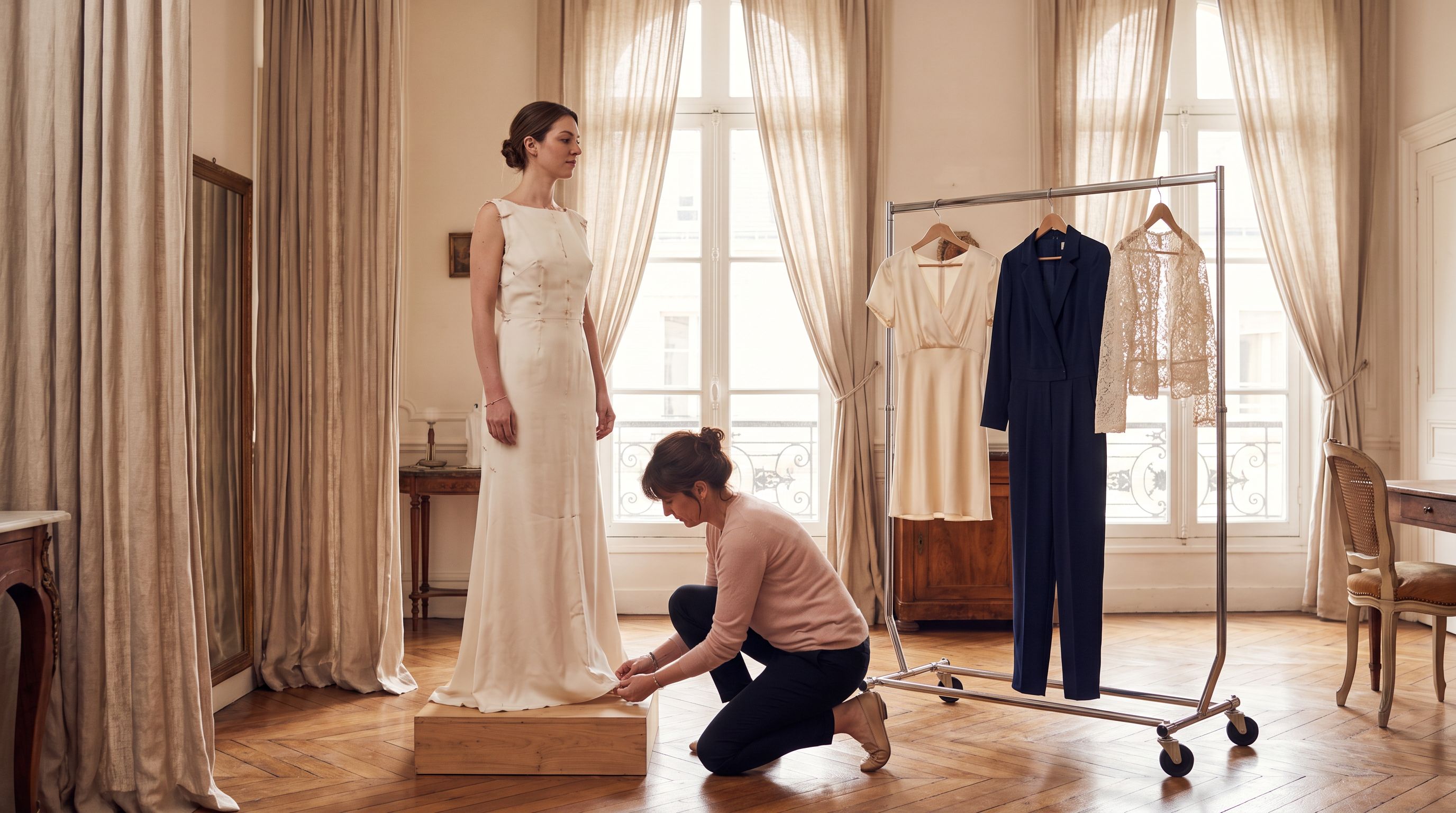
The multi-day wedding is no longer a destination-only phenomenon. Scroll through almost any wedding feature in the fashion press lately and you’ll see the same shape repeating — a welcome party, a ceremony, a reception, and something soft and low-key to close the weekend out. The celebration is a weekend, and the wardrobe is a wardrobe, not a single dress.
It’s worth saying plainly, though, that none of this is new. South Asian, West African, Chinese, and Jewish families have been dressing for multi-day celebrations for generations — mehndi and sangeet nights, a tea ceremony, a henna party, a traditional outfit change partway through the reception. If that’s your weekend, the custom math often flips. The hardest piece to fit is frequently not the white ceremony gown but the heavily embellished lehenga, the structured aso-ebi or qipao, or a second-day outfit whose weight, boning, and beadwork all have to sit correctly while you dance for hours. Build your commission calendar around that piece first.
Either way, it’s exciting and also a little terrifying once you start pricing it. So let’s do the unglamorous part properly: what each look actually needs to be, what made-to-measure versions tend to cost, and where you can spend almost nothing and still look like you planned it all along.
First, map the weekend before you map the wardrobe
In our experience, couples often plan more distinct looks than they end up wanting. Write out every event with three columns: how long you’ll be there, how many photos will exist of it, and who will see you. A 90-minute welcome drinks where everyone is in coats and holding a glass needs far less than a four-hour reception.
A typical weekend shakes out like this:
- Welcome party / rehearsal dinner — the second-most photographed look. Often the one people actually enjoy shopping for.
- Ceremony — the gown. Non-negotiable on fit.
- Reception / after-party — either the same gown restyled, or something shorter and easier to dance in.
- Farewell brunch, pool day, or pajama party — low-stakes, high-charm. Almost never worth a commission.
What each look tends to cost when it’s made for you
These are illustrative ranges in US dollars, not quotes — and UK, EU, and Australian markets price differently again, so treat the shape of the numbers as the useful part rather than the figures themselves. What moves them: fabric (silk versus a good synthetic can double a materials bill), construction (a boned, lined bodice takes many more hours than a bias-cut slip), hand-finishing, your maker’s experience, and where you live — a major-city atelier carries different overheads than a home-studio dressmaker in a smaller town.
Notice the shape of those numbers. The ceremony gown is usually more than everything else combined — because it carries the structure, the support, the lining, the train, and the fittings. A short unlined silk dress with a simple closure might take a skilled maker a fraction of the hours.
The gown is where you buy engineering. The rest of the weekend, you’re mostly buying fabric and a good shape.
Where custom is worth it, and where vintage quietly wins
On that last column: as one illustrative example, a $90 vintage find plus $120 of alterations can land you somewhere a $700 commission would have — but vintage alteration costs vary enormously, and a fragile beaded 1930s bias gown can quietly cost more to rescue than it did to buy. Build in time as well as budget. Seam allowances are often tiny, and a good alterations specialist will tell you honestly what can and can’t be changed — the same limits that apply when you’re weighing alterations against a full custom build.
If you’ll be seated for part or all of the celebration, say so at the very first conversation. Skirt volume that looks romantic standing can pool awkwardly in a chair, back zips and corset lacing may need rethinking for comfort and independence, and hem length is measured differently when you’re seated. None of this is difficult for a competent maker — it just has to be known before the pattern is cut.
One gown, several looks: the cheapest upgrade in the weekend
Before you commission a second dress, ask your maker what the ceremony gown can do on its own. Detachable sleeves, a removable overskirt, a bustle that genuinely changes the silhouette, a skirt that unzips to reveal a shorter shape underneath — these are usually designed in at the pattern stage and cost far less than a standalone piece. The trade-offs are real, though, and worth reading through in our breakdown of a convertible gown versus a second reception dress.
Planning the timeline when you’re commissioning more than one piece
Multiple pieces don’t multiply your timeline — but they do multiply your fitting appointments if you don’t plan well.
-
Bring the whole weekend to the first consultation
Don’t book a gown appointment and mention the after-party dress three months later. A maker who knows the full scope can plan one measuring session, one calendar, and sometimes one fabric order across pieces.
-
Build the most structured piece's toile first
The muslin fitting for your most demanding garment gives your maker a fit map — your actual shoulder slope, waist placement, and posture. Smaller pieces can often skip their own toile entirely because that information already exists.
-
Stack your fittings
Ask to try the secondary pieces at the same appointments as the gown. Three combined visits is realistic; six separate ones is a waste of everyone’s afternoon.
-
Finish the ceremony look before the extras
If anything runs late, you want it to be the brunch outfit, not what you’re married in. Most makers want six to nine months for a gown; shorter pieces can often be slotted in later. Our guide to how long a custom gown really takes walks through the full calendar.
-
Leave two weeks of air at the end
Steaming, pressing, packing, and travel garment bags all take time — especially if you’re flying everything to another country.
What to ask before you commit to a multi-piece commission
A maker who’s comfortable with a weekend wardrobe will answer these easily:
- Do you price pieces individually, or is there a difference if I commission several together?
- Which of these would you honestly tell me to buy rather than have made?
- Can the ceremony gown be designed to convert, and what does that add?
- How many fittings per piece, and can we combine appointments?
- What’s the deadline for each piece, and what happens if my measurements change?
That last question matters more than people expect. If your body may shift between now and the wedding, say so plainly — a good maker will build in ease and schedule a later final fitting rather than act surprised in month seven.
The makers worth working with get genuinely enthusiastic about the second question. Someone who tells you to thrift the brunch dress and spend the money on the gown’s silk is showing you how they’ll advise you the whole way through — which is exactly the instinct to look for when you’re vetting a dressmaker.
If you’re still sketching out a weekend and want a realistic read on what your budget covers, talking it through with a maker is a quick way to turn a mood board into actual numbers.
Ready to bring your dream dress to life?
Tell us what you're picturing — style, timeline, and budget — and we'll connect you with custom dressmakers who can make it. Free, no obligation.
Get matched with a dressmakerRelated guides
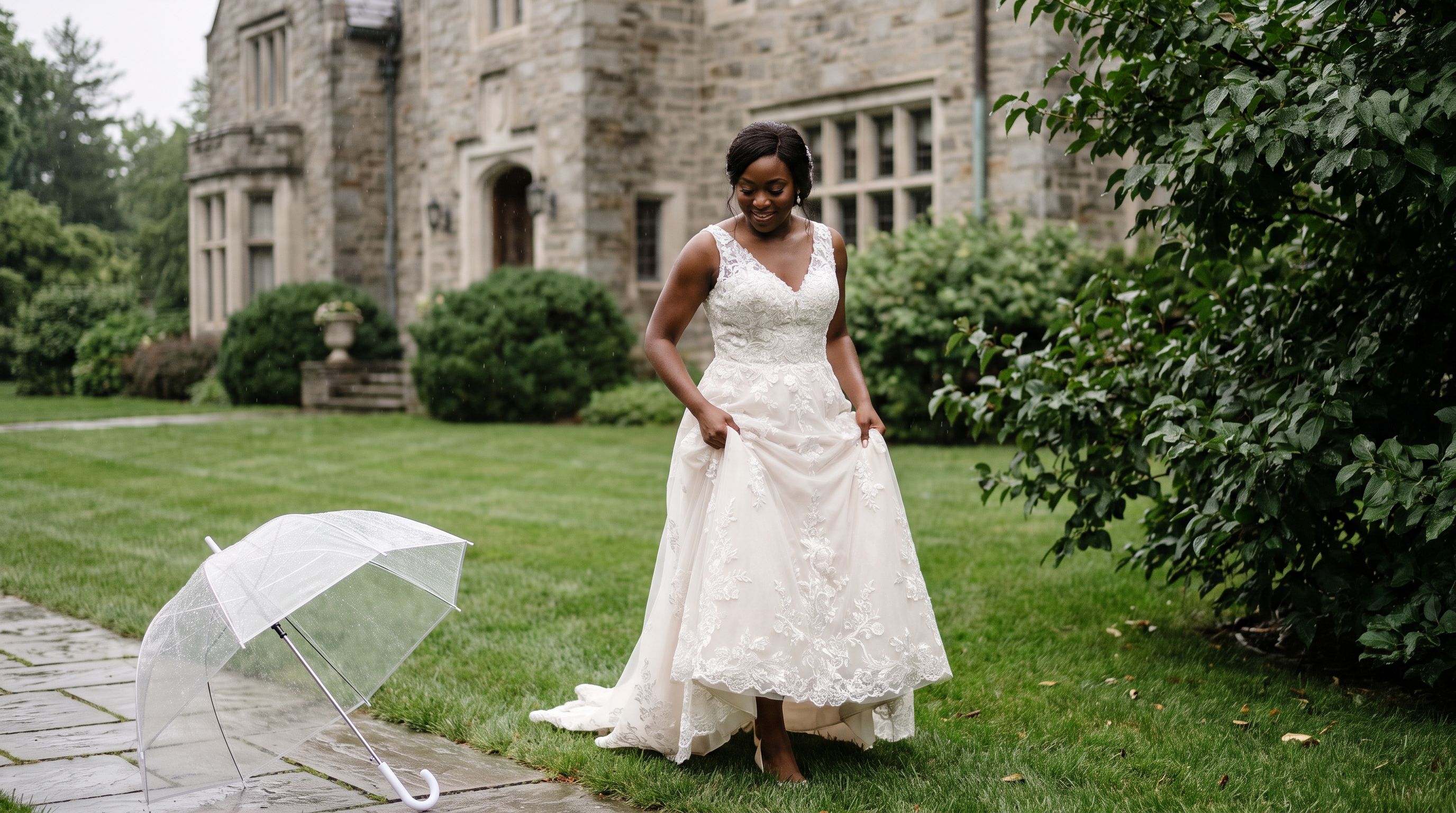
Outdoor Wedding Dress: Rain, Grass, and Humidity Guide
How to choose a custom outdoor wedding dress that survives rain, grass, wind, and humidity — fabric picks, hem strategy, and what weatherproofing costs.
Read guide →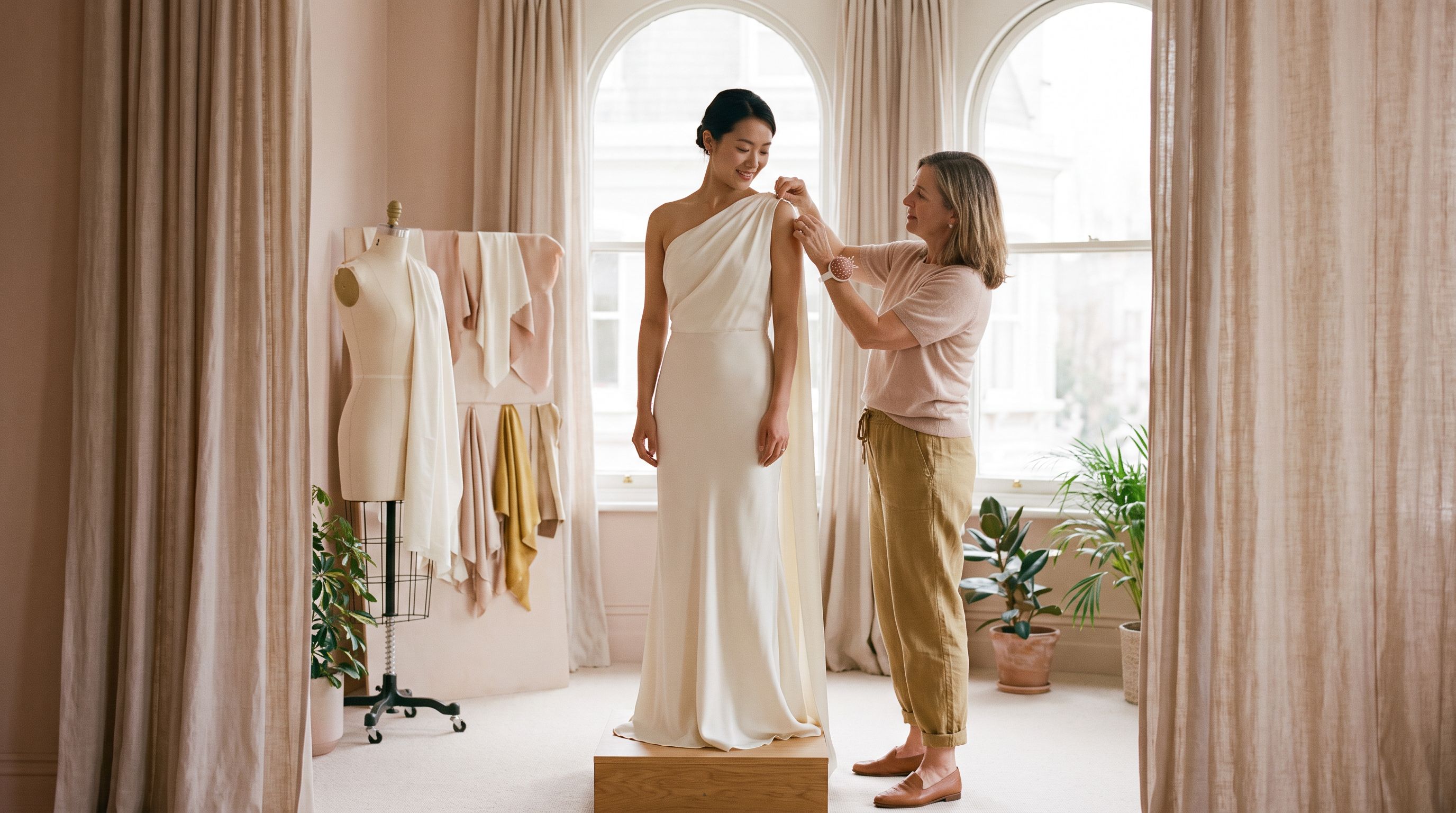
Halter vs One-Shoulder vs Asymmetric Gown: Fit & Cost
Halter vs one-shoulder wedding dress: how each neckline carries weight, flatters different shoulders and busts, what it costs custom, and what to ask your maker.
Read guide →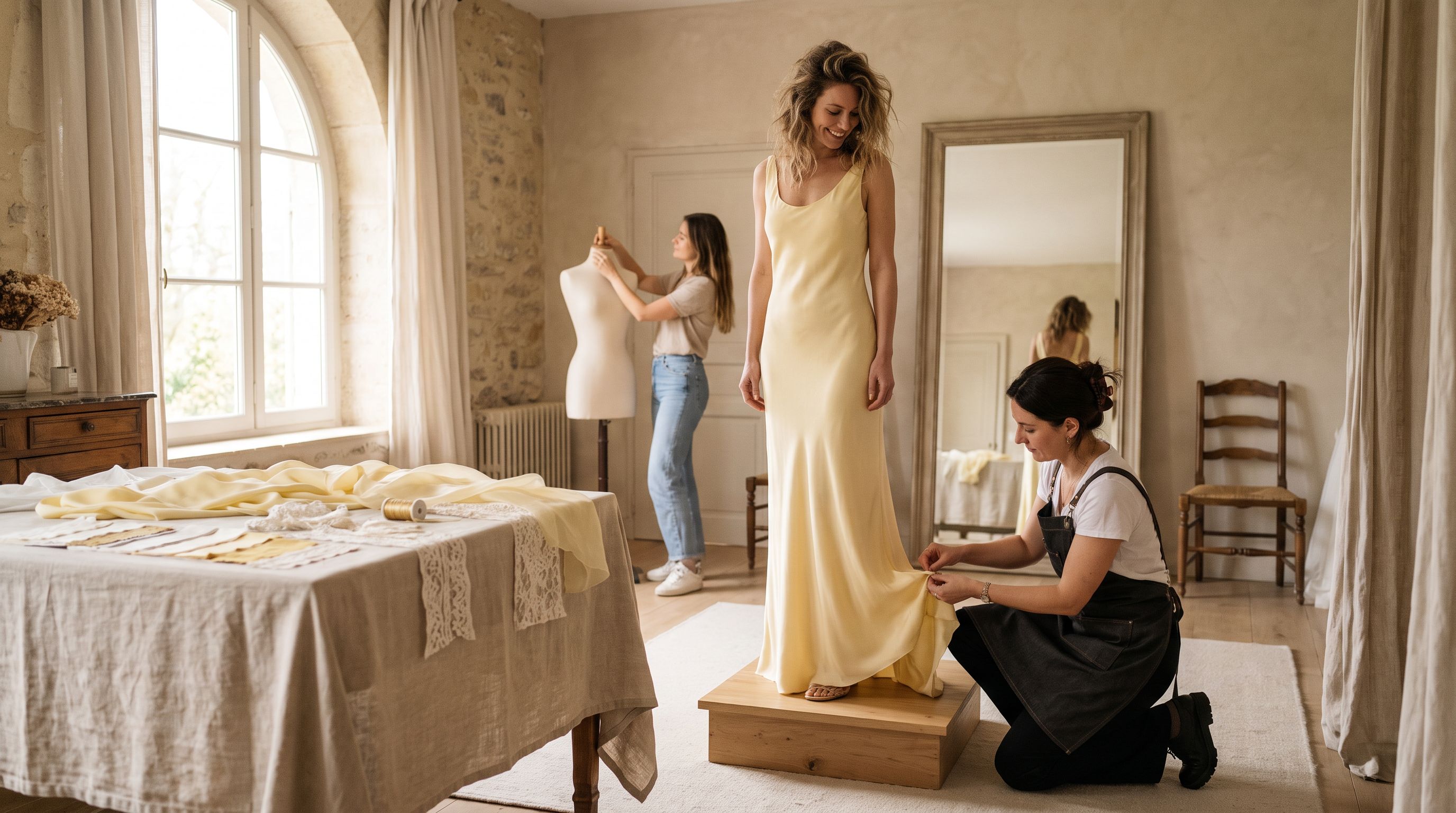
Butter Yellow Wedding Dress: Custom Color, Fit, Cost
Butter yellow is bridal's softest new neutral. Here's how custom dyeing works, which fabrics hold the shade, what it costs, and how to pick your tone.
Read guide →