 Custom
 Custom Wedding Dress When Your Body Is Changing
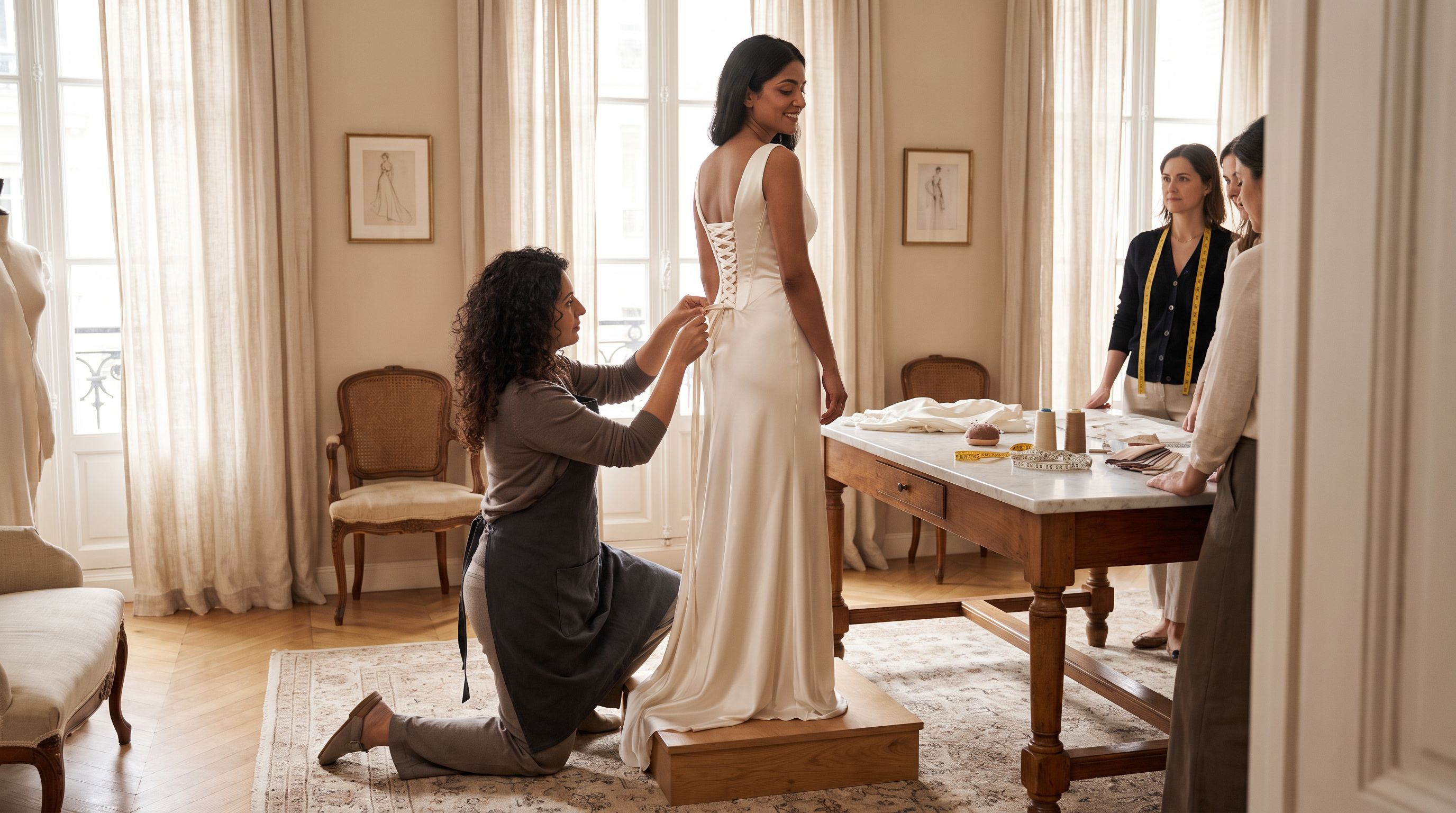
One question comes up in fitting rooms more than almost any other: what if I’m not this size on the day? It is one of the most common anxieties in bridal, and one of the least honestly discussed. People are losing or gaining weight, on purpose or not. People are pregnant, hoping to be, or newly postpartum and still nursing. People are on medication that changes their shape, going through IVF, recovering from surgery, or managing a condition that makes some days a full size different from others.
None of that is a problem to hide from your dressmaker. It is information a good maker actively wants, because it changes how they cut and construct your gown from day one.
Why “just order a size down” is the riskiest plan
Buying a smaller size as motivation is the most common approach and the most expensive one. A bridal gown that is too small cannot be conjured bigger; a seam only opens as far as its allowance, and a beaded or lace-appliquéd seam often cannot be moved at all without visibly breaking the pattern.
Taking a gown in, by contrast, is bread-and-butter work — up to a point. Reducing a bodice by an inch or two is routine. Reducing three or four inches means re-cutting the bodice, re-balancing the boning, moving the zipper and often re-setting the skirt, which is closer to rebuilding than altering. We cover exactly where that ceiling sits in wedding dress alterations vs. custom.
What “built to adjust” actually looks like
Adjustability is not one feature — it is a set of construction decisions your maker can stack together:
- A corset or laced back, exposed or hidden under a modesty panel. Properly built, it can absorb a couple of inches of change in either direction without a new fitting.
- Generous seam allowances at the side seams, center back and princess lines — deeper than a factory gown, precisely so the dress can be let out later.
- Princess seaming rather than darts. Vertical seams through the bust and waist can be reshaped; a dart cannot move without disturbing the whole panel.
- An internal boned foundation that carries the structure, so the outer fabric can be eased or released without the gown losing its shape.
- Adjustable straps, side-seam ties and hidden ribbon-drawn segments at the back waist — invisible from the front, forgiving on the day.
Different garments, different bodies
These principles are not exclusive to a Western white gown. A lehenga blouse, a hanbok jeogori, a modest long-sleeve gown, a cheongsam or a tailored suit can all be built to move. Side lacing, deeper side seams and princess or panel seaming transfer well to almost any fitted bodice. What does not transfer as neatly: a heavily embroidered choli or a fully beaded panel may have no movable seam at all, a jeogori’s set proportions mean adjustment usually happens at the goreum ties and side seams rather than the back, and a suit jacket’s canvassed front limits how far the chest can be opened up. Ask which specific seams on your garment are adjustable.
Bodies differ in what they need, too. On a fuller figure, adjustability usually comes from stronger internal support and wider seam allowances at the side and princess seams rather than a single lacing panel, plus boning placed to prevent the bodice rolling at the waist. For a seated wearer or wheelchair user, the fit that matters is the seated one: shorter front rise, no bulk at the back waist, closures moved to the side or front where you can reach them, and fabric that will not bunch under the hips. For someone binding, or before or after top surgery, cup shaping is often removed altogether in favor of a flat-front foundation with light vertical boning, and a maker can leave a deeper chest seam allowance so the bodice can be re-shaped after healing.
Timing your fittings when your size is a moving target
The custom process has a natural rhythm, and it can be shifted later without panic if everyone plans for it — see how long a custom gown really takes.
-
Consultation and design (early)
Sketching, fabric selection, and an honest conversation about what may change. Nothing is cut yet. -
First measurements and muslin
A mock-up of the gown. Measurements here are a starting point, not a verdict. If your shape shifts, the muslin is cheap to re-cut. -
Cutting in real fabric (the commitment point)
Ask your maker to schedule this as late as their workload safely allows — often around two to four months out, longer if it is heavily hand-beaded. -
Fittings
Most gowns need around three. If your body is actively changing, expect one extra and put it in the calendar rather than squeezing it in. -
Final fit, roughly two to four weeks out
Hem, closures, bustle, pressing. This is the last honest fit — and the reason a laced back is such a gift for the final two weeks.
Pregnancy, postpartum and nursing access
If you will be pregnant on the day, expect the bust to keep changing well past the point the belly is being accounted for — many people move a cup size or more between the third trimester and around six weeks postpartum, in either direction. That is why postpartum brides benefit most from an empty final-fitting slot held deliberately close to the wedding: it is the only appointment that can respond to a body that changed last week. If you will be nursing, say so early. A wrap front, a hidden bodice opening under a pleat or panel, or a side-seam zip that opens downward gives you discreet access without redesigning the gown, and works far better than trying to pull a fitted strapless bodice down. Ask for a nursing bra to be fitted with the gown, not after it.
What this adds to your budget
All figures below are in USD, and UK, Australian and EU pricing varies substantially — treat these as a shape to adapt, not a benchmark. A custom or made-to-measure gown from an independent dressmaker commonly lands somewhere between roughly $1,500 and $6,000, with heavily beaded, silk-heavy or couture-level work climbing well beyond that. Building in adjustability usually costs little at the design stage — mostly extra fabric and labor.
Retrofitting is the expensive version. A corset-back conversion on a plain-fabric gown might run roughly $250–$600; the same conversion on a beaded or lace-covered bodice, where appliqué must be lifted and reapplied by hand, often runs $600–$1,500 or more. A standard alterations package — hem, side seams, bustle, straps — frequently totals around $400–$900, while a full bodice re-cut on a structured beaded gown can approach or exceed the cost of the alterations package twice over. Fabric, beading density and local labor rates drive all of it.
Does buying off the rack and altering later save money?
Off-the-rack means buying a gown that already exists in a shop’s stock size. It can be cheaper up front, and for a body that will stay roughly steady, it often is. But when your size is moving, the math changes: you pay for a gown cut to a standard grade, then pay again to have it re-engineered, under a deadline, with no guarantee the seams will cooperate. Our custom vs. off-the-rack cost comparison walks through real totals rather than sticker prices.
A gown that can be laced tighter or eased wider on the morning of your wedding is worth more than a gown that fit perfectly six weeks ago.
Silhouettes and fabrics that move with you
Empire and raised waistlines skim rather than grip. A-lines and soft ballgowns place the fitted point higher, where change tends to be less dramatic. Bias-cut crepe drapes over shape rather than clamping it, though bias is unforgiving of sudden change — compare drape and structure in our crepe, satin and Mikado guide. Less forgiving: heavily boned exposed corsetry, all-over beading across the waist, and knife-edge columns through the hips. All still possible — they simply need later cutting dates and a laced closure.
What to tell your dressmaker, and what to ask
Say the real thing out loud at the consultation: I’m actively losing weight. I’m three months pregnant. I’m mid-IVF. I have surgery scheduled in March. I’ll be nursing. You are not being difficult; you are handing a professional the most useful information they will receive.
Then ask:
- How much seam allowance will you leave, and where?
- Would you recommend a corset back for my design — and how would you make it look deliberate?
- When is the latest you can safely cut into the real fabric?
- How many fittings are included, and what does an extra one cost?
- Have you built for someone whose measurements changed significantly mid-process? What did you do?
A maker who answers calmly, with specifics and without judgment, is the one you want. It is worth speaking with two or three dressmakers before deciding — a consultation costs you nothing but an hour, and you will learn more in that hour than in a month of scrolling.
Ready to bring your dream dress to life?
Tell us what you're picturing — style, timeline, and budget — and we'll connect you with custom dressmakers who can make it. Free, no obligation.
Get matched with a dressmakerRelated guides
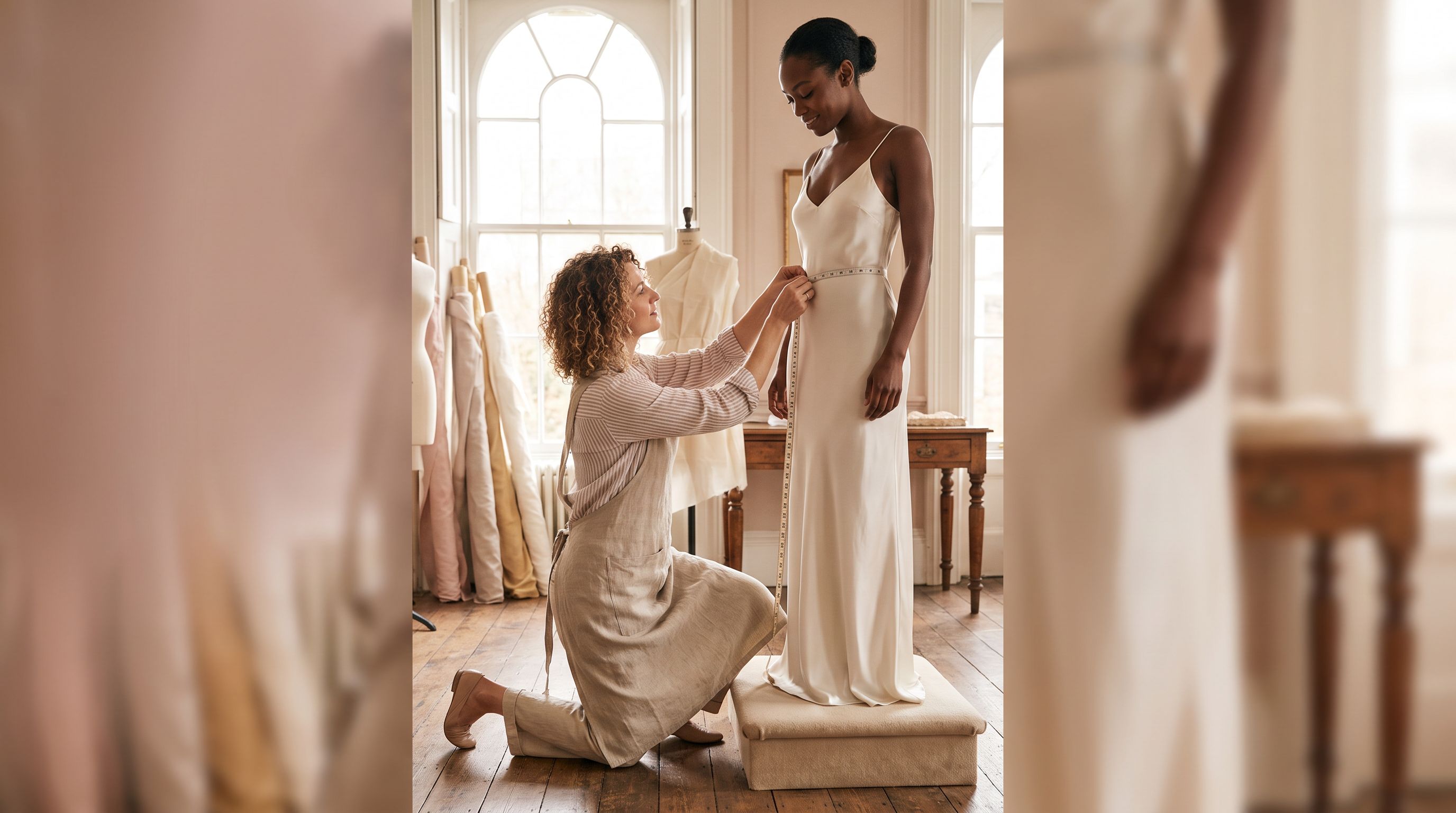
How to Measure Yourself for a Custom Wedding Dress
A step-by-step guide to taking wedding dress measurements at home: the exact list, tools, common mistakes, and how makers use them for a custom gown.
Read guide →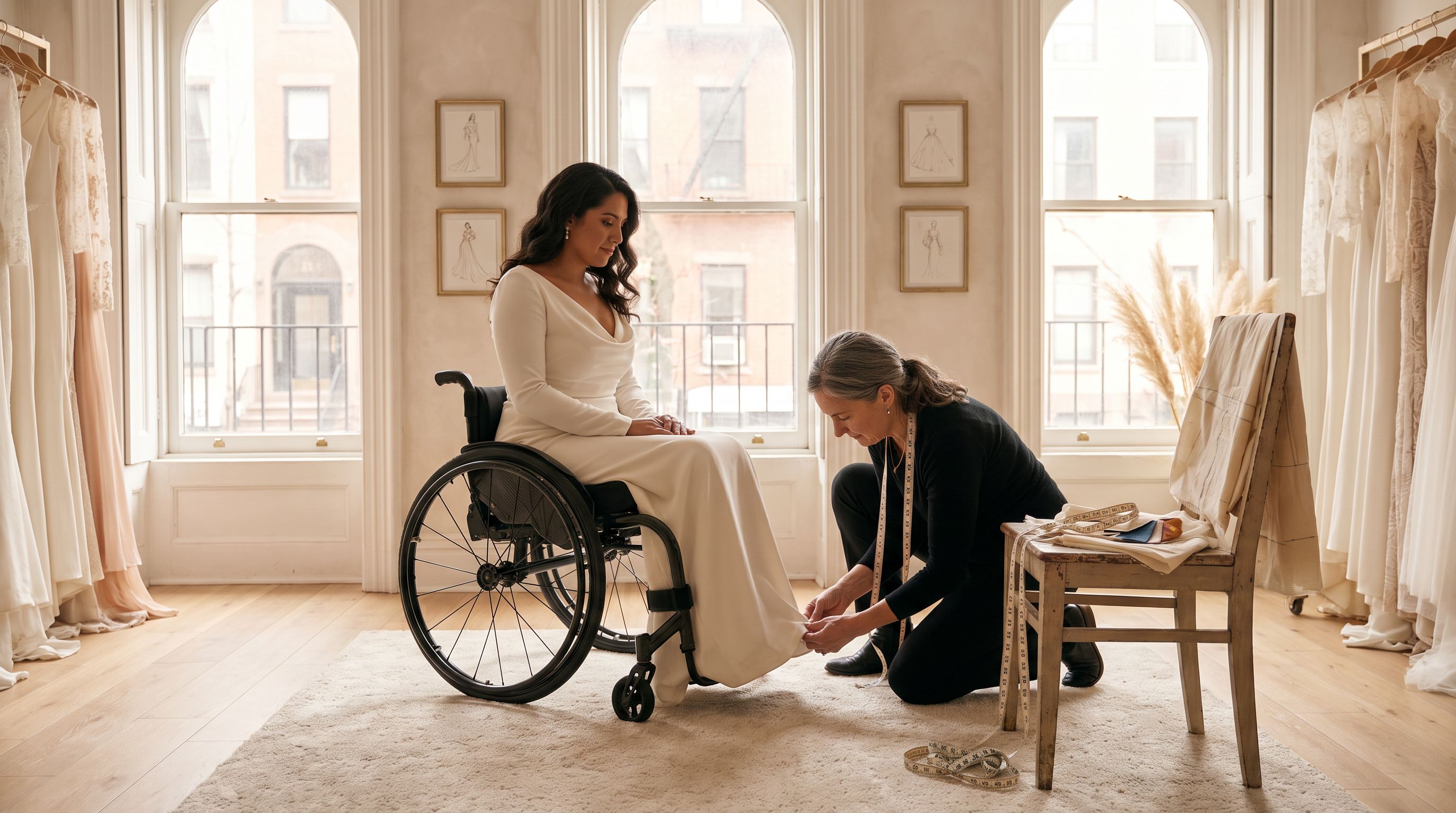
Adaptive Custom Wedding Dresses: Seated Fit and Access
How an adaptive custom wedding dress is drafted for a seated fit, easy closures, and real mobility needs — plus realistic cost ranges, fittings, and what to ask a dressmaker.
Read guide →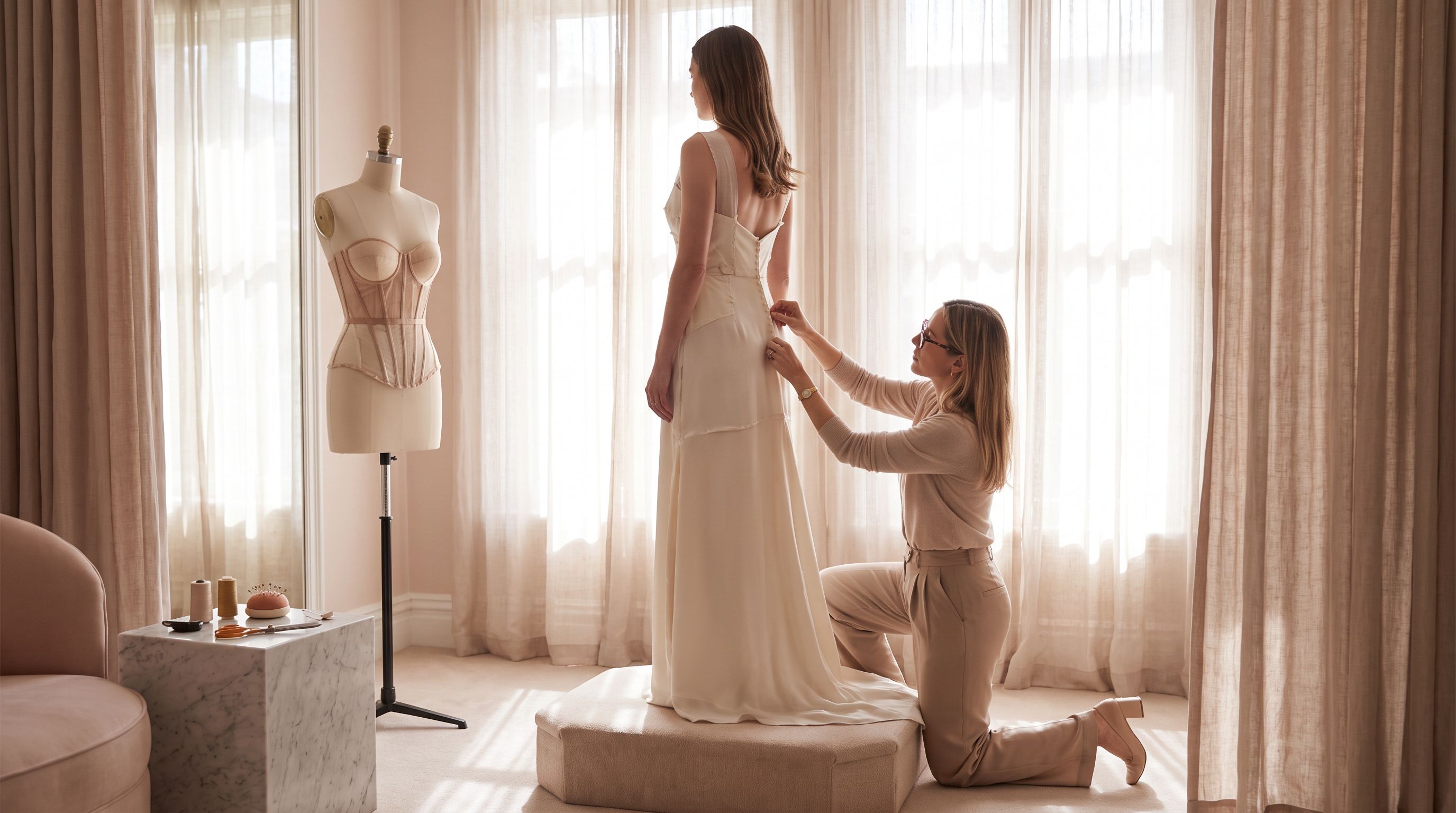
Corset vs Built-In Bra: Wedding Dress Support Explained
Corset, boning, or built-in bra cups? A clear guide to wedding dress support: what each does, what it costs in a custom gown, and how to choose for your bust.
Read guide →