 Custom
Bias-Cut Slip vs Structured Gown: Custom Fit and Cost
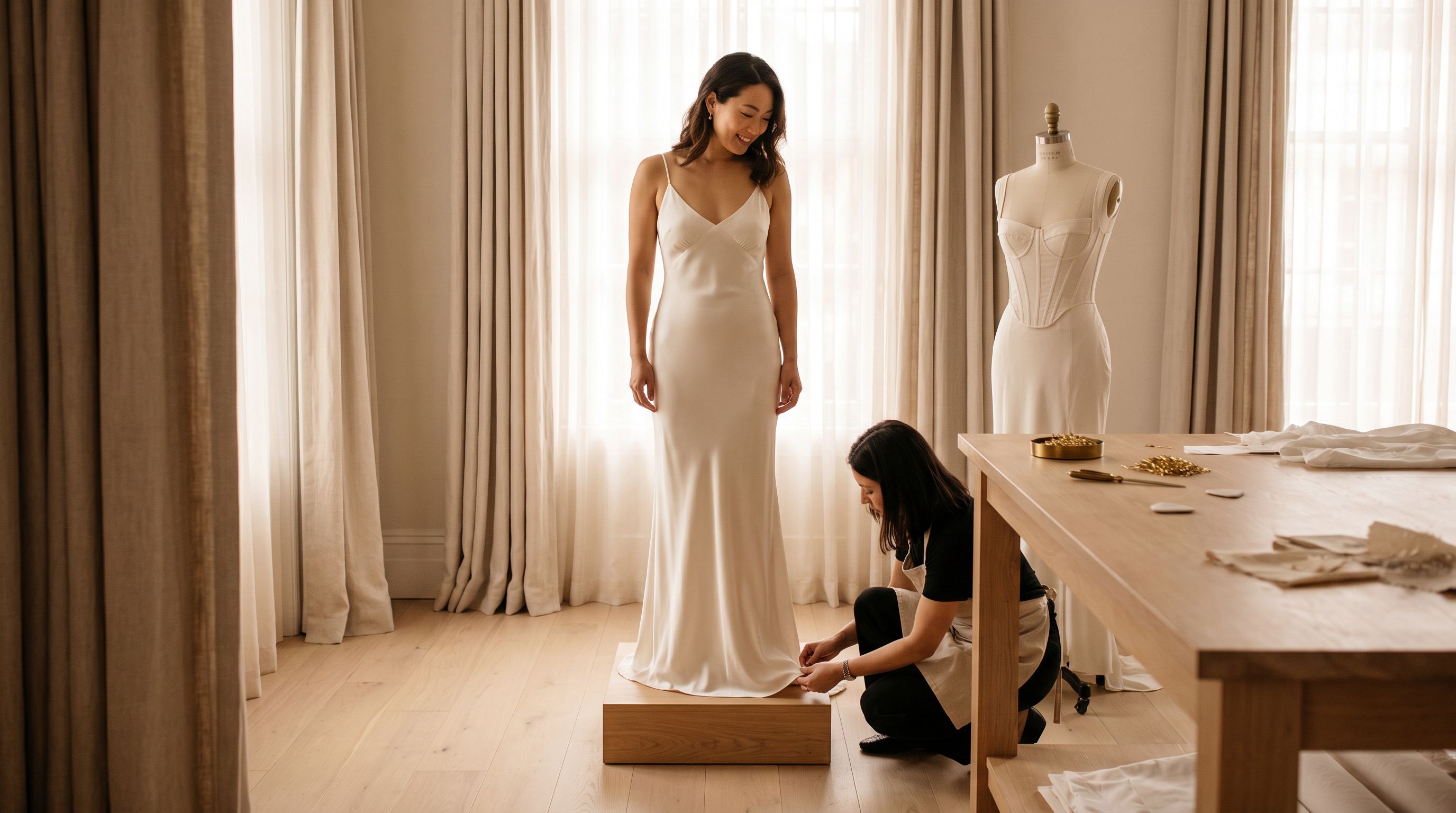
If you have been saving minimalist gowns — that liquid column that pours over the body with no visible seams, nothing but light on silk — you have been saving bias-cut dresses. Save a corseted ballgown alongside it and you are looking at two completely different engineering problems. Neither is tied to white, either: custom gowns are commissioned constantly in champagne, blush, red, gold, black and deep jewel tones. And neither is tied to one kind of client — brides, grooms who wear gowns, non-binary clients, parents of the couple and anyone else commissioning made-to-measure go through exactly the same process: measurements, a toile, fittings, a final hem.
Understanding the difference is the fastest route to a productive first conversation with a dressmaker, because it changes your fabric, your fittings, your undergarments and your budget.
What “bias-cut” actually means
Woven fabric has a grain: threads running lengthwise and crosswise. Cut along those threads, fabric is stable and holds a shape. Cut at 45 degrees to them — on the bias — and the same fabric gains stretch and drape. It clings, swings and moulds to a body instead of standing away from it.
That is the magic of the 1930s-style slip, and also the difficulty. A good maker cuts single-layer, with a tilted pattern piece for each half, then hangs the half-made dress for days before touching the hem. Here is the reason you can verify in any workroom: because the two halves are cut on opposing diagonals, they droop at slightly different rates, so a hem measured up from the waist will read level on the table and crooked on the body. The hem has to be re-trued on the form, after the dress has dropped.
The structured gown, honestly
A structured gown builds shape into the garment. Inside a well-made bodice you will usually find a boned inner corselette, a waist stay, interfacings, and sometimes horsehair braid or net holding the skirt out. The dress holds its shape whether or not your body is holding it.
That architecture is why a structured bodice can define a waist, support a bust without a bra, and carry a heavy skirt. The same principles travel well beyond the Western white wedding: a boned, engineered bodice is what makes a lehenga choli or a fitted gharara top sit cleanly, and bias construction is equally at home in a reception or sangeet change, a cheongsam or qipao, or an ao dai commissioned alongside a main gown. If your day involves two, three or four outfits, say so at the very first meeting — fabric, yardage and budget are far easier to plan together than in sequence. For silhouette families in general, our guide to A-line, ball gown, and sheath shapes is a good companion.
Why the simpler dress isn’t automatically the cheaper one
A plain slip has no beading, no lace, no layers — so it should cost less. Sometimes. Often not.
Three things push bias costs up. First, yardage: a bias layout eats more fabric than straight grain, commonly 30–50% more, depending on fabric width and pattern layout, and you cannot play tetris with the pieces. Second, fabric quality: bias hides nothing, so cheap polyester satin reads shiny and ripply and most makers will steer you to good silk crepe. Our breakdown of silk versus polyester covers that trade-off. Third, skill: hand-finished seams on slippery silk, a hem that has hung and been re-trued, an invisible zip set into moving fabric. A structured gown simply shifts the money into labour instead — corselette, interfacings, extra fittings. The totals land closer together than the photos suggest.
If your budget sits below those figures, say the number out loud at consultation — a working dressmaker has genuine routes down, not just a smaller dress. Viscose or rayon crepe, or a silk-blend crepe, cut on the bias drapes beautifully for a fraction of silk crepe de chine; it has a flatter sheen and creases more readily when you sit. Shortening or dropping the train saves both yardage and hem labour, at the cost of the pooled fabric in photographs. Machine-finished seams instead of hand-finished are invisible from a metre away but visible close up and inside. Separates — a simple skirt with a more worked bodice — let you spend where the camera looks. And a maker can take a plain ready-to-wear slip and fit it properly to you, which fixes the fit but leaves the cut and fabric as they are.
What each silhouette asks of your body — and gives back
Neither belongs to one body type, and anyone saying bias is “only for slim people” is quoting a magazine rule from 1998. They simply ask for different things.
Bias shows surface, not size. Underwear seams, a bra band, the edge of shapewear: the fabric reports all of it. The fix is usually seamless or bonded-edge underwear, or a bias-cut silk lining built into the dress. Over a soft tummy or a C-section shelf, compressive shapewear often makes things worse — it creates a ridge the silk then traces — while a smooth bias slip or silk lining lets the fabric glide past. A fuller bust works beautifully on bias, but you will want an internal cup or a supportive bra, because bias lifts nothing. Height matters to the quote too: a tall frame with a train can need several extra yards, while a petite frame uses less but may need the pattern re-proportioned rather than shortened.
A structured bodice gives control — it can hold a bust, nip a waist, balance a broad shoulder, or build curve on a straighter frame. It can also be engineered around a scoliosis curve, a port, a stoma or a prosthesis, with boning placement and openings planned so nothing presses where it shouldn’t. Raise any of this at consultation, not at the final fitting. If support is your main question, read corset versus built-in bra first.
A few practical points worth raising early:
- Seated wear. If you use a wheelchair, bias clings and pools at the hip when seated; a structured skirt usually needs a shortened front and a shaped seat so fabric doesn’t bunch under you.
- Closures. Decide whether you need to dress alone or with one helper — a side zip or a hook-and-loop placket beats fifty covered buttons.
- Change over time. Pregnancy, treatment, or anticipated weight change should be flagged at the start so your maker can leave generous seam allowance or plan a lace-back or corset-back panel.
How the fitting timelines differ
-
Consultation and fabric
For bias, handle the fabric and watch it fall over your hand. Ask to see a bias sample hanging, not flat on a table. -
Toile (muslin)
Structured bodices get a stiff calico toile. Bias dresses need a toile in something with similar drape — cheap bias-cut rayon — because calico tells you nothing about how silk moves. -
The hang
A bias dress is assembled and hung on a form, often several days to a week, so it can drop before hemming. -
Fittings
Structured gowns take more appointments to perfect the bodice. Bias takes fewer but more delicate ones — small adjustments, careful pressing, a hem trued at the very end. -
Final check
Walk, sit and dance in both. Test bias sitting on a hard chair, which is where clinging shows.
For most custom work, roughly four to nine months is comfortable. Push toward the longer end for heavy beading, hand embroidery, imported or mill-ordered fabric, or multiple outfits; shorter is usually possible only with a rush fee and a simpler design. As a rule of thumb, starting less than about three months out narrows your options considerably — and a bias gown still cannot be hemmed the week it is sewn.
Questions that reveal a maker who knows bias
Ask to see photographs of previous bias gowns on real clients, ideally moving. Ask how long they hang a bias dress before hemming — anything less than “a few days” is a flag. Ask how they finish seams, handle the zip, and whether they will cut the lining on the bias too, since a straight-grain lining will fight the outer fabric and twist it. For a structured gown, ask about the corselette, the waist stay and the bustle plan. A maker who answers specifically, rather than reassuringly, is the one to work with.
So which one is yours?
Choose bias if you want ease, movement, a long unbroken line, something that packs into a suitcase and still looks extraordinary. Choose structure if you want a sculpted waist, support without a bra, heavier fabric, or genuine drama in photographs.
And if you want both — a structured ceremony look and something fluid to dance in, or a second and third outfit for other parts of the celebration — say so at the first meeting. Bring your inspiration photos, your honest budget range and your date. A good first conversation should leave you clearer about what’s possible, not committed to anything.
Ready to bring your dream dress to life?
Tell us what you're picturing — style, timeline, and budget — and we'll connect you with custom dressmakers who can make it. Free, no obligation.
Get matched with a dressmakerRelated guides
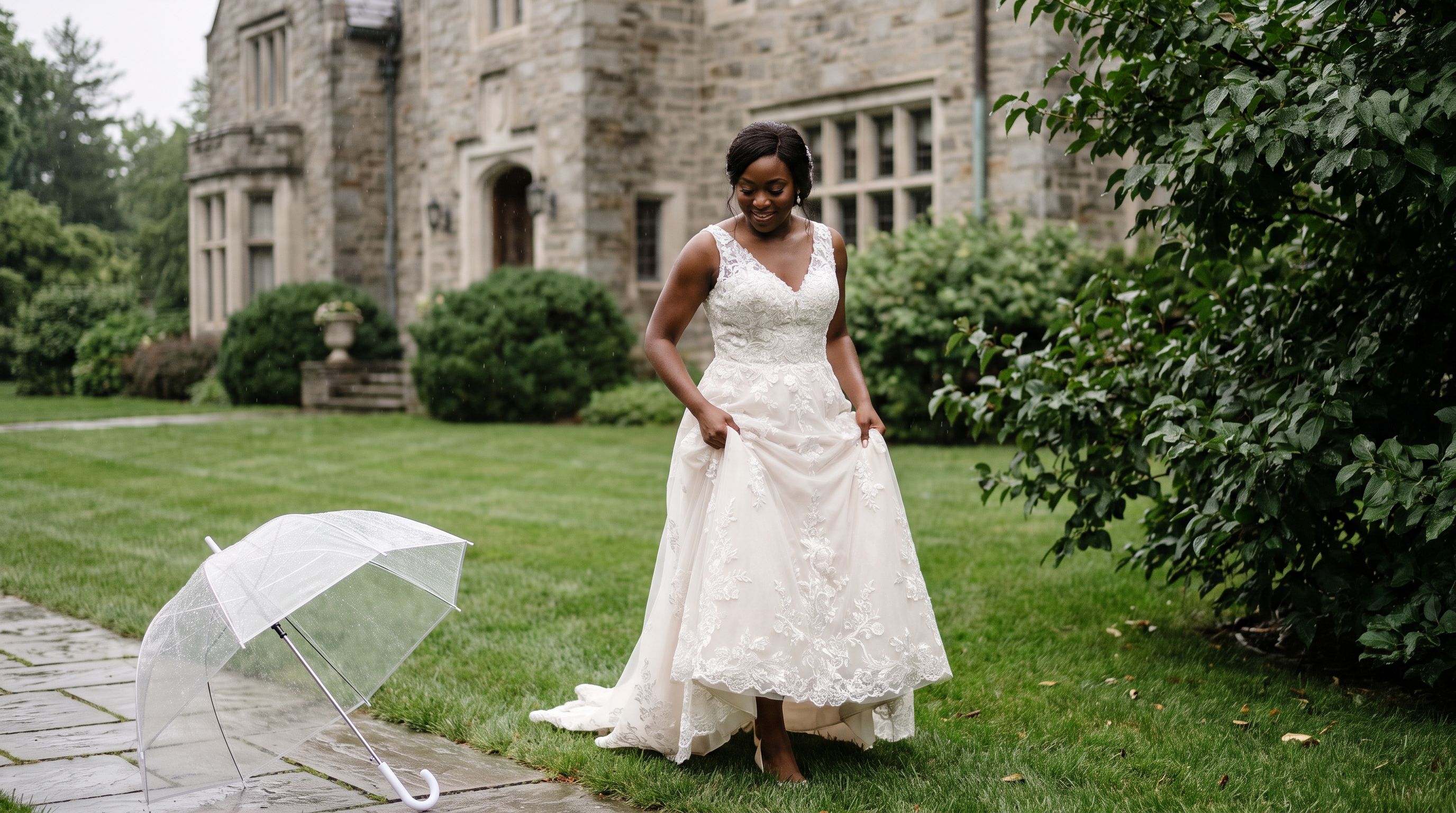
Outdoor Wedding Dress: Rain, Grass, and Humidity Guide
How to choose a custom outdoor wedding dress that survives rain, grass, wind, and humidity — fabric picks, hem strategy, and what weatherproofing costs.
Read guide →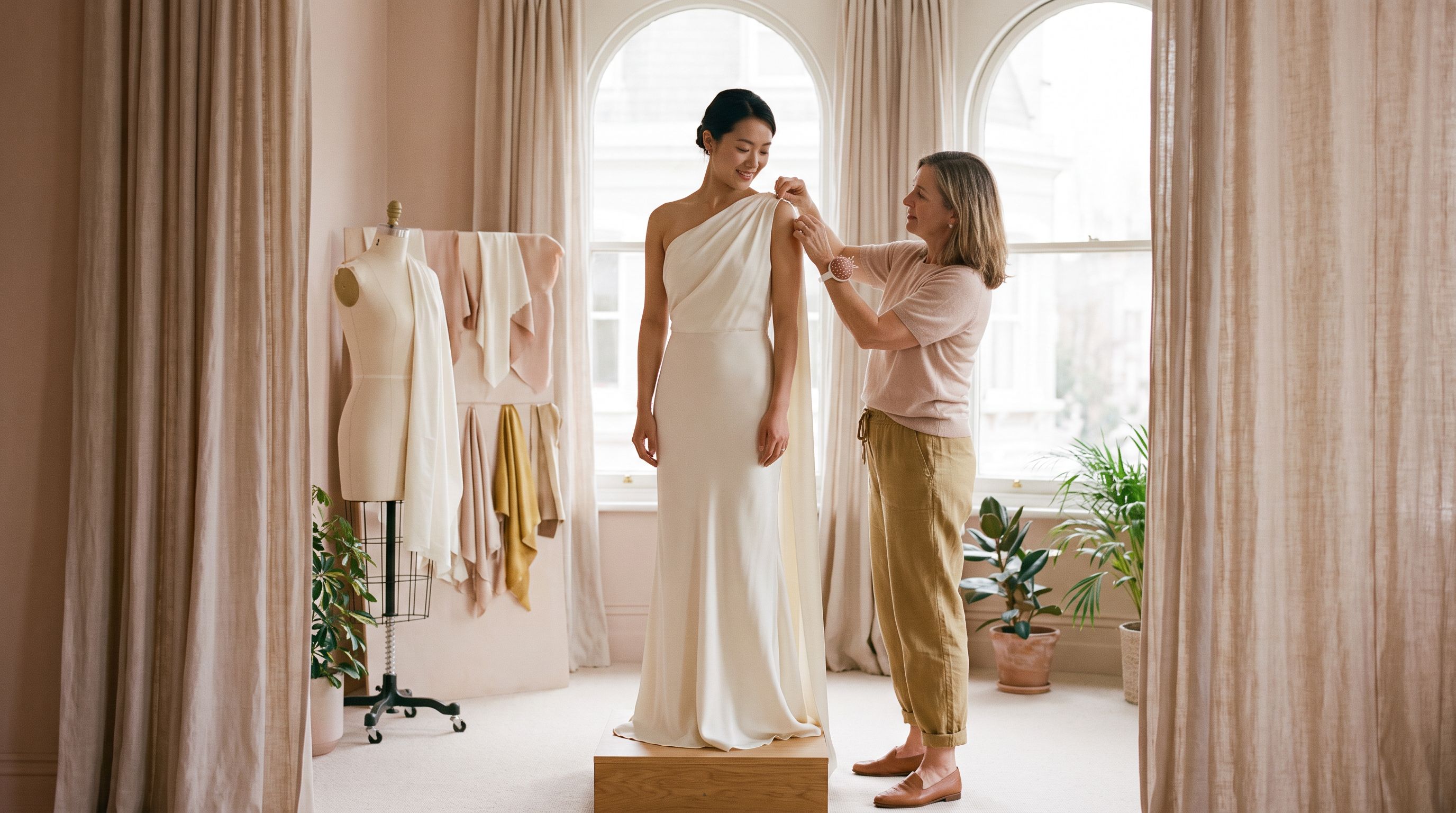
Halter vs One-Shoulder vs Asymmetric Gown: Fit & Cost
Halter vs one-shoulder wedding dress: how each neckline carries weight, flatters different shoulders and busts, what it costs custom, and what to ask your maker.
Read guide →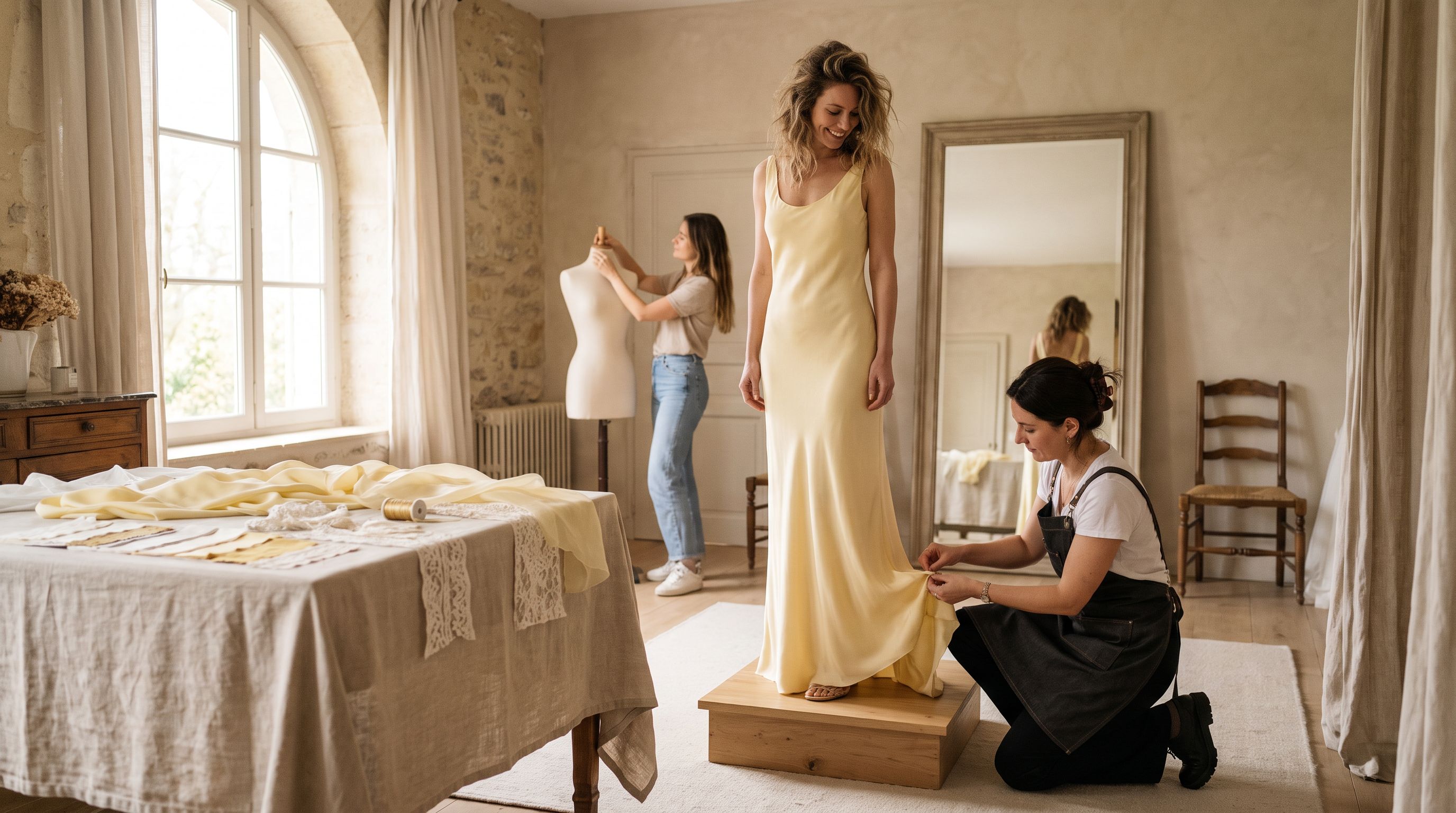
Butter Yellow Wedding Dress: Custom Color, Fit, Cost
Butter yellow is bridal's softest new neutral. Here's how custom dyeing works, which fabrics hold the shade, what it costs, and how to pick your tone.
Read guide →