 Custom
 Custom Wedding Dress Deposits and Payment Plans, Explained
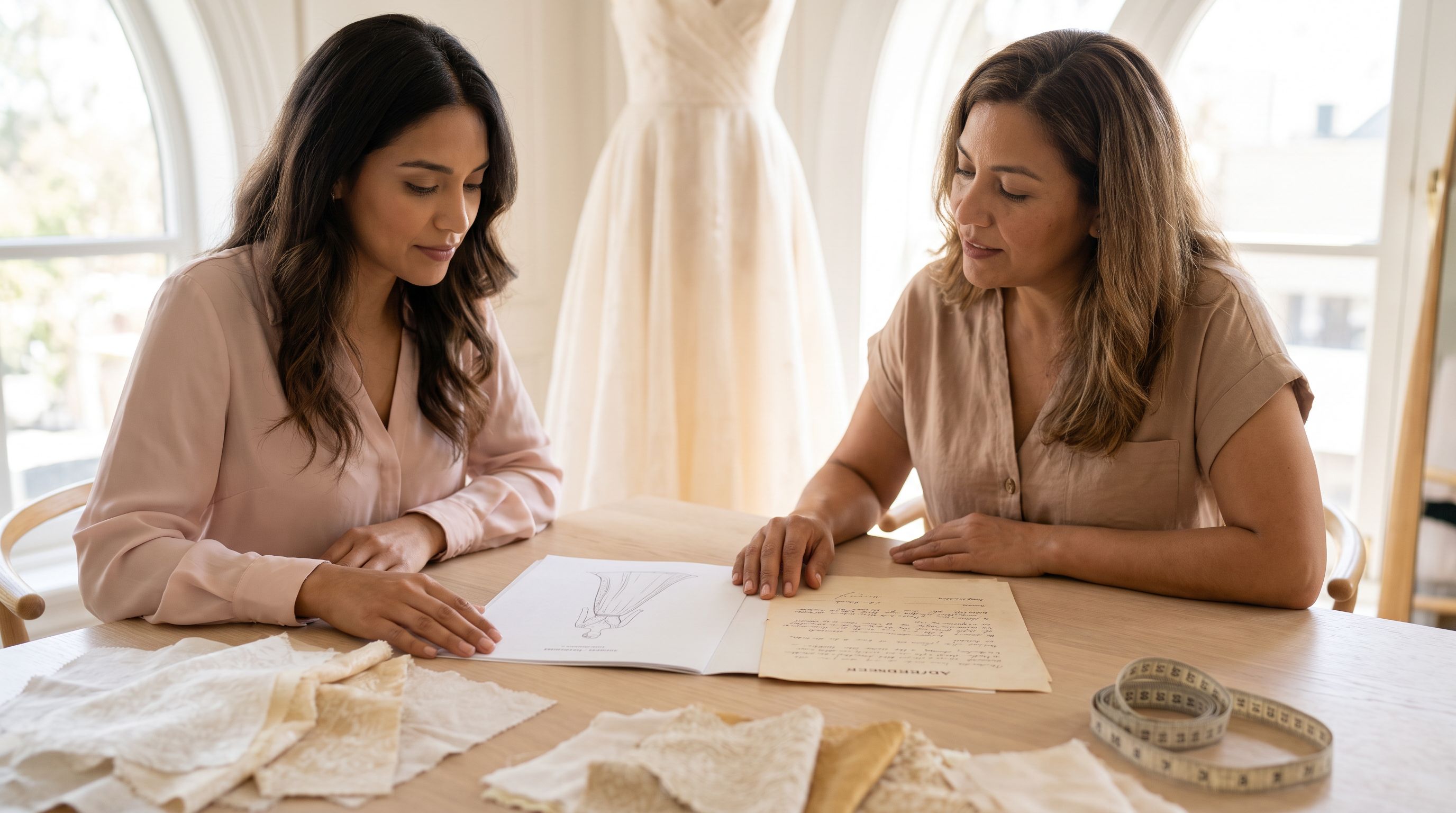
The moment that makes most people nervous in a custom gown journey isn’t the first fitting. It’s the first transfer of money. You’ve met someone lovely, you’ve talked about silhouettes and sleeves, and now they’ve sent an invoice for a meaningful sum — for a dress that doesn’t exist yet.
That feeling is reasonable, and it’s also solvable. Payment structures are fairly consistent across good makers, and once you know what “normal” looks like, you can tell quickly whether you’re in safe hands.
What a deposit actually buys
A deposit is not a down payment on fabric. It’s a booking fee for a maker’s time — and time is the scarcest thing an independent dressmaker has.
When someone accepts your commission, they block out weeks of studio capacity for you: design development, pattern drafting, a toile/muslin, construction, and typically two to four fittings. Every hour reserved for you is an hour they’ve declined to sell someone else, and that time can’t be resold at short notice if you disappear.
The deposit also covers the early, unglamorous work you never see: sourcing and ordering fabric (often non-returnable once cut or custom-dyed), lace swatching, and drafting a pattern to your measurements. By your first fitting, a maker has usually already spent real money and many hours on your behalf.
How much you’ll typically be asked for up front
There is no universal rule, and pricing varies enormously by region, by the maker’s experience, and by how elaborate your design is. But these are the shapes you’ll most often encounter.
A design consultation fee is also common — often modest, sometimes credited toward your gown if you go ahead. That’s a fair ask: a serious consultation involves an hour or more of expert attention, sketching, and honest advice about what your budget can achieve.
To sanity-check the total before you commit, our breakdown of what a custom wedding dress costs and why walks through the cost drivers — fabric quality, beading and hand-finishing, structure and boning, and the maker’s experience — so you can estimate your own situation rather than relying on someone else’s figure.
A payment schedule that follows the dress
The healthiest payment plans are milestone-based: money moves when work is completed. Here’s the rhythm you’ll most often see.
-
Consultation
A separate small fee, or free, depending on the maker. This is where you discuss design, budget, and whether you’re a good fit for each other. Nothing is binding yet. -
Booking deposit
Paid when you sign the agreement and lock your date in the calendar. Typically covers reserved studio time and initial fabric sourcing. Usually non-refundable. -
Fabric and materials payment
Some makers invoice fabric, lace, and trims separately and transparently, especially for luxury or imported materials. Ask whether these are included in your quote or billed at cost. -
Mid-point payment
Often due around the toile fitting or the first fitting in real fabric — the stage where the gown genuinely takes shape. -
Final balance
Due at or just before the final fitting, before the gown leaves the studio. This is standard and not a red flag.
The same milestone logic applies well beyond a white Western gown. A lehenga, hanbok, cheongsam, áo dài, a modest or fully sleeved design, a suit, separates, or a reception second look all follow the same shape: reserve the time, buy the materials, pay as work is completed. One difference worth expecting — heavily hand-worked cultural garments often front-load materials much earlier, because zardozi, hand embroidery, gold thread, or a commissioned weave may need to be ordered or sent out months ahead. If your maker asks for a larger materials payment early on a garment like that, ask what it’s buying and when the work begins; a clear answer is usually a good sign.
If your wedding is far out, ask whether payments can be spaced monthly instead. Many independent makers are genuinely flexible — it’s cash flow for them too — but they need to know before the schedule is set, not after.
When a deposit is refundable — and when it isn’t
Honest answer: most booking deposits are non-refundable, and that’s a normal reflection of reserved time rather than a trick. What should be negotiable is proportionality.
A fair agreement usually says: if you cancel before work begins, you forfeit the booking deposit; if you cancel after fabric is cut, you owe materials plus labor completed to date. What isn’t reasonable is a clause demanding the full balance regardless of how little work has been done. Worth knowing: in a number of jurisdictions, a deposit or cancellation charge is expected to be a genuine pre-estimate of the maker’s loss, and a forfeiture clause that is wildly disproportionate may be unenforceable as a penalty. Rules differ by country and by state, so check your local consumer protection guidance rather than assuming any clause is automatically binding — in either direction.
What belongs in a written agreement
You do not need a lawyer. You need a document — even a detailed email both parties have replied to — that covers:
- The total price, and whether it includes fabric, lining, trims, and sales tax / VAT
- The deposit amount and the remaining payment schedule with dates
- A clear description of the design, including sketch or reference images
- How many fittings are included, and what additional fittings cost
- The maker’s experience across a range of sizes and body shapes — ask to see finished work on bodies like yours, and confirm that a fuller bust, a larger size, a wheelchair user’s seated fit, or asymmetry are within their everyday practice, not a first
- Whether fittings assume in-person visits, how many trips that implies, and whether the studio is step-free and accessible — real considerations if travel is costly or difficult for you
- How remote or measurement-based commissions are billed, including shipped toiles, video fittings, and who pays return postage or local alterations
- The delivery date, and how it relates to your wedding date
- Who provides and pays for fabric
- What counts as a design change, and how changes are priced
- Cancellation and postponement terms for both sides
- What happens to your pattern and toile afterward
That last one matters more than people expect — your personal pattern is a genuinely valuable asset if you ever want a second look or a reception dress made later.
A dressmaker who writes things down is not being cold. They’re protecting the relationship — and a maker who protects the relationship is usually a maker who delivers.
How this compares to paying a bridal boutique
Off-the-rack means buying a gown that already exists, in the size on the rack. Made-to-order means the boutique orders your dress from a designer in the nearest standard size, then you alter it.
Are off-the-rack dresses cheaper? Sometimes genuinely yes — especially a sample sale gown that happens to fit. But the sticker price rarely tells the whole story once alterations are added, which is why we compared them line by line in the real math on custom versus off-the-rack.
Is a $2,000 budget realistic?
Yes — with clear priorities. In many markets, that figure buys a simple, beautifully cut custom gown in a good crepe, satin, or unembellished silk: clean lines, excellent fit, minimal hand-beading. It generally does not buy layered French lace, heavy hand-embroidery, a cathedral train, and a fully boned foundation all at once.
Spend the conversation on which single element matters most to you, and let your maker engineer the rest. Affordable custom work is almost always about restraint in design and generosity in fit — and honest makers will tell you plainly when your wish list and your number don’t meet.
What to ask before any money changes hands
Bring these to your consultation: How many gowns like mine have you made? May I see finished work in person, not just photos? What’s included in the quote? How many fittings? When is my final balance due? What happens if my date moves?
Someone who answers all six easily — and puts it in writing — is someone you can hand a deposit to with a steady hand. For a deeper checklist, our guide to vetting a custom dressmaker covers the questions that separate a hobbyist from a professional, and how long the whole process takes will tell you when your deposit really needs to be paid.
Here’s a concrete next step: book two consultations, not one. Bring your top three reference images, your measurements if you have them, and the firm ceiling number you will not go past. Ask each maker to quote the same design, with the same inclusions — fabric, fittings, tax — so you’re comparing like for like. Two quotes on identical terms will teach you more about fair pricing in your area, and about who you want to spend six months with, than any amount of research on your own.
Ready to bring your dream dress to life?
Tell us what you're picturing — style, timeline, and budget — and we'll connect you with custom dressmakers who can make it. Free, no obligation.
Get matched with a dressmakerRelated guides
Wedding Dress Budget: The Hidden Costs Beyond the Gown
A realistic wedding dress budget includes more than the gown. Here's what alterations, undergarments, veils, rush fees and cleaning really cost — custom or off-the-rack.
Read guide →
Beaded Wedding Dress Cost: Hand-Beading vs Appliqué
What beading really adds to a custom wedding dress cost — hand-beading vs beaded lace appliqué vs pre-beaded fabric, with realistic price ranges and cost drivers.
Read guide →
Silk vs Polyester Wedding Dress: Is Silk Worth the Cost?
Silk vs polyester wedding dress fabric, honestly compared: real price ranges per yard, how much fabric a gown needs, drape, sweat marks, and when to splurge.
Read guide →