 Custom
 Design Your Wedding Dress Online: A Realistic Guide
What “designing your dress online” actually means
When people search for a website that will design their wedding dress, they’re usually hoping for one of four very different things — and it helps to know which one you want.
1. Visualization tools. Free dress-design apps, croquis templates, drag-and-drop “build a gown” configurators on bridal brand sites. Swap a neckline, add a sleeve, see a cartoon-ish result. Great for narrowing options, not for engineering.
2. AI image generators. Type “A-line ivory gown, square neck, long sheer sleeves, corded lace, chapel train” and you’ll get a gorgeous image in seconds. Useful for communicating a vibe. Unreliable for anything structural (more below).
3. Made-to-order menus from established designers. Many labels let you order an existing style in a custom size, add sleeves, change the lining color, or lengthen a train. This is customization within a pattern that already exists — lower risk, lower cost than true custom.
4. Online custom dressmakers. Sites that take your measurements and sew a gown from scratch, sometimes to your own sketch. Quality here ranges enormously — from excellent independent ateliers who work remotely with video fittings, to overseas factory shops selling $250 replicas with no fitting process at all.
Where AI mockups help — and where they quietly mislead
AI is now the fastest way to show a dressmaker what’s in your head, and most makers genuinely welcome it. It removes the awkwardness of “I want something romantic but not fussy.”
But AI images are paintings, not patterns. Things they routinely get wrong:
- Fabric behavior. AI will show you crisp mikado that also puddles like silk charmeuse. Real fabric picks one.
- Support. That plunging strapless bodice in the render has no visible means of staying up. In real life it needs boning, a waist stay, or built-in cups — which changes the line of the neckline.
- Lace scale and placement. Generated lace is decorative noise. Real lace comes in repeats that have to be cut, mirrored and matched by hand at seams.
- Bodies. Most generators default to one narrow body type. A neckline that reads delicate there may behave very differently on a fuller bust, a longer torso, or broader shoulders — and that’s a fit conversation, not a rendering one.
An AI image is a wish. A toile is a promise. You need both, in that order.
Bring the AI image, absolutely. Then ask the magic question: “What in this picture won’t behave the way it looks, and what would you change to make it work on me?” A good dressmaker will light up. Someone who says “yes, we can do exactly that” without touching a fabric swatch is worth a second look.
Turning inspiration into a brief a dressmaker can build from
This is the part that separates people who get what they pictured from people who don’t. Before any consultation, spend an evening building this.
-
Collect 8–12 images, no more
Too many images muddy the message. Aim for a handful that share a common thread, plus one or two “absolutely not” examples. Contrast is informative. -
Annotate every image with the ONE thing you like
Write it directly on the pin: “this back,” “this sleeve length,” “this skirt fullness.” Nine images of full gowns tell a maker nothing; nine annotated details tell them everything. -
Name your non-negotiables
Sleeve coverage, shoulder coverage, neckline height, a fully lined bodice, pockets, a bustle you can manage alone, no itchy net against your skin. Modesty and comfort requirements belong at the top of the brief, not as an afterthought. -
Write down your venue, season and how you'll move
Beach in August, cathedral in February, and a barn with a gravel path all demand different fabric weights, linings and hem finishes. Add: dancing, sitting for a long meal, kneeling, or a costume change. -
State a real number
Your all-in budget, including alterations, foundation garments, veil and cleaning. Makers can design to a budget beautifully — they just can’t guess it.
None of this assumes a white Western gown. Plenty of makers work happily in reds and golds, cut lehengas and cheongsams, sew hanbok, or plan two or three outfits across a multi-ceremony weekend — say so in the first conversation, because fabric sourcing, embellishment and timeline all shift accordingly.
What it costs to have your own design made
Here’s the honest picture. The ranges below are in USD and assume US-based makers; prices vary hugely by country, city, experience and — above all — labor hours.
To sanity-check what’s normal where you live, send the same one-paragraph brief to two makers in your city and ask each for a ballpark before you commit to anyone. The drivers behind the numbers are predictable:
- Hand-labor hours. Beading, hand-finished hems, covered buttons, lace appliqué placed motif by motif — measured in hours, not inches. Usually the biggest line item.
- Fabric. Silk costs multiples of a good synthetic; a full skirt eats meters; lace ranges from modest to eye-watering per yard.
- Structure. An internal corset, boning, cups and a waist stay add real construction time — and are what makes a strapless gown stay put all night.
- Number of fittings. More fittings means more of your maker’s time. Complex designs and long-distance fittings both add sessions.
- Where you live. Studio rent and local wages show up in the quote; Chicago, London and Sydney price differently from smaller markets.
Many people land somewhere between a tenth and a fifth of their total wedding budget on the outfit — but there’s no correct percentage, and plenty spend far more or far less. Set the number that works for you, and make sure it includes alterations, undergarments and cleaning. Our guide to what a custom wedding dress actually costs walks through each line item.
Online, remote or in person — which route fits you
Many excellent makers now work partly remotely — video consultations, a mailed toile, a local tailor for final fittings. If “custom wedding dress near me” has come up short, widening the search to makers who work this way opens real options. Just confirm before you commit: who fits the toile, who pays return shipping, and how many revision rounds are included.
Questions that reveal a good maker fast
- Can I see photos of gowns you’ve made on clients with bodies like mine — not runway shots? A weak answer leans entirely on styled editorial images or borrowed designer photos.
- Will there be a toile, and is it included in the quote? If the answer is “we don’t usually need one,” ask what happens if the first fit is off and who pays for the remake.
- How many fittings does your quote assume, and what happens if we need more? “As many as it takes” sounds generous, but with no cap and no hourly rate it tells you nothing about the final bill.
- What’s in the price, and what’s extra — lining, buttons, a bustle, pressing, a garment bag?
- What’s your deposit and cancellation policy, in writing? Reluctance to put it in writing is the answer.
- Looking at my inspiration images, what would you change and why?
That last one is the tell. A maker who gently pushes back — “that neckline will need a different support structure on you, here’s what I’d suggest” — is showing you exactly the expertise you’re paying for. If you’re still weighing bespoke against buying and altering a sample, our custom vs off-the-rack comparison lays out the trade-offs.
When to start
Design time is real time. Sketching, sourcing fabric, cutting a toile, fitting, adjusting, finishing — most makers want several months, and more if there’s beading or fabric coming from overseas. Rush work is often possible but costs more and narrows your options. Our custom gown timeline guide maps a comfortable schedule from first consultation to final press.
The happiest version of this process usually looks the same: a few months of quiet gathering, a well-annotated brief, then one honest conversation with a maker who knows how fabric behaves. Bring your Pinterest board, bring your AI mockup, bring your worries about your arms or your budget or whether it’ll look like the picture. That first consultation is meant to be a conversation, not a commitment — and a good maker will tell you the truth about what’s possible before you spend a thing.
Ready to bring your dream dress to life?
Tell us what you're picturing — style, timeline, and budget — and we'll connect you with custom dressmakers who can make it. Free, no obligation.
Get matched with a dressmakerRelated guides
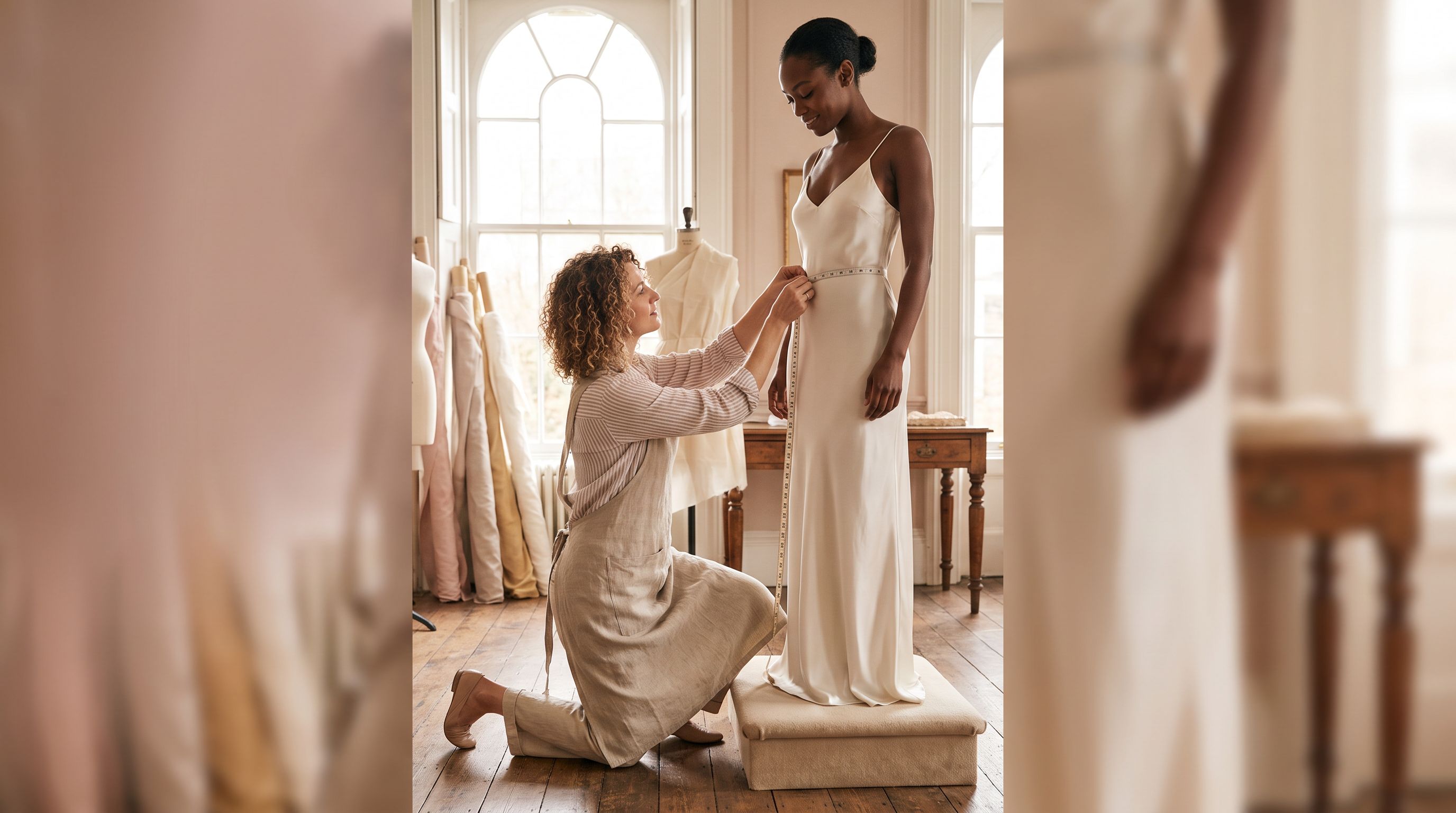
How to Measure Yourself for a Custom Wedding Dress
A step-by-step guide to taking wedding dress measurements at home: the exact list, tools, common mistakes, and how makers use them for a custom gown.
Read guide →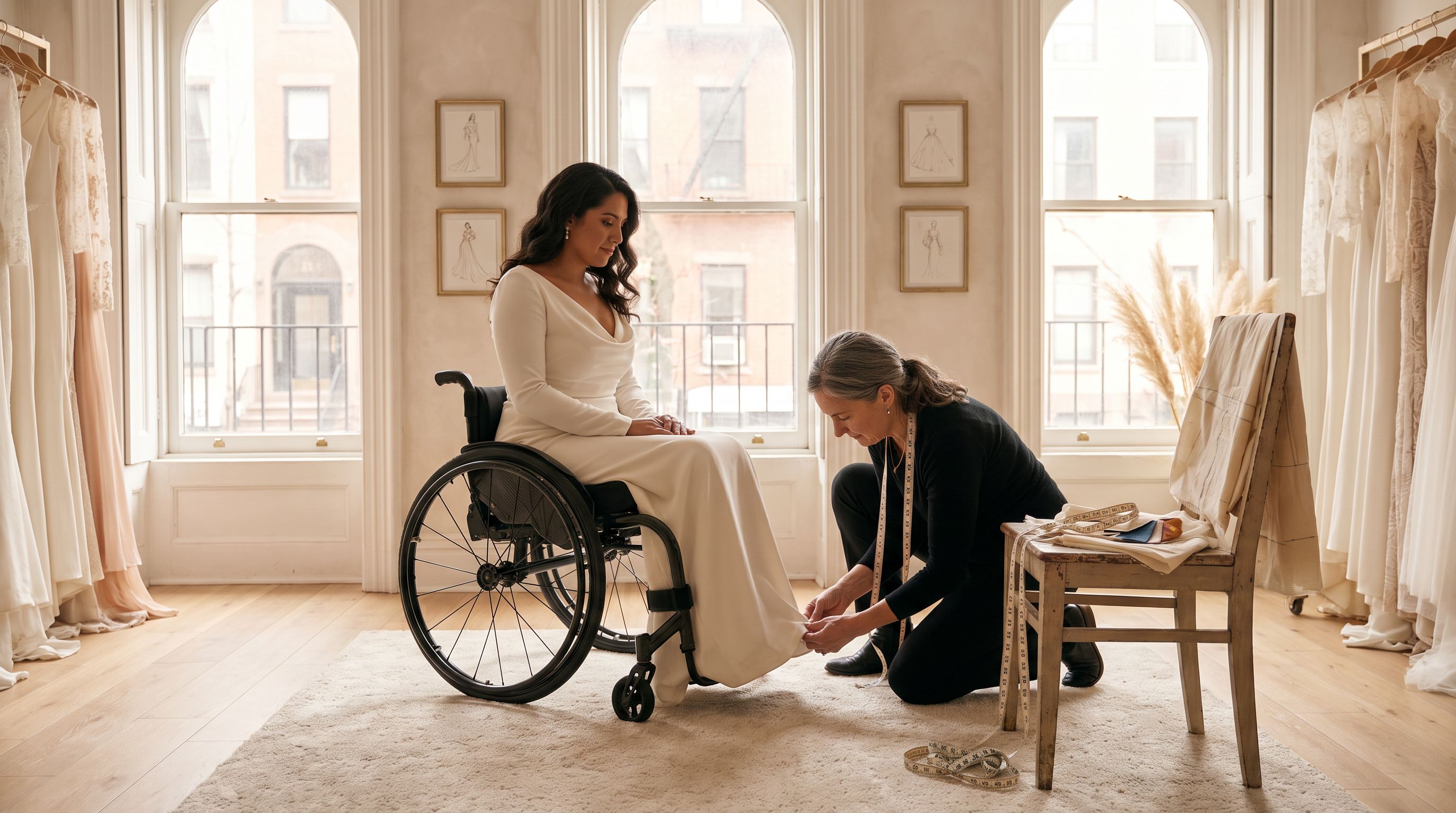
Adaptive Custom Wedding Dresses: Seated Fit and Access
How an adaptive custom wedding dress is drafted for a seated fit, easy closures, and real mobility needs — plus realistic cost ranges, fittings, and what to ask a dressmaker.
Read guide →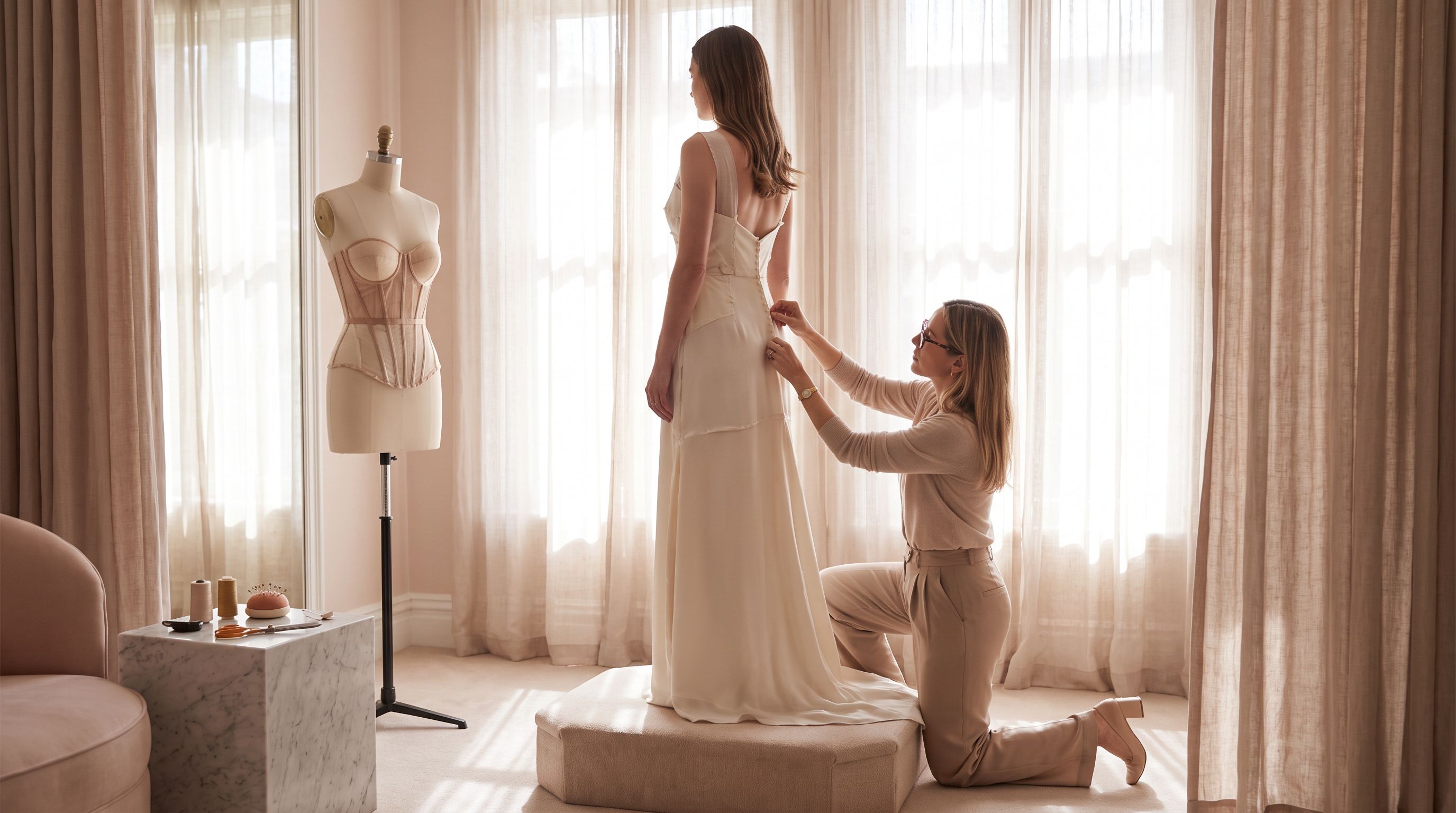
Corset vs Built-In Bra: Wedding Dress Support Explained
Corset, boning, or built-in bra cups? A clear guide to wedding dress support: what each does, what it costs in a custom gown, and how to choose for your bust.
Read guide →